Nicole Glover: Memories, Dreams, Reflections
Glover, tenor saxophone; Tyrone Allen II, bass; Kayvon Gordon, drums; Lester St. Louis, cello (two tracks)
Savant SCD 2225 (CD). Glover, Allen, Gordon, prods.; Maureen Sickler, eng.
Performance *****
Sonics **** Nicole Glover plays in major bands like Artemis and Christian McBride's Ursa Major. She is an outstanding talent of the new jazz generation. Drummer Kenny Washington has called her "the best tenor saxophonist to come along in a long, long time." Memories, Dreams, Reflections is a 21st century example of an ensemble format with a long, distinguished history: the sax trio. Tunes here like "Resilience" and "March" are classic sax trio celebrations. They recall the epic trios of Sonny Rollins and Joe Henderson in the way Glover hurtles forward, spewing fresh ideas, riding the river of energy emanating from her merciless but smart rhythm section. (Tyrone Allen II and Kayvon Gordon are also new names to watch.)
However, Glover's band mostly operates outside the sax trio tradition. Consider that her album's title is shared with one of the great psychological texts of the 20th century, by Carl Jung. Glover and Jung, in their respective art forms, deal in domains such as mysteries of the psyche and dualities of self. On "Obsidian," Glover's raw, impulsive expletives flirt with chaos. The title of one track, "No. 2," is also a Jungian term for "inner being." Here and elsewhere, Glover's stream-of-consciousness outpourings sound like the result of fearless inner searching. As an improviser, she always spills her guts. But this album is richer for the fact that some of the risks she takes are slow and quiet. "Tell Him I Said Hello" by Jack Canning and Bill Hegner is one of the great, ironic, heartbroken love songs, memorably sung by Betty Carter and Linda Ronstadt. Glover's portrayal is relatively literal, yet it is even more emotionally devastating than the vocal versions, perhaps because it seems to well up from her inner being.—Thomas Conrad
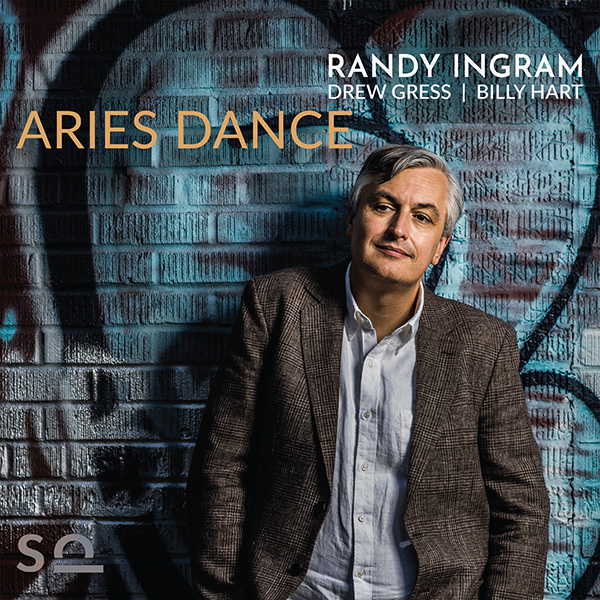 Randy Ingram: Aries Dance
Ingram, piano; Drew Gress, bass; Billy Hart, drums
Sounderscore SO 008 (CD, available as LP). 2024. Ingram, Leo Sidran, prods.; James Farber, eng.
Performance ****
Sonics ***** The piano trio is the most common ensemble in jazz. Its popularity is counterintuitive, given that jazz fans love trumpets and saxophones, and piano trios don't have any. But there is something magical about the configuration that has been called "the minimum complete jazz orchestra." Piano trios offer particular balance and proportion among melody, harmony, and rhythm. They allow both individual focus and selfless collective realization.
Randy Ingram's Aries Dance could go in a time capsule as a paradigm of the piano trio art form. Ingram is a pianist with trustworthy taste, firm technique, and humility. That last quality allows him to serve the music rather than himself. His touch on the keys is forthright yet sensitive. Everything he plays bends toward lyricism, even when he takes off and flies, as on "You and the Night and the Music." His version of "Dedicated to You" is trickier than usual in 5/4 but retains the song's romanticism. His own composition "Towards Polaris," a tension-and-release waltz, is fervent with energy and yet stays elegiac. True ballads are his sweet spot. His improvisation "Castle and Fog" is two minutes of alluring impressionism. His interpretation of Wayne Shorter's mysterious, hovering ballad "Penelope" is stunning. Ingram embraces its rapt mood even as he casts new harmonic light on Shorter's form.
A special piano trio needs the right bassist and drummer. Drew Gress's bass solos add depth to the emotional textures of this music. Billy Hart is the most in-demand drummer in jazz for a reason. At 85, he still owns The Beat.
Another factor that makes this album a paradigm is the sound of engineer James Farber. If there are studio recordings of piano trios clearly superior to Aries Dance, this reviewer would drive across town to hear them.—Thomas Conrad
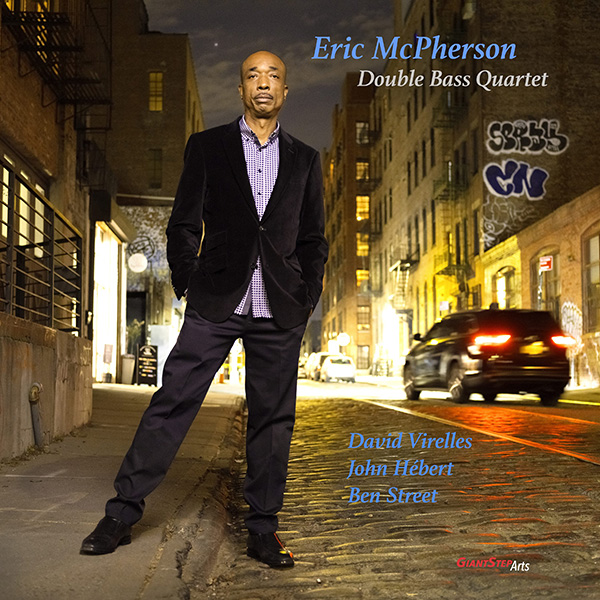 Eric McPherson: Double Bass Quartet
McPherson, drums; David Virelles, piano; John Hébert, Ben Street, basses
Giant Step Arts GSA 18 (CD). 2025. McPherson, Jimmy Katz, prods.; Katz, James Kogan, engs.
Performance ****
Sonics ****½ It feels like the bass has taken on increased prominence in recent jazz. Solo bass albums have become a niche. (Arild Andersen's new ECM release Landloper is an attractive example.) Eric McPherson's new record is a variant of the current phenomenon. It is a piano trio session with a second bass player added. Its press sheet points out that there is a small history of two basses in jazz that goes back to Duke Ellington in the 1940s. Most precedents come from the avant-garde: Coleman, Coltrane, Ayler, Sanders. It is striking how adding a second bass can transform an ensemble. One obvious way to deploy two basses is to have one solo over a piano trio that includes a bass. That happens often on this album, as on John Hébert's "Blind Pig." The deep, probing bass solo (presumably Hébert's but maybe Ben Street's) is supported by a full rhythm section. There are many more effects, some complex, some subtle, that two basses can create. Pieces such as Stanley Cowell's "Illusion Suite," Thelonious Monk's "Skippy," and Jaki Byard's "Cinco y Cuatro" were conceived by their composers as erudite rhythmic exercises. But with two basses driving them, they all swing more intensely. A quieter piece like Andrew Hill's "Ashes" takes on rich textures from one bass playing arco and one pizzicato. On "Darn the Dream," pianist David Virelles's flirtations with the melody are intriguing yet secondary to the two basses, winding their separate, complementary long strands of notes through the song.
As for the other two players, Virelles, from Cuba, is sometimes bombastic, but his rhythmic sophistication enables him to thrive within the intricate energy of this session. McPherson contributes a songlike six-minute drum solo that proves his thesis: "Rhythm is melody as well."—Thomas Conrad
Glover, tenor saxophone; Tyrone Allen II, bass; Kayvon Gordon, drums; Lester St. Louis, cello (two tracks)
Savant SCD 2225 (CD). Glover, Allen, Gordon, prods.; Maureen Sickler, eng.
Performance *****
Sonics **** Nicole Glover plays in major bands like Artemis and Christian McBride's Ursa Major. She is an outstanding talent of the new jazz generation. Drummer Kenny Washington has called her "the best tenor saxophonist to come along in a long, long time." Memories, Dreams, Reflections is a 21st century example of an ensemble format with a long, distinguished history: the sax trio. Tunes here like "Resilience" and "March" are classic sax trio celebrations. They recall the epic trios of Sonny Rollins and Joe Henderson in the way Glover hurtles forward, spewing fresh ideas, riding the river of energy emanating from her merciless but smart rhythm section. (Tyrone Allen II and Kayvon Gordon are also new names to watch.)
Randy Ingram: Aries DanceIngram, piano; Drew Gress, bass; Billy Hart, drums
Sounderscore SO 008 (CD, available as LP). 2024. Ingram, Leo Sidran, prods.; James Farber, eng.
Performance ****
Sonics ***** The piano trio is the most common ensemble in jazz. Its popularity is counterintuitive, given that jazz fans love trumpets and saxophones, and piano trios don't have any. But there is something magical about the configuration that has been called "the minimum complete jazz orchestra." Piano trios offer particular balance and proportion among melody, harmony, and rhythm. They allow both individual focus and selfless collective realization.
Eric McPherson: Double Bass QuartetMcPherson, drums; David Virelles, piano; John Hébert, Ben Street, basses
Giant Step Arts GSA 18 (CD). 2025. McPherson, Jimmy Katz, prods.; Katz, James Kogan, engs.
Performance ****
Sonics ****½ It feels like the bass has taken on increased prominence in recent jazz. Solo bass albums have become a niche. (Arild Andersen's new ECM release Landloper is an attractive example.) Eric McPherson's new record is a variant of the current phenomenon. It is a piano trio session with a second bass player added. Its press sheet points out that there is a small history of two basses in jazz that goes back to Duke Ellington in the 1940s. Most precedents come from the avant-garde: Coleman, Coltrane, Ayler, Sanders. It is striking how adding a second bass can transform an ensemble. One obvious way to deploy two basses is to have one solo over a piano trio that includes a bass. That happens often on this album, as on John Hébert's "Blind Pig." The deep, probing bass solo (presumably Hébert's but maybe Ben Street's) is supported by a full rhythm section. There are many more effects, some complex, some subtle, that two basses can create. Pieces such as Stanley Cowell's "Illusion Suite," Thelonious Monk's "Skippy," and Jaki Byard's "Cinco y Cuatro" were conceived by their composers as erudite rhythmic exercises. But with two basses driving them, they all swing more intensely. A quieter piece like Andrew Hill's "Ashes" takes on rich textures from one bass playing arco and one pizzicato. On "Darn the Dream," pianist David Virelles's flirtations with the melody are intriguing yet secondary to the two basses, winding their separate, complementary long strands of notes through the song.