

Sonic and musical epiphanies
I had certain expectations about what I would hear when I began my audition. I anticipated that the Momentum M400 MxV would have a similar top-to-bottom sonic signature to the Progression M550 but that its bass would be less impactful, less dynamic. Most differences, I expected, would probably be best described as refinements of that house sound Dan had mentioned. Considering that the Momentums cost some $30,000 more than the Progressions, I hoped for a great deal of refinement. I'm always amused when my expectations are proved wrong. The strength and quality of bass with the M400 MxV blew me away. Every audiophile has their favorite recorded bass assault. One take-no-prisoners excerpt I keep referencing is the second movement of Shostakovich's Symphony No.11 as performed by the Boston Symphony Orchestra under Andris Nelsons on Shostakovich: Symphonies Nos.4 & 11 "The Year 1905" (24/96 MQA, DG/Tidal). The 400/800/1600Wpc MxV delivered bass that equaled, if not surpassed, that of the 2100/3600/6000Wpc Karan Acoustics POWERa monoblocks. I was especially drawn to the sound of the symphony's huge bass drum: Its timbre was realistic, its hollow vastness superbly realized, and the balance between leading edge, resonance, and decay of each momentous thwack was awe-inspiring.
The M400 MxV's bass superiority didn't end there. Most symphonies rest on a foundation of double basses, which, in a live concert, remains strong out to the last rows of the hall (footnote 8). An orchestra's bass section is often so strong that, if you sit the right distance from the stage, you can sometimes feel it resonate in your gut.
I'd always assumed that the Progression and POWERa monoblocks elicited as much bass from my speakers as they could possibly produce in my 16' × 20' × 9.25' listening room. Wrong again. On the Shostakovich, I was so impressed by the strength and solidity of the bass line that I felt compelled to share it. I invited my friend Scott over for a listen. Scott echoed my impression: "It's like a different recording!"
I'm always amused when my expectations are proved wrong. The strength and quality of bass with the M400 MxV blew me away. Every audiophile has their favorite recorded bass assault. One take-no-prisoners excerpt I keep referencing is the second movement of Shostakovich's Symphony No.11 as performed by the Boston Symphony Orchestra under Andris Nelsons on Shostakovich: Symphonies Nos.4 & 11 "The Year 1905" (24/96 MQA, DG/Tidal). The 400/800/1600Wpc MxV delivered bass that equaled, if not surpassed, that of the 2100/3600/6000Wpc Karan Acoustics POWERa monoblocks. I was especially drawn to the sound of the symphony's huge bass drum: Its timbre was realistic, its hollow vastness superbly realized, and the balance between leading edge, resonance, and decay of each momentous thwack was awe-inspiring.
The M400 MxV's bass superiority didn't end there. Most symphonies rest on a foundation of double basses, which, in a live concert, remains strong out to the last rows of the hall (footnote 8). An orchestra's bass section is often so strong that, if you sit the right distance from the stage, you can sometimes feel it resonate in your gut.
I'd always assumed that the Progression and POWERa monoblocks elicited as much bass from my speakers as they could possibly produce in my 16' × 20' × 9.25' listening room. Wrong again. On the Shostakovich, I was so impressed by the strength and solidity of the bass line that I felt compelled to share it. I invited my friend Scott over for a listen. Scott echoed my impression: "It's like a different recording!"
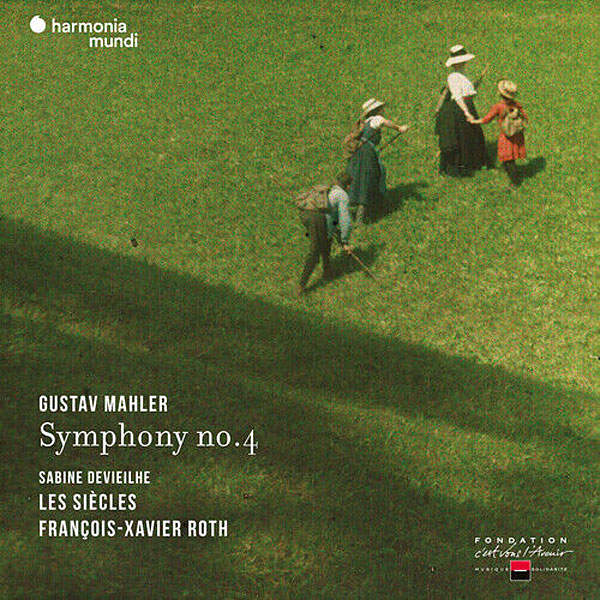
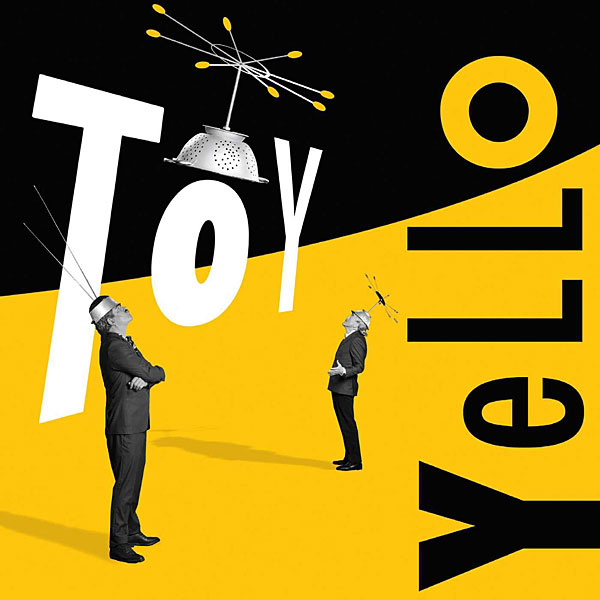 When we turned to the pounding bass in Yello's "Electrified II," from Toy (24/48 MQA, Polydor/Tidal), the first low bass thwack sounded considerably stronger than with any other amplifier that had graced my system. And every subsequent beat pounded with renewed force. On a very different work, François Xavier-Roth's Record-to-Live-For rendition of Mahler's Symphony No.4, with period-instrument orchestra Les Siècles (24/96 WAV, Harmonia Mundi HMM 905347), the reinvigorated double bass line presented in true, full sonority, rendering this piece anew, in fresh colors.
 Scott asked to hear the live recording of Monk and Williams's "'Round Midnight," from Bill Evans's At Shelly's Manne-Hole (Live) (24/192 MQA, Riverside/Tidal). "Wow!" he exclaimed. Neither of us had heard such bass in this system before.
The MxV's magic, however, was not limited to its bass. "The cymbals are fantastic too," Scott said when the track concluded. "I sat on the edge of my seat."
Above its fine, true midrange, treble sounded less bright and forward on the M400 MxV than with the Progression M550. Gut-stringed baroque violins, played correctly, may have a more pointed, less rounded sound than modern violins with metal strings, but their leading edge is finely focused. The MxV faithfully conveyed that distinction. Cymbals made a huge clatter when the music called for it, but they never sounded glassy. And when Shostakovich's score demanded that horns blast and piccolos scream, they did so with convincing realism.
On Debussy's Sonata for Flute, Viola & Harp, from Debussy: Sonates & Trio (24/96 MQA, Erato/Tidal), color and contrast were striking and the intimate details of harp plucks, palpable. The depth and resonance of the Salle Colonne, in Paris, came through clearly, and sonic transparency was superb. As captivating as the sonic performance was, it was not a distraction: It was still the musical performance of this wonderful work that held me spellbound.
In my review of the Karan POWERa monoblocks, I raved about how distinctively they depicted the four period instruments on the Chiaroscuro Quartet's recording of Mozart's Prussian Quartets (24/96 WAV, BIS 7318599925585). The M400 MxV shed further light on those instruments, raising from the shadows even the subtle fricative whisper of bows as they were drawn across strings. The sound wasn't as brightly illumined as through the Karans, but it flowed with exceptional ease. The rich timbre of Claire Thirion's gut-stringed cello was particularly enchanting, and the higher- and lower-pitch instruments balanced each other ideally.
I recently reviewed the five new piano works by Vijay Iyer, Derek Bermel, Anthony Cheung, John Harbison, and Wang Lu on Shai Wosner's Variations on a Theme by FDR (24/96 WAV, New Focus Recordings FCR359; footnote 9). Wosner's piano sounded fuller and more resonant with the M400 MxV than with any other amplifier I've had at home. The piano's low end and midrange, in particular, sounded as realistic as I'd ever heard it on my system, and the vibration and decay of each note were more convincing.
Scott asked to hear the live recording of Monk and Williams's "'Round Midnight," from Bill Evans's At Shelly's Manne-Hole (Live) (24/192 MQA, Riverside/Tidal). "Wow!" he exclaimed. Neither of us had heard such bass in this system before.
The MxV's magic, however, was not limited to its bass. "The cymbals are fantastic too," Scott said when the track concluded. "I sat on the edge of my seat."
Above its fine, true midrange, treble sounded less bright and forward on the M400 MxV than with the Progression M550. Gut-stringed baroque violins, played correctly, may have a more pointed, less rounded sound than modern violins with metal strings, but their leading edge is finely focused. The MxV faithfully conveyed that distinction. Cymbals made a huge clatter when the music called for it, but they never sounded glassy. And when Shostakovich's score demanded that horns blast and piccolos scream, they did so with convincing realism.
On Debussy's Sonata for Flute, Viola & Harp, from Debussy: Sonates & Trio (24/96 MQA, Erato/Tidal), color and contrast were striking and the intimate details of harp plucks, palpable. The depth and resonance of the Salle Colonne, in Paris, came through clearly, and sonic transparency was superb. As captivating as the sonic performance was, it was not a distraction: It was still the musical performance of this wonderful work that held me spellbound.
In my review of the Karan POWERa monoblocks, I raved about how distinctively they depicted the four period instruments on the Chiaroscuro Quartet's recording of Mozart's Prussian Quartets (24/96 WAV, BIS 7318599925585). The M400 MxV shed further light on those instruments, raising from the shadows even the subtle fricative whisper of bows as they were drawn across strings. The sound wasn't as brightly illumined as through the Karans, but it flowed with exceptional ease. The rich timbre of Claire Thirion's gut-stringed cello was particularly enchanting, and the higher- and lower-pitch instruments balanced each other ideally.
I recently reviewed the five new piano works by Vijay Iyer, Derek Bermel, Anthony Cheung, John Harbison, and Wang Lu on Shai Wosner's Variations on a Theme by FDR (24/96 WAV, New Focus Recordings FCR359; footnote 9). Wosner's piano sounded fuller and more resonant with the M400 MxV than with any other amplifier I've had at home. The piano's low end and midrange, in particular, sounded as realistic as I'd ever heard it on my system, and the vibration and decay of each note were more convincing.
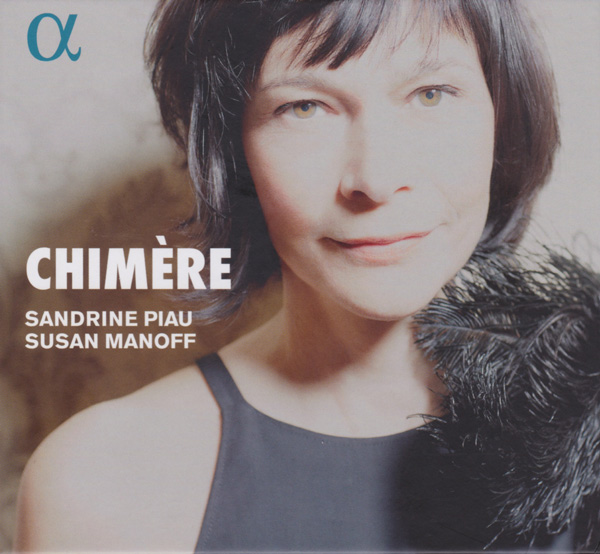 Vocals were special. Soprano Sandrine Piau's recording of Carl Loewe's lieder "Ach neige, du Schmerzenreiche," from Chimère (24/96 MQA, Alpha 397/Tidal), sounded more transparent than through the Progression. I could hear the heart behind the voice. The very different, ringing voice on tenor Jonathan Tetelman's Arias (24/96 WAV, Deutsche Grammophon 4862927; footnote 10) has long been a test for my system, with squillo often obscuring all else. With the M400 MxV, I could hear the warmth at the core of Tetelman's voice on the highest, strongest, and brightest notes.
How wonderful it was to hear again, after many years, the divine voice of Kathleen Battle in "Vorrei spiegarvi, o Dio!" on Kathleen Battle Sings Mozart (16/44.1 MQA, Warner/Tidal). It's easy to understand why Battle chose to open her recital with this concert aria. Aside from a challenging high E that pushes her into the uppermost reaches of her vocal compass, this aria's tessitura lies comfortably in the middle of the most heavenly part of her range. Thanks in no small part to Christopher Parker's engineering and the Abbey Road acoustic, this recording is flawless, and the M400 MxV delivers every note as if it were a precious pearl.
Conclusion
Vocals were special. Soprano Sandrine Piau's recording of Carl Loewe's lieder "Ach neige, du Schmerzenreiche," from Chimère (24/96 MQA, Alpha 397/Tidal), sounded more transparent than through the Progression. I could hear the heart behind the voice. The very different, ringing voice on tenor Jonathan Tetelman's Arias (24/96 WAV, Deutsche Grammophon 4862927; footnote 10) has long been a test for my system, with squillo often obscuring all else. With the M400 MxV, I could hear the warmth at the core of Tetelman's voice on the highest, strongest, and brightest notes.
How wonderful it was to hear again, after many years, the divine voice of Kathleen Battle in "Vorrei spiegarvi, o Dio!" on Kathleen Battle Sings Mozart (16/44.1 MQA, Warner/Tidal). It's easy to understand why Battle chose to open her recital with this concert aria. Aside from a challenging high E that pushes her into the uppermost reaches of her vocal compass, this aria's tessitura lies comfortably in the middle of the most heavenly part of her range. Thanks in no small part to Christopher Parker's engineering and the Abbey Road acoustic, this recording is flawless, and the M400 MxV delivers every note as if it were a precious pearl.
Conclusion
D'Agostino's Momentum M400 MxV mono amplifier exceeded my expectations. Its relatively compact size belies its stellar performance: massive bass, mellifluous midrange, and well-measured treble. The clarity and ease with which it handles even the most challenging recordings is remarkable. It is one of the most musical, truthful, satisfying amplifiers I've ever heard in my system and one of the most striking aesthetically. Audiophiles wishing to experience the edge of the hi-fi envelope should visit a dealer or an audio show exhibiting the Momentum M400 MxV and listen to it. Those who audition a pair and are blessed with the wherewithal to seriously consider their acquisition will find it tempting, I suspect, to take them home.
Footnote 8: In my experience, that depends on the hall.—Jim Austin Footnote 9: See sfcv.org/articles/review/pianist-shai-wosner-focuses-immigrant-experience-latest-recording. Footnote 10: See sfcv.org/articles/review/jonathan-tetelman-sings-greats.
I had certain expectations about what I would hear when I began my audition. I anticipated that the Momentum M400 MxV would have a similar top-to-bottom sonic signature to the Progression M550 but that its bass would be less impactful, less dynamic. Most differences, I expected, would probably be best described as refinements of that house sound Dan had mentioned. Considering that the Momentums cost some $30,000 more than the Progressions, I hoped for a great deal of refinement.
I'm always amused when my expectations are proved wrong. The strength and quality of bass with the M400 MxV blew me away. Every audiophile has their favorite recorded bass assault. One take-no-prisoners excerpt I keep referencing is the second movement of Shostakovich's Symphony No.11 as performed by the Boston Symphony Orchestra under Andris Nelsons on Shostakovich: Symphonies Nos.4 & 11 "The Year 1905" (24/96 MQA, DG/Tidal). The 400/800/1600Wpc MxV delivered bass that equaled, if not surpassed, that of the 2100/3600/6000Wpc Karan Acoustics POWERa monoblocks. I was especially drawn to the sound of the symphony's huge bass drum: Its timbre was realistic, its hollow vastness superbly realized, and the balance between leading edge, resonance, and decay of each momentous thwack was awe-inspiring.
The M400 MxV's bass superiority didn't end there. Most symphonies rest on a foundation of double basses, which, in a live concert, remains strong out to the last rows of the hall (footnote 8). An orchestra's bass section is often so strong that, if you sit the right distance from the stage, you can sometimes feel it resonate in your gut.
When we turned to the pounding bass in Yello's "Electrified II," from Toy (24/48 MQA, Polydor/Tidal), the first low bass thwack sounded considerably stronger than with any other amplifier that had graced my system. And every subsequent beat pounded with renewed force. On a very different work, François Xavier-Roth's Record-to-Live-For rendition of Mahler's Symphony No.4, with period-instrument orchestra Les Siècles (24/96 WAV, Harmonia Mundi HMM 905347), the reinvigorated double bass line presented in true, full sonority, rendering this piece anew, in fresh colors.
Scott asked to hear the live recording of Monk and Williams's "'Round Midnight," from Bill Evans's At Shelly's Manne-Hole (Live) (24/192 MQA, Riverside/Tidal). "Wow!" he exclaimed. Neither of us had heard such bass in this system before.
Vocals were special. Soprano Sandrine Piau's recording of Carl Loewe's lieder "Ach neige, du Schmerzenreiche," from Chimère (24/96 MQA, Alpha 397/Tidal), sounded more transparent than through the Progression. I could hear the heart behind the voice. The very different, ringing voice on tenor Jonathan Tetelman's Arias (24/96 WAV, Deutsche Grammophon 4862927; footnote 10) has long been a test for my system, with squillo often obscuring all else. With the M400 MxV, I could hear the warmth at the core of Tetelman's voice on the highest, strongest, and brightest notes.
D'Agostino's Momentum M400 MxV mono amplifier exceeded my expectations. Its relatively compact size belies its stellar performance: massive bass, mellifluous midrange, and well-measured treble. The clarity and ease with which it handles even the most challenging recordings is remarkable. It is one of the most musical, truthful, satisfying amplifiers I've ever heard in my system and one of the most striking aesthetically. Audiophiles wishing to experience the edge of the hi-fi envelope should visit a dealer or an audio show exhibiting the Momentum M400 MxV and listen to it. Those who audition a pair and are blessed with the wherewithal to seriously consider their acquisition will find it tempting, I suspect, to take them home.
Footnote 8: In my experience, that depends on the hall.—Jim Austin Footnote 9: See sfcv.org/articles/review/pianist-shai-wosner-focuses-immigrant-experience-latest-recording. Footnote 10: See sfcv.org/articles/review/jonathan-tetelman-sings-greats.















