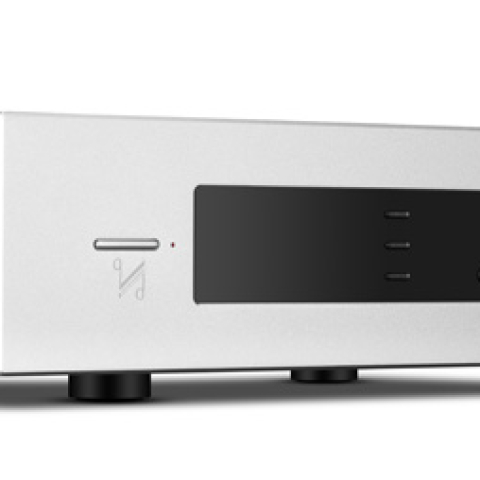
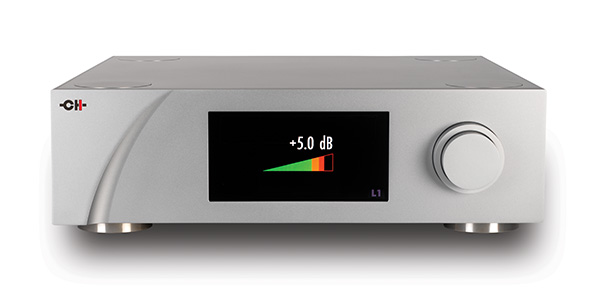
 CH Precision always sends one of its people to assist with setup—a good idea for a major review, since it guarantees that the setup is correct and the sound achieved is up to what the component is capable of. In this case, my visitor was Kevin Wolff, CH Precision's Seattle-based global sales director. Kevin went through the setup process as I looked on, paying attention some of the time. He turned off unused inputs, set input gain, chose DC coupling for the active inputs, and labeled them. Kevin activated a third channel for an experiment.
Kevin set the system to warm up and walked up to Broadway for some lunch. Returning, Kevin ran Input Calibration (DC-offset compensation) on two of the connected inputs, the ones to which the phono preamplifier and the D/A converter were connected. The process took several minutes. The third input, which for now had nothing connected, remained uncalibrated; moving interconnects to this third, uncalibrated input allowed a quick comparison between calibrated and uncalibrated inputs. I'll report the results of this experiment in the listening section.
The X1 power supply was used to power both the L1 and the C1.2 DAC. The C1.2 remained connected to it throughout the audition, but from time to time I removed it from the L1, for comparison with the L1 running on its own internal power supply. I'll report these results, too, in the following section.
CH Precision always sends one of its people to assist with setup—a good idea for a major review, since it guarantees that the setup is correct and the sound achieved is up to what the component is capable of. In this case, my visitor was Kevin Wolff, CH Precision's Seattle-based global sales director. Kevin went through the setup process as I looked on, paying attention some of the time. He turned off unused inputs, set input gain, chose DC coupling for the active inputs, and labeled them. Kevin activated a third channel for an experiment.
Kevin set the system to warm up and walked up to Broadway for some lunch. Returning, Kevin ran Input Calibration (DC-offset compensation) on two of the connected inputs, the ones to which the phono preamplifier and the D/A converter were connected. The process took several minutes. The third input, which for now had nothing connected, remained uncalibrated; moving interconnects to this third, uncalibrated input allowed a quick comparison between calibrated and uncalibrated inputs. I'll report the results of this experiment in the listening section.
The X1 power supply was used to power both the L1 and the C1.2 DAC. The C1.2 remained connected to it throughout the audition, but from time to time I removed it from the L1, for comparison with the L1 running on its own internal power supply. I'll report these results, too, in the following section.
I have an affinity for preamplifiers—not some special talent; I just mean only that I view them with affection beyond what I feel for most other audio components. Yes, for me, relationships with hi-fi components can be personal. The advantages of a fine preamplifier go beyond how simply and well it does the basics: select an input, adjust the volume, maybe (less critically but usefully) switch between stereo and mono or invert absolute polarity. Even if their sonic impact is subtle, preamplifiers can have a profound impact on how effectively a system conveys music. I inserted the L1 in the system and spent time listening to varied music and making casual observations, taking occasional notes, working toward understanding the L1's particular sound. Weeks later, I got serious.
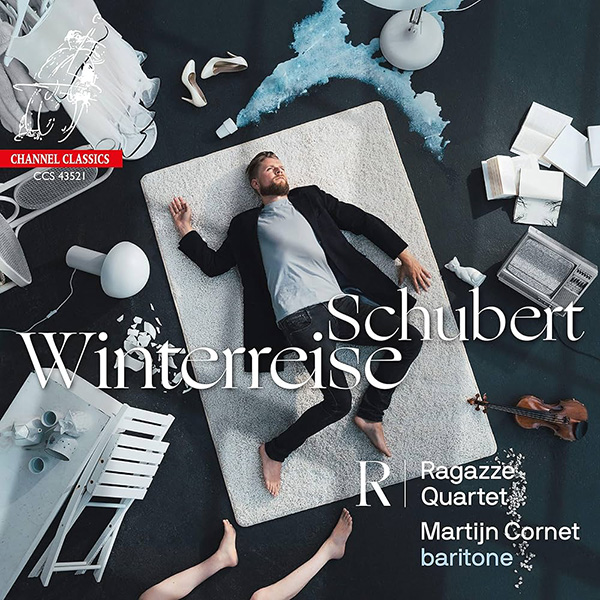 From chamber music and small-group jazz, you can learn a lot about the palpability of sonic images, how well a component maps out the sonic space, and something about its ability to convey timbre and rhythm. First up: Schubert's song cycle Winterreise, the piano part transcribed for string quartet (played here by the Raggazze Quartet), sung by baritone Martijn Cornet (24/192 FLAC download, Presto CSS 43521). With the L1 in the system, Cornet's voice emerged from a big, deep stage, the voice somewhat distantly miked but rich and tangible, positioned just behind the quartet, which was arrayed from speaker to speaker. Subtle shadings of voice and strings were clearly conveyed.
Charles Ives's Violin Sonata No.4, "Children's Day at the Camp Meeting," is among the works on the brilliant recent album American Road Trip (24/96 FLAC, Warner Records/Qobuz), a varied collection of American works written or transcribed for violin and piano, performed by Augustin Hadelich and Orion Weiss. In the second movement, Largo–Allegro, the violin was woody, warm, richly colored, precisely and stably positioned on the soundstage—tangible—and the piano was big and bold, with booming (in a good way), resonant low notes.
Marc-André Hamelin Live at Wigmore Hall (16/44.1 CD rip, Hyperion 66765) has been a favorite recording for decades. The music on this 1994 album was chosen not so much for its musical gravity but to display pianist Hamelin's astonishing virtuosity. It succeeds. It includes, for example, a movement of Alkan's transcription of Beethoven's Piano Concerto No.3 for solo piano. But the recording is also interesting for its sonic perspective. Courtesy of recording engineer Ken Blair, it's one of the most convincing midhall perspectives I'm aware of.
From chamber music and small-group jazz, you can learn a lot about the palpability of sonic images, how well a component maps out the sonic space, and something about its ability to convey timbre and rhythm. First up: Schubert's song cycle Winterreise, the piano part transcribed for string quartet (played here by the Raggazze Quartet), sung by baritone Martijn Cornet (24/192 FLAC download, Presto CSS 43521). With the L1 in the system, Cornet's voice emerged from a big, deep stage, the voice somewhat distantly miked but rich and tangible, positioned just behind the quartet, which was arrayed from speaker to speaker. Subtle shadings of voice and strings were clearly conveyed.
Charles Ives's Violin Sonata No.4, "Children's Day at the Camp Meeting," is among the works on the brilliant recent album American Road Trip (24/96 FLAC, Warner Records/Qobuz), a varied collection of American works written or transcribed for violin and piano, performed by Augustin Hadelich and Orion Weiss. In the second movement, Largo–Allegro, the violin was woody, warm, richly colored, precisely and stably positioned on the soundstage—tangible—and the piano was big and bold, with booming (in a good way), resonant low notes.
Marc-André Hamelin Live at Wigmore Hall (16/44.1 CD rip, Hyperion 66765) has been a favorite recording for decades. The music on this 1994 album was chosen not so much for its musical gravity but to display pianist Hamelin's astonishing virtuosity. It succeeds. It includes, for example, a movement of Alkan's transcription of Beethoven's Piano Concerto No.3 for solo piano. But the recording is also interesting for its sonic perspective. Courtesy of recording engineer Ken Blair, it's one of the most convincing midhall perspectives I'm aware of.
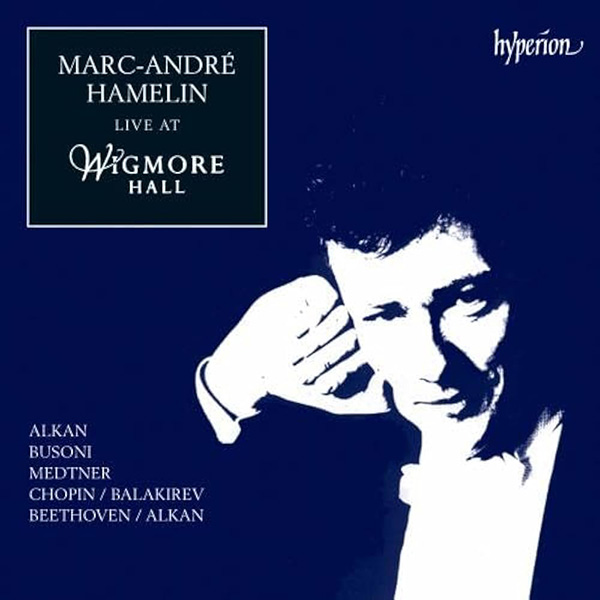 I remember that, shortly after I acquired the CD in the mid-1990s, my then-modest system couldn't sort it out; the recording didn't make sonic sense. This current system, with the L1 assisted by the X1, nailed the middle-seat perspective in the relatively intimate performance space that is Wigmore Hall. What was special was the tangibility—physicality—of the piano and its changes of timbre as Hamelin moved up and down the keyboard and altered his touch, and how well it mapped out the space the notes resonated within.
It is rare for both things—the piano's richness and timbre and the hall's acoustic—to come through so clearly at the same time.
I enjoy Roon's Radio feature, not least when it screws up, making weird leaps, as when the Finale of the Bruch Violin Concerto No.1 in G minor gave way to "Out ta Get Me," the fourth track on Appetite for Destruction (Super Deluxe) (24/96 FLAC, Geffen/Tidal), by Guns N' Roses.
I remember that, shortly after I acquired the CD in the mid-1990s, my then-modest system couldn't sort it out; the recording didn't make sonic sense. This current system, with the L1 assisted by the X1, nailed the middle-seat perspective in the relatively intimate performance space that is Wigmore Hall. What was special was the tangibility—physicality—of the piano and its changes of timbre as Hamelin moved up and down the keyboard and altered his touch, and how well it mapped out the space the notes resonated within.
It is rare for both things—the piano's richness and timbre and the hall's acoustic—to come through so clearly at the same time.
I enjoy Roon's Radio feature, not least when it screws up, making weird leaps, as when the Finale of the Bruch Violin Concerto No.1 in G minor gave way to "Out ta Get Me," the fourth track on Appetite for Destruction (Super Deluxe) (24/96 FLAC, Geffen/Tidal), by Guns N' Roses.
I would happily live forever with the CH Precision L1, especially paired with the X1. Considering the prices and CH Precision's perfectionist approach, this is not surprising. What is surprising is how much extra performance apparently remains unrealized, even in a very well-designed product, as demonstrated by the improvement when the X1 was employed. I find myself wondering how much room for improvement is still out there, waiting to be realized. How much better could a four-box L1/X1 system, or the L10 preamp, be? Assuming you can pay the tab, it's highly recommended
Footnote 4: The images were not larger; if anything, they were smaller. They were more tightly confined, with clearer outlines, in better focus. I am suspicious of larger images. Most often, I think, they are a result of signal imprecision, a bug not a feature. Footnote 5: I eagerly await the results of JA's measurements. On the one hand, the effect (especially of the X1) was obvious. On the other hand, in the past, our standard measurement suite has usually failed to detect differences resulting from power supply improvements.