Sidebar 3: Review System
Analog sources were the Linn Sondek LP12 with all the accoutrements (Lingo, Cirkus, QR/DNM Design 330 Mk.II Ringmat), Linn Ittok, and AudioQuest AQ7000nsx. Digital sources were PS Audio's Lambda transport, Sonic Frontiers' UltraJitterbug, PS Audio's UltraLink II, and Sonic Frontiers' SFD-2. The preamp used was mostly a Sonic Frontiers SFL-2, with some use also made of a Convergent Audio Technology SL-1 Signature. Reference power amplifiers were the Bryston 7B monoblocks, Krell KSA-100S, and Threshold T-200.
Interconnects, digital links (AES/EBU), and power cables were mostly the latest-generation TARA Labs RSC. The Lightstar manual warns against using power cables other than those supplied, which are specially shielded and able to handle high current, but I obtained better results with TARA Labs RSC. I have The Original Cable Jackets, grounded to a single wire, on all the power cables. My listening room has two dedicated AC lines; the Lightstar was plugged directly into two receptacles (remember: it has two power cables) fed by one of the lines. On the other AC line, the digital components were plugged into a Tice Series II Power Block line-conditioner, the preamp directly into AC. In connecting the SFL-2 to the Lightstar, I tried both balanced and unbalanced connections. The sonic differences (once I compensated for the higher gain in the balanced mode) were fairly minor, the unbalanced mode sounding a touch more open (footnote 1).
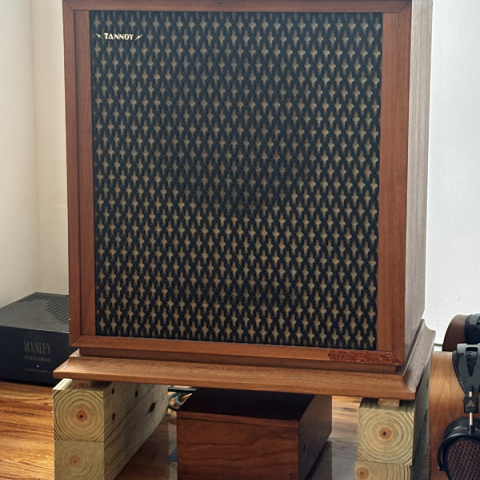
Speakers were Dunlavy Audio Labs SC-IVs—first the original pair that formed the basis of my review in April 1994 (Vol.17 No.4), then the revised version discussed in my Follow-Up to that review in March '95 (Vol.18 No.3). The SC-IV has above-average sensitivity (91dB/W/m) and does not present a reactive load. However, its impedance, while extremely even, is in the 5 ohm range, so it is somewhat demanding of current.—Robert Deutsch
Footnote 1: Although the Lightstar has balanced inputs, it's not a fully balanced (differential) design. Jim Croft told me that, during the development of the Lightstar, they also built a fully balanced version, and then worked on improving the unbalanced version until it sounded very close to the balanced protype.
Footnote 1: Although the Lightstar has balanced inputs, it's not a fully balanced (differential) design. Jim Croft told me that, during the development of the Lightstar, they also built a fully balanced version, and then worked on improving the unbalanced version until it sounded very close to the balanced protype.