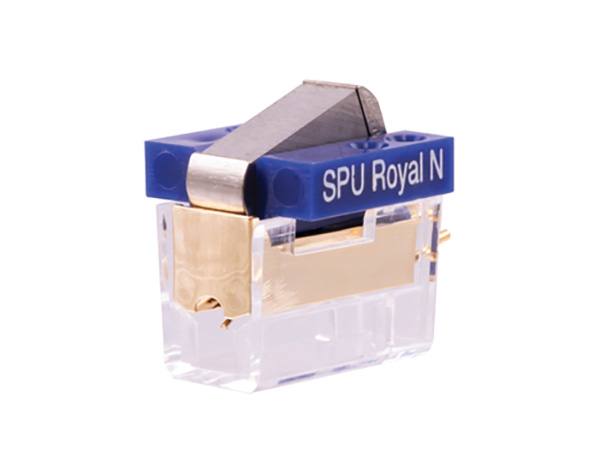
Contributing to this effect was the remarkable sonic density produced by the Royal N. I'm talking about an intensely palpable physicality, or, put another way, a heightened sensation of sound being a
mechanical wave that needs the medium of air to expand. For me, this is one of the most enjoyable aspects of musical reproduction and is another calling card of the SPU.
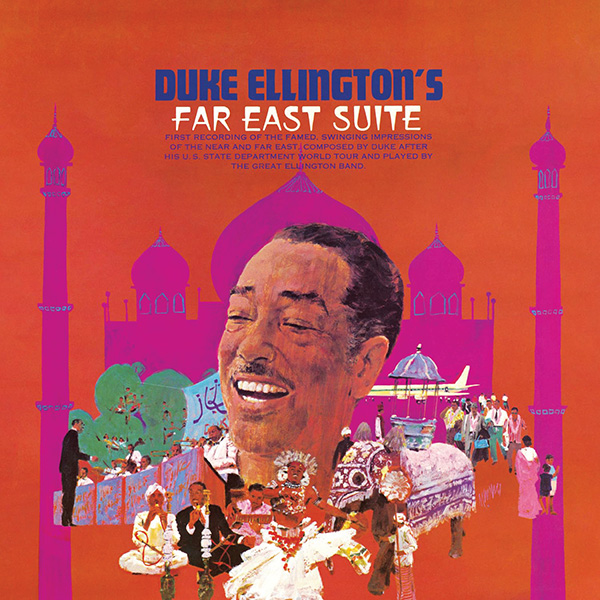
The cartridge's frequency response is a thing of beauty. On "Mount Harissa" from
The Far East Suite (RCA Victor LSP-3782), Duke Ellington's late masterpiece from 1967, the orchestra's blasts sounded robust and exciting, but the massed horns never grated or turned strident. To be sure, the Royal N's treble range is significantly more extended, delicate, and refined than my Classic G's, but it is integrated into the whole with grace and restraint and never sounds etched, bleached, or metallic, even on poor recordings. This balance may disappoint fans of shimmering, airy cartridges, but to me it more closely resembles real music played in an actual room. With age I've lost the ability to perceive the very highest frequencies, but even when I could, I never heard an instrument produce what hi-fi reviewers refer to as "air."
The wonderful solos on "Mount Harissa" provided an opportunity to suss out the Ortofon's colorful personality. It lent Ellington's teasing, richly inventive piano playing a harmonic richness and layering I found electrifying. And Paul Gonsalves's tenor sounded as burnished as I'd heard it, undulating its way through the melody in front of the orchestra's kaleidoscopic, tapestry-like backdrops. The cartridge's royal blue and polished gold housing is an apt representation of its tonally saturated way with music.
Beyond these hallmarks of the SPU family sound, the performance of the Classic G and Royal N have little in common. For one, the Royal N is an obviously superior tracker, riding in the groove with less surface noise and spittiness, producing deeper silences, and playing with more coherence and confidence. Then there's its superior soundstaging, the horizontal spread audibly wider, and its more precisely drawn images.

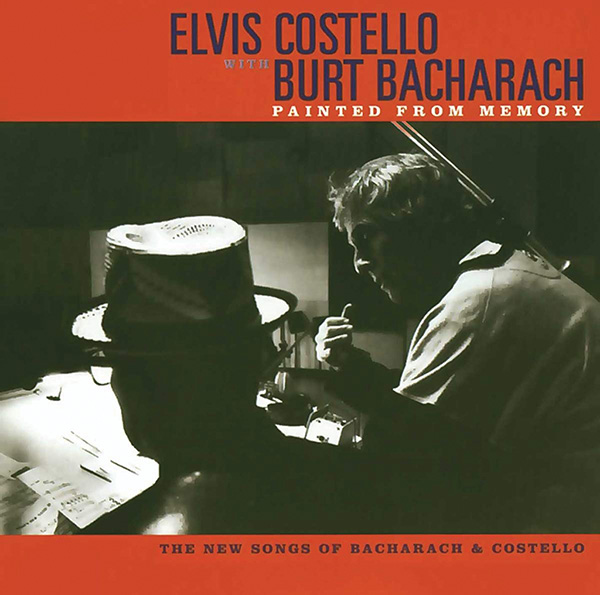
That brings us to transparency and resolution. This is where the Royal N really pulls away from its chunky older sibling. To get a measure of its ability to unravel complex arrangements, I pulled out my copy of
The Songs of Bacharach & Costello (UMe B0036683-01), a two-LP set that includes the 1998 album
Painted from Memory. It's not often I wait 25 years for an album to be released on vinyl, but I did for this one. A rabid Burt Bacharach fan, I yearned for his unlikely yet oddly moving collaboration with Elvis Costello to be pressed on hot plastic. Aside from two limited vinyl editions from MoFi, which were too dear for my wallet, it took until 2023 for these songs to be available on LP. Mastered by Bob Ludwig with a lacquer cut by Ryan K. Smith, I think
The Songs of Bacharach & Costello turned out pretty good.
Of course it's the music that made it worth waiting for. During Bacharach's classic collaboration with lyricist Hal David, the songs they wrote demanded a vocalist with a vast range and flawless technique, capable of scaling the leaps the material demanded without difficulty. More often than not, that singer was Dionne Warwick, whose instrument, intelligence, and lack of sentimentality made her a perfect interpreter of this music.
On
Painted from Memory, a set of songs as strong as any Bacharach had written, Costello contributed lyrics but also had the courage—or was it audacity—to step into Warwick's role. In trying to stretch his expressive yet brittle baritone to the nearly operatic demands of these melodies, Costello often sings at the very top of his range, and sometimes beyond it. To me, his willingness to so nakedly reveal the limitations of his voice adds a pathos to these songs that a more polished singer could not muster.
Playing back "This House Is Empty Now," the Ortofon Royal N placed Costello well in front of the ensemble and did a lovely job of mining the sonic details of Bacharach's unusually inventive arrangement. It allowed me to hear that Dave Coy was playing a fretless bass, made it easy to distinguish the maestro's piano from Dave Parks's electric guitar, and even helped me pick out the musette—a small bagpipe—which added another color to Bacharach's palette. The detail retrieval of the Royal N turned out to be not just fine but terrific, on par with a resolution champ like the Dynavector Te Kaitora Rua.
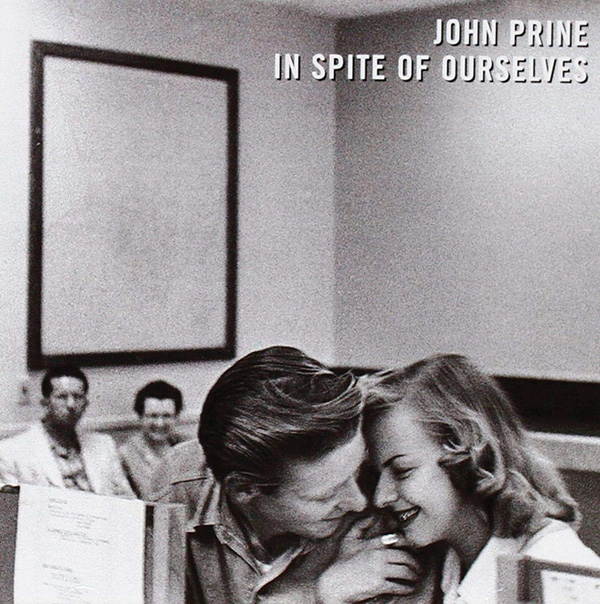
Aside from the Ortofon's sound, there's a less tangible but more important point to make about its very special way with musical communication, which I experienced as a sense of avidity and rightness. When I played
In Spite of Ourselves, John Prine's album of duets from 1999, one of the most fun entries in his discography, I kept returning to "We Must Have Been Out of Our Minds." In 1963, the song became a Top 3 country hit for George Jones and Melba Montgomery. Jones was married but had fallen in ruinous, unrequited love with the beautiful Montgomery, and their hit—about two people stuck with the wrong partners—has a chemistry that's impossible not to hear.
Prine, who takes over Jones's part, recorded his version nearly 40 years later. Montgomery was in her 60s, and her once-powerful bluegrass voice now sounded like a faded turquoise looks. In place of the yearning desire of the original, their rendition brings out a sweetness and knowing humor that work just as effectively. The Ortofon cartridge kept drawing me into the joy and mutual affection of the performance, allowing me to partake in an experience that must have been as fun to record as it is to listen to. Montgomery passed in January, and by the time the stylus began tracing the next track, the irresistible "In Spite of Ourselves" with Iris Dement, my eyes had filled with tears.
Though the Miyajima Shilabe and Ortofon Cadenza Bronze were no longer on hand for a direct comparison, I still had vivid memories of their sound. Better yet, I had my notes. The Royal N sounds just as resolving and textured as the thoroughly terrific Shilabe. Yet it strikes me as having a more seamless frequency response and being just a hair more colorful and dynamic. And while it's not quite as silent in the groove as Ortofon's own Cadenza Bronze, the Royal N handily bests that cartridge in its portrayal of ambience, detail, texture, and presence. No, the Royal N doesn't quite reach the technical excellence of the $15,000 My Sonic Lab Signature Diamond Reference, but their musical missions and personalities are so different that the comparison isn't terribly useful.
I'd like to end by writing something critical about the SPU Royal N, but the truth is that I haven't heard a stereo cartridge that I've enjoyed more, or one that's felt more like me.
With the Royal N, Ortofon has pulled off the impressive feat of preserving nearly all of the wonderful tone, chunk, and kickass dynamics of my vintage SPU and adding the refinement, resolution, quiet surfaces, and superior tracking of its best contemporary units. That they did it at an attainable price and without resorting to limited production is just gravy. As they say in Copenhagen,
du styrer!