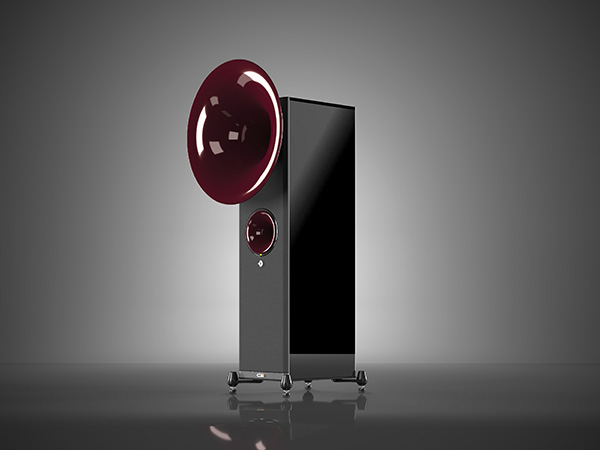
 Step two is to set the relative levels of the midrange and highs using two sturdy three-way switches, choosing among 0, +1.5dB, and –1.5dB for treble and midrange. The crossover from the midrange horns to the treble horns is at 3.5kHz, a frequency that conveniently caps the fundamental frequencies of common musical instruments. (On a standard piano, the four highest notes, including the black keys, are in the range of the tweeter; the rest are in the midrange.) I went back and forth but ultimately left the tweeter flat and set the midrange level to +1.5dB.
Next, I adjusted the subwoofer's volume to match the volume of the horns. Two buttons let you change the level, in 0.5dB increments from –20dB to +8dB; the level is displayed on a backlit LCD screen beside the buttons. It is without question the best system for doing this kind of thing that I've encountered. A setting of –5dB gave the speakers a reasonable overall balance, but at this level, the bass was prominent, casting a bright light on my room's sonic issues. I was pretty happy with this state of affairs, because I was looking forward to using the Duo's DSP system to fix the issues.
The DSP is always on, though of course it can be set to be neutral. Most DSP settings are controlled by the Control Center app, which runs not on a tablet or smartphone but on a computer. The computer connects via an Ethernet cable; connect it and up pops the app in a web browser.
Step two is to set the relative levels of the midrange and highs using two sturdy three-way switches, choosing among 0, +1.5dB, and –1.5dB for treble and midrange. The crossover from the midrange horns to the treble horns is at 3.5kHz, a frequency that conveniently caps the fundamental frequencies of common musical instruments. (On a standard piano, the four highest notes, including the black keys, are in the range of the tweeter; the rest are in the midrange.) I went back and forth but ultimately left the tweeter flat and set the midrange level to +1.5dB.
Next, I adjusted the subwoofer's volume to match the volume of the horns. Two buttons let you change the level, in 0.5dB increments from –20dB to +8dB; the level is displayed on a backlit LCD screen beside the buttons. It is without question the best system for doing this kind of thing that I've encountered. A setting of –5dB gave the speakers a reasonable overall balance, but at this level, the bass was prominent, casting a bright light on my room's sonic issues. I was pretty happy with this state of affairs, because I was looking forward to using the Duo's DSP system to fix the issues.
The DSP is always on, though of course it can be set to be neutral. Most DSP settings are controlled by the Control Center app, which runs not on a tablet or smartphone but on a computer. The computer connects via an Ethernet cable; connect it and up pops the app in a web browser.
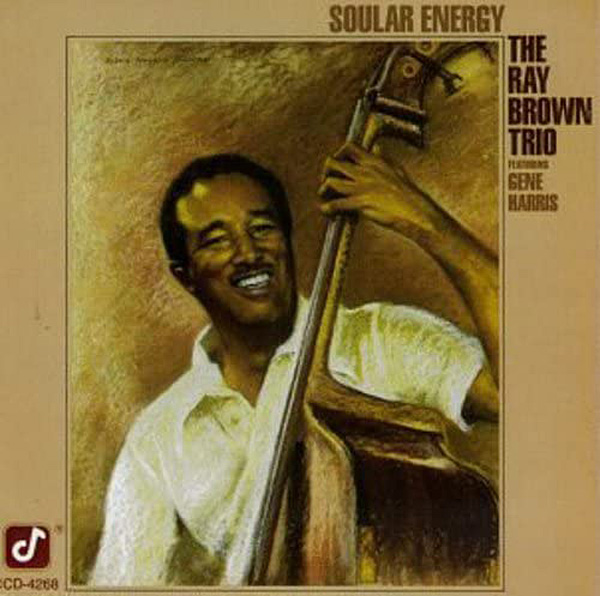 I spent many nights progressing through DSP settings before arriving at a setup that boosted the bass level and raised the low-pass frequency to create an overlap in the upper bass/lower midrange region. I used the eight-band equalizer to lower and shape the frequency response from the midbass on down. I stacked the narrow band filters to get rid of the worst room node at about 55Hz. Double basses in jazz combos—my most oft-used yardstick being Ray Brown's LP Soular Energy (Concord Jazz LELP 111 LP)—were present, even, and accounted for. To sum up: Cabling constraints—which few Avantgarde customers working with a dealer will have—led to a perfectly fine but less-than-ideal setup, which was rescued thanks to the Duo SD's flexibility. And I had fun doing it.
Listening
I spent many nights progressing through DSP settings before arriving at a setup that boosted the bass level and raised the low-pass frequency to create an overlap in the upper bass/lower midrange region. I used the eight-band equalizer to lower and shape the frequency response from the midbass on down. I stacked the narrow band filters to get rid of the worst room node at about 55Hz. Double basses in jazz combos—my most oft-used yardstick being Ray Brown's LP Soular Energy (Concord Jazz LELP 111 LP)—were present, even, and accounted for. To sum up: Cabling constraints—which few Avantgarde customers working with a dealer will have—led to a perfectly fine but less-than-ideal setup, which was rescued thanks to the Duo SD's flexibility. And I had fun doing it.
ListeningThe Duos didn't sound the way I expected them to; that is, they didn't sound particularly "horny" in all the clichéd ways, good or bad. Their dynamic performance didn't convince me I was hearing live music when I stepped out into the hallway, and they didn't have the slightest trace of that PA-system sound. Nor did they sound like a good line source, or a good planar, or a good anything else in particular. They had no particular, familiar character.
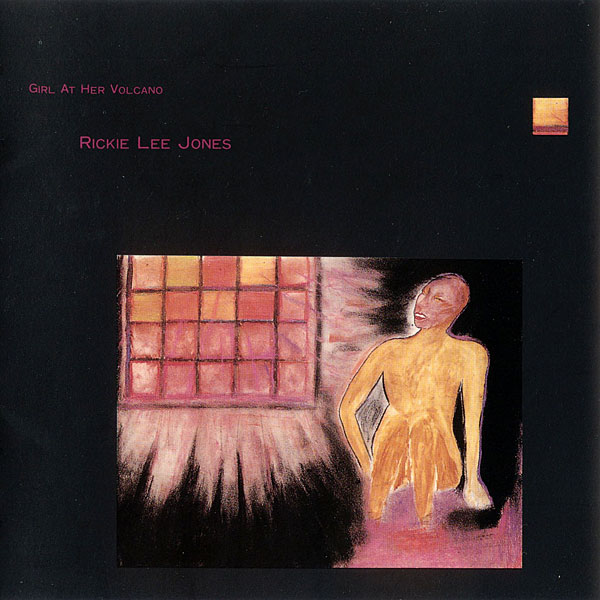 One of the most revealing tests of a system's aplomb in reproducing dynamic transients, as well as one of the coolest recordings I know, is "Under the Boardwalk" from Rickie Lee Jones's EP Girl at Her Volcano (Warner Bros. Records 1-23805 EP). How well a system goes from zero to 90dB and back to zero will make or break this cut. I've heard a lot of systems do it well, with transients beyond reproach: huge and precise, visceral even, with just the right amount of reverb. Often, though, I feel like I'm hearing a test that was aced—that the system had been designed and prepped to do exactly this: "Look what I can do!" The Duos just played the music, before, during, and after the transient. No drama. Yet Rickie's "Under the Boardwalk" had more impact and sounded more right than I could recall ever hearing it.
The ability of the Duos to present transients at the pppp end of the scale was even more impressive. I've long had a mental picture of music, as a visible entity, surrounded by air and flowing through speakers. With the Duos, this image persisted even with changes so small that they were all but inaudible. What came through most was how tangible the instruments seemed. In one instance, listening to a solo oboe of all things, I had no choice but to stop the record and sit in silence to unpack what I'd just heard. A direct emotional response. To an oboe.
One of the most revealing tests of a system's aplomb in reproducing dynamic transients, as well as one of the coolest recordings I know, is "Under the Boardwalk" from Rickie Lee Jones's EP Girl at Her Volcano (Warner Bros. Records 1-23805 EP). How well a system goes from zero to 90dB and back to zero will make or break this cut. I've heard a lot of systems do it well, with transients beyond reproach: huge and precise, visceral even, with just the right amount of reverb. Often, though, I feel like I'm hearing a test that was aced—that the system had been designed and prepped to do exactly this: "Look what I can do!" The Duos just played the music, before, during, and after the transient. No drama. Yet Rickie's "Under the Boardwalk" had more impact and sounded more right than I could recall ever hearing it.
The ability of the Duos to present transients at the pppp end of the scale was even more impressive. I've long had a mental picture of music, as a visible entity, surrounded by air and flowing through speakers. With the Duos, this image persisted even with changes so small that they were all but inaudible. What came through most was how tangible the instruments seemed. In one instance, listening to a solo oboe of all things, I had no choice but to stop the record and sit in silence to unpack what I'd just heard. A direct emotional response. To an oboe.
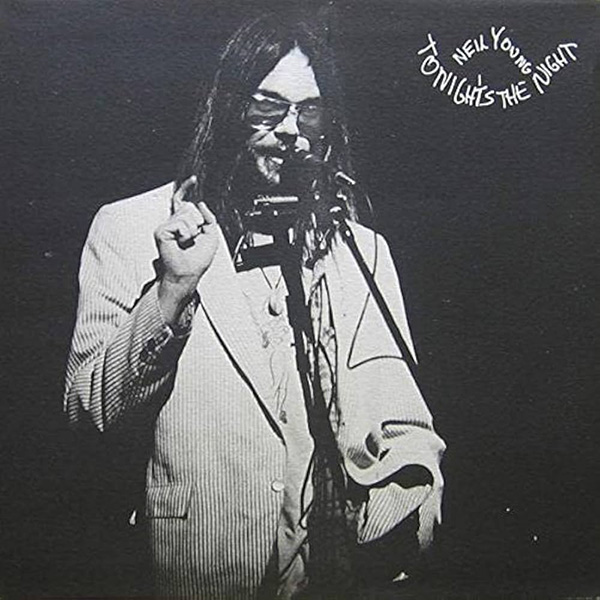 In contrast, what I'd call midlevel detail—how clearly voices can be heard at the back of the studio during a recording, for example—weren't as obvious as the subtler shadings that put faces on those people. I used the title cut on Neil Young's Tonight's the Night (Reprise REP 54 040 LP) to describe how the T+A Solitaire S 530s that I reviewed in May 2024 presented exactly this level of detail—more voices became obvious and more convincingly located than typical, but there wasn't the wealth of fine detail I'd heard from other speakers. With the Avantgardea, the opposite was true.
 Drawing conclusions
This review involved a certain amount of fighting with room acoustics, a battle that was mostly—intentionally—self-imposed, since I allowed speaker placement to be dictated by the availability of power cords and interconnects. In this contest between speakers and room, the speakers won. The Duo's DSP didn't allow me to neutralize all the things my room was doing wrong, but they did manage to fix most things, including the things that bothered me most. The result was superb. Small jazz combos, where the key elements are percussion, horns, piano, and bass, were spot-on. They were articulate, and their timbres were harmonically dense and complex. The small amount of extra bass I dialed in to achieve a pleasing balance in jazz turned out to be great with classic rock; I flipped when I heard the clarity, definition, and presence of Chris Squire's distinctive bass guitar riffs in "Roundabout," on Yessongs (Atlantic SD 3-100 LP). If those riffs weren't burned into my memory before, they most definitely are now. Defying even positive expectations—such as my expectation that the Duo SD would sound like a typical horn speaker—is usually a good thing, I've found. It means that something interesting is going on. Such was the case here. The Avantgarde Duo SD iTRON G3s are truly excellent speakers. I loved spending time with them and would be perfectly satisfied if they could have remained in my listening room long term. (Unfortunately, they departed months ago.) They did everything well and some things extraordinarily well. What shortcomings I heard are best attributed to the room and placement constraints and not to the Duos themselves.
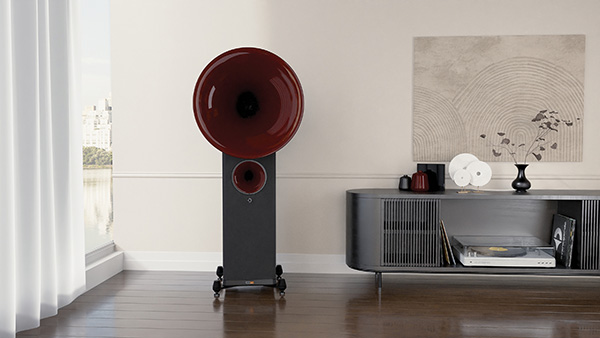 The big question posed by the Duos isn't about performance, or even about price (though the Duo SD iTRON system is hardly cheap). It's whether you're willing to commit to a unique, totally different kind of system. That's up to you. I can't tell you to take the plunge, but I can suggest unequivocally that if this review raises your curiosity even a little, you should listen to a pair if you can
Footnote 4: I adjusted the position of the listening seat by a foot or two, which reduced these nulls somewhat, but they persisted to a lesser extent at the final position.