Turntable Reviews

Sort By:  Post Date TitlePublish Date

SME 60 record player

Creating a new flagship model is never an easy task for an audio company. A good designer will have already incorporated all his or her best ideas into the prior flagship. For a follow-up, you typically get a scaled-up version of what came before, incorporating the kind of improvements a bigger budget will allow.

SME's history is well-documented. The company started out, in 1946, as an engineering company for hire. In 1959, after a few years supplying parts for the scale modeling and various other high-tech industries, company founder Alastair Robertson-Aikman wanted a better tonearm for his personal use. He leveraged the capabilities of his small engineering company to create what eventually became the legendary 3009 and 3012 tonearms. The reputation of the new arms spread quickly, and from the mid-1960s through the 1970s, SME dominated the high-end tonearm market. SME's corporate slogan was The Best Pick-Up Arm in the World, and few people at the time would have challenged that claim.

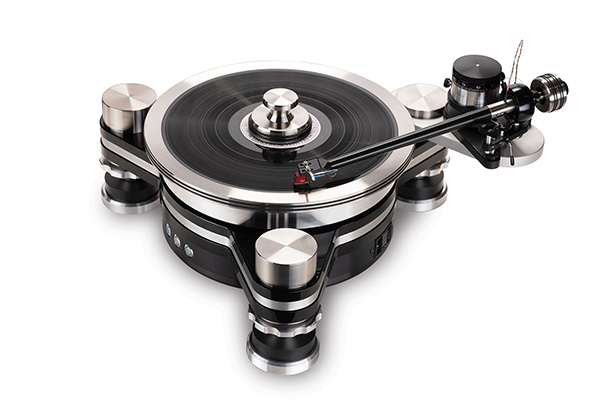
VPI Avenger Direct Turntable & 12" FatBoy tonearm

Founded in 1978, VPI Industries appears to be one of the most successful turntable manufacturers in the world—certainly in the US. The New Jersey–based company sells turntables, tonearms, cartridges, record clamps, plinths, record cleaning machines, and a phono preamp. But that's not all. The company offers VPI-branded pillows, candles, mugs, stickers, T-shirts, and a tell-all company history, 40 Years on the Record.

And talk about turntables! From the entry-level $1499 Cliffwood to the top-of-the-line $104,000 Vanquish (found under the website's "VPI Luxury" page, accompanied by the adage, "Settle for Nothing but Extravagant"), VPI is clearly and rightfully proud of its analog achievements.

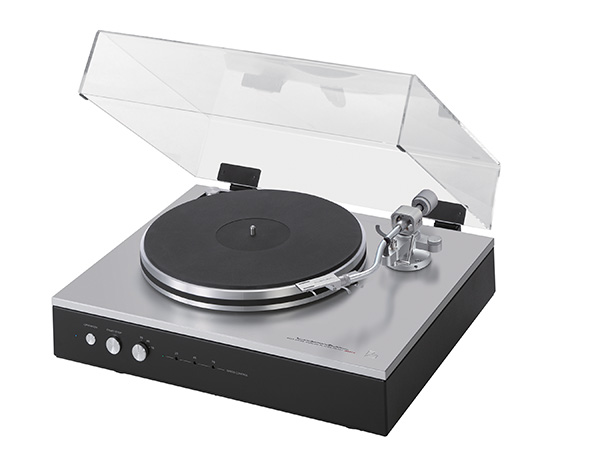
Luxman PD-151 MARK II Record Player

Luxman occupies an unusual place in the hi-fi world. While many of the brands chasing ultimate performance will battle it out in the bleeding-edge design stakes, Luxman makes what I like to call luxury equipment. Everything they produce is beautiful, not just to the ear, but also to the eye and hand. Their design aesthetic keeps one foot firmly planted in the style of classic audio equipment from decades past—for example, many of their amplifiers have tone controls and big power meters, features reminiscent of topflight gear from 40 years ago—while the other foot is up to date with the latest technology...

The PD-151 MkII record player ($5695) is an excellent example.

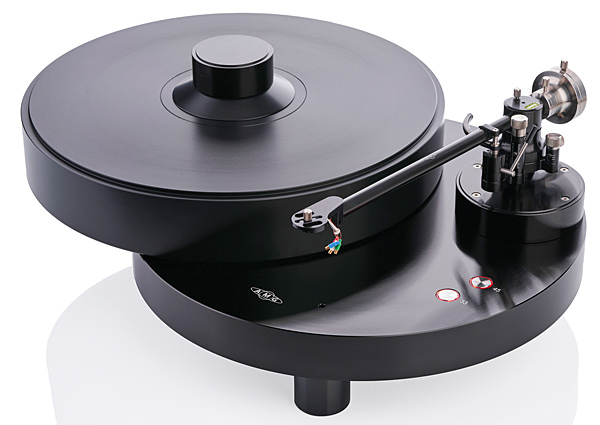
AMG Giro MK II turntable

Three decades ago, I had a boss who insisted I drive a Mercedes-Benz as a company car. Tough gig, you might be thinking, but there was solid reasoning behind this extravagance: He wanted the people representing his company to look successful, so it was three-pointed star cars for all, at a time when a Mercedes was more exclusive than it is today.

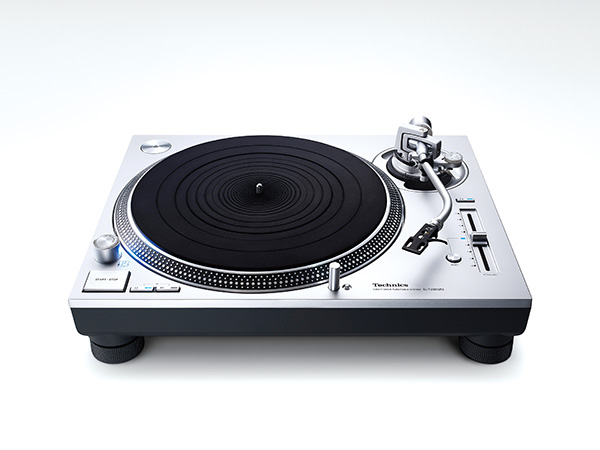
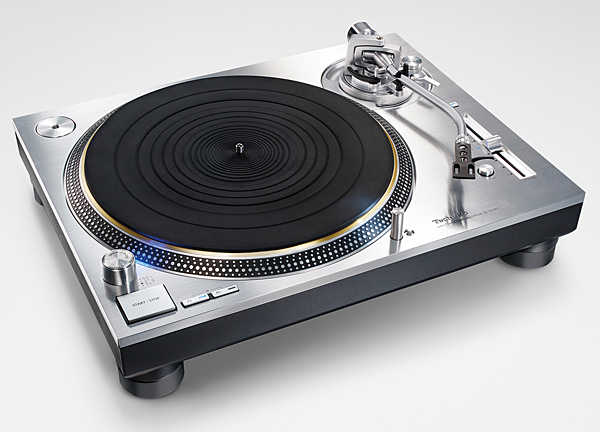
Technics SL-1200G turntable

People tend to believe that things are what they appear to be. This turned out to be the case in 2016, when Panasonic introduced the limited-edition Technics SL-1200GAE turntable. It appeared almost identical to an SL-1200—arguably the best-selling and most loved record player series of all time, discontinued in 2010 after more than 30 years—but it cost a whopping $4000. The similar model designation didn't help stem the griping that Panasonic had made a "fancy" version of their legendary DJ turntable at six times the price of the original.

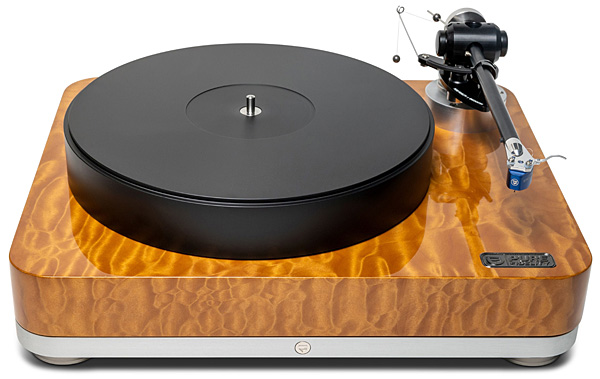
Pure Fidelity Harmony Record Player

When scouring the labyrinthine halls of big audio shows for products to review in Stereophile, I use three main markers to determine which rooms to visit: a must-hear designation from Editor Jim Austin; a company or brand whose products always light my fire; and systems fellow Stereophile correspondents have described, in a text or an in-person conversation, as worth checking out. Other times, though, I just follow my nose.

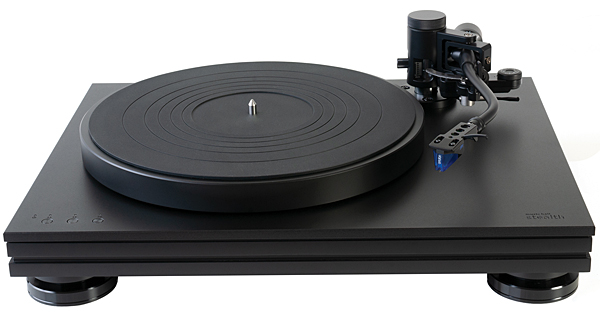
Music Hall Stealth record player

The earliest direct-drive record player I've discovered is Garrard's Model 201 from 1930. It only played 78s. In their advertising, Garrard claimed the 201 was the world's first "transcription turntable." It employed Garrard's latest in a line of what they called "prestige" motors: an AC-induction "Super Motor." Garrard described the 201's platter as "plush covered" and said it was "popular with HiFi enthusiasts and used by the BBC." The 201 was superseded by the 201A, which rotated at both 78 and 33 1/3 rpm. The venerable Garrard 301 that followed was an idler-drive design.

Clearaudio Reference Jubilee record player

There's an enduring debate among the turntable-tech intelligentsia between opposing theories of turntable design. Some designers, notably Roy Gandy of Rega, follow a less-is-more approach, building stiff, lightweight turntables that release energy rather quickly. Others, such as Franc Kuzma, whose Kuzma Ltd. manufactures my reference Kuzma Stabi R turntable and Kuzma 4Point tonearm, believe in heavy mass-loading to dampen vibrations, including transparency-miring resonances.

Pro-Ject Debut PRO record player

I enjoy few things more than setting up a turntable. Whether it's for myself or for a friend—whether it's a budget model with a layered MDF plinth and nonadjustable tonearm, or a megabuck, state-of-the-art behemoth—I relish the ritual.

Back in the day, I used to huff and puff, scream and shake, thanks to the heebie-jeebies I'd get when attempting to raise a turntable to ultimate performance. But with experience comes wisdom. My buddy and Sound & Vision contributor Michael Trei makes turntable setup look like child's play. I've learned by watching Mike that, when a turntable setup tries your patience, the thing to do is keep calm and carry on.

Advertisement
Advertisement
Advertisement