Stand Loudspeaker Reviews

Sort By:  Post Date TitlePublish Date

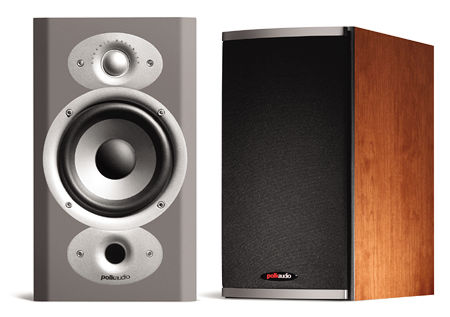
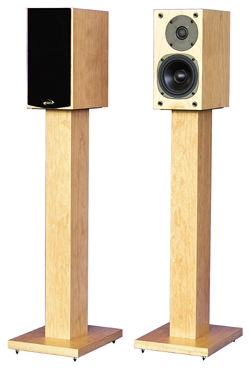
Polk RTi4 loudspeaker

In the September 2001 Stereophile (Vol.24 No.9), I wrote very favorably about Polk's RT25ihttp://www.stereophile.com/loudspeakerreviews/417">RT25i; loudspeaker ($319.90/pair). That bookshelf model impressed me with its open, neutral midrange; its pristine, extended high-frequency response; and its low-level dynamics. On the minus side, the RT25i was fairly limited in low-bass extension and high-level dynamic slam. At the time, I was seeking a new speaker for my home computer music-composition system, and I bought the review samples—the only time I've done that since I began to write for Stereophile some 20 speaker reviews ago.

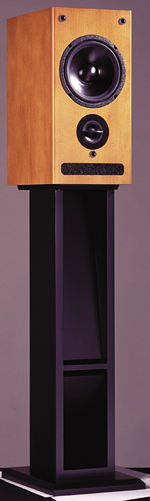
Audes Bravo loudspeaker

Attending a Consumer Electronics Show is enjoyable, productive, nerve-racking, and exhausting. Too many components, so little time. One has to prioritize to ensure sufficient time to cover everything intended. One needs to avoid certain rooms, such as those with new, unremarkable designs from companies whose designers would love to talk—for half an hour or more—with each audio reviewer who makes the mistake of sauntering in. There are also many rooms in that middle region—rooms on neither the Must Hit nor the Must Avoid list.

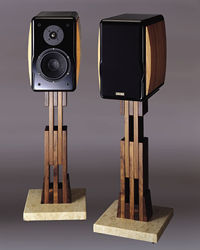
Jean-Marie Reynaud Twin Mk.III loudspeaker

I love dealing with the colorful characters of high-end audio. One such individual is Victor (Veekh-tor) Goldstein, who has distributed high-quality European audio gear from his New York City headquarters, Fanfare International, for 23 years. A nuclear engineer by training, Goldstein transitioned into audio when the Three Mile Island incident reduced the demand for his services. (I guess he felt his skills were transferable to single-ended triode amplifiers.) Most of all, Goldstein is a passionate lover of music with a vinyl collection that numbers well into five figures, and a fixture at many of the significant classical performances at New York's major concert halls.

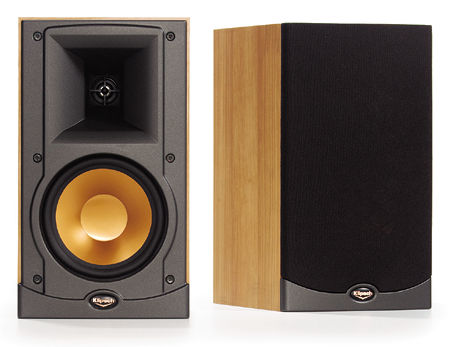
Usher Audio Technology Compass X-719 loudspeaker

I love attending Stereophile's Home Entertainment shows. I get to check out the latest gear, hobnob with manufacturers and writer colleagues, hear some live music, and play a little jazz with John Atkinson, Zan Stewart, and Immedia's Allen Perkins. Unfortunately, work commitments at my day job meant I couldn't attend HE2003, in San Francisco, so I directed my team of Stereophile scouts to find me some hot new budget speakers. Robert Deutsch was quickest to respond, the week following the show: "Bob, you've got to check out these new speakers from Usher Audio in Taiwan! They have a number of models within your budget." One phone call later, and a $1000/pair of Compass X-719 bookshelf speakers was on its way to me.

Infinity Primus 150 loudspeaker

It was 20 years ago that I began audio reviewing as a second career. It was also 20 years ago that I made my first very expensive audio purchase: a pair of Infinity RS-1b speakers. The RS-1b was a landmark speaker in its day, and very costly for the time at $5500/pair. (I think my dentist has just spent more than that on a TV.) In retrospect, the RS-1b was an extraordinary value. With four large towers, more than 30 drivers, and a servo network and a passive crossover, the Infinity RS-1b resolved a significant amount of detail, was capable of large dynamic swings, had pinpoint image specificity on a wide, deep soundstage, and was capable of reproducing a convincing bottom octave in the right room when paired with the right associated equipment. Its main weaknesses were a relative lack of coherence due to its use of three different types of drivers to cover the various frequency ranges, and both the midrange/tweeter towers and woofer columns were picky about amplifier matching.

B&W 705 loudspeaker

When I was first getting interested in "high fidelity," as we called it back in the 1960s, there was an audio dealer in Worthing, England called Bowers & Wilkins. Their advertisement in the February 1966 issue of Hi-Fi News features their annual sale, with a Quad Electrostatic Speaker priced at £30 instead of the manufacturer's recommended £37, and offering other bargains, from ReVox, Quad, Rogers, Leak, and Armstrong. Conspicuous by their absence from the ad are Bowers & Wilkins speakers. The first reference to those I could find was in the August 1968 issue of what was then called The Gramophone, when race-car driver turned audio critic John Gilbert raved about the P2 Monitor. Designed by avid concertgoer John Bowers with Peter Hayward and featuring an EMI bass unit and a Celestion tweeter, the two-way P2 was priced at more than twice the Quad speaker, at £159/pair.
Advertisement
Advertisement
Advertisement