Stand Loudspeaker Reviews

Sort By:  Post Date TitlePublish Date

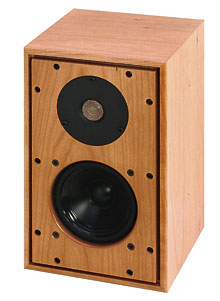
Harbeth HL-P3 loudspeaker

Back in the early 1970s, the BBC needed a physically unobtrusive, nearfield monitor loudspeaker for use in outside-broadcast trucks. Accordingly, they instructed their design department, which at that time featured such luminaries as Dudley Harwood (the "father" of the polypropylene cone, who went on to found Harbeth) and the late Spencer Hughes (the "father" of the Bextrene cone, who went on to found Spendor), to produce such a model. Thus, not only was what was then probably the finest collection of British speaker-design talent involved in its development, there were no commercial constraints placed on the design. The only limitations were intended to be those arising from the necessarily small enclosure and the absence of the need for a wide dynamic range under close monitoring conditions.

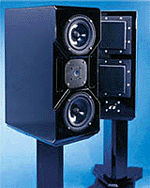
Wilson Audio Specialties CUB loudspeaker

Scratch an audiophile and, chances are, you'll find a closet Wilson Audio fan. The Wilson">http://www.stereophile.com/loudspeakerreviews/477">Wilson WATT/Puppy would probably make almost anyone's list of the most significant high-end loudspeaker designs. David Wilson first built his reputation with the custom-built WAMM loudspeaker—a monumental piece invariably included with products like the Infinity IRS, Genesis I, and Apogee Grand when the world's most awesome loudspeakers are discussed. But it was the WATT, followed by the WATT/Puppy—the latter now several">http://www.stereophile.com/loudspeakerreviews/920">several generations improved over the original design—that really put the company on the high-end audio map.

Paradigm Reference Signature S2 loudspeaker

Canadian company Paradigm has made a name for itself over the past 20 years with affordably priced, high-performance loudspeakers. Its Reference Series designs have garnered much praise from this magazine—I was well impressed by the floorstanding Series 3 Reference Studio/100 ($2300/pair) last">http://www.stereophile.com/loudspeakerreviews/105paradigm">last January, my review following hard on the heels of Kalman Rubinson's enthusiastic recommendation of the smaller Studio/60 v.3 ($1600/pair) in December">http://www.stereophile.com/loudspeakerreviews/1204paradigm">December 2004, while the bookshelf Reference Studio/20 ($800/pair) has been a resident of Stereophile's "Recommended Components" listing ever since Bob Reina's original review in February">http://www.stereophile.com/loudspeakerreviews/628">February 1998.

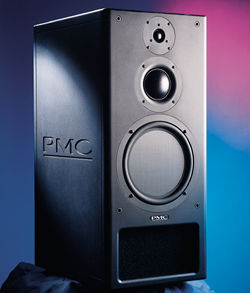
PMC IB-1S loudspeaker

I have a soft spot in my heart (some say my head) for transmission-line designs. I remember being entranced by the authoritative but effortless bass of John Wright's IMF and TDL Monitors, and I have been inspired to experiment by building my own lines in various sizes. Then, as demonstrated by Bryston's Jim Tanner at the 1997 WCES and at HI-FI '97, PMC's IB-1S loudspeakers threw an enormously deep soundstage. (I have a soft spot for that as well.)

Dynaudio Special Twenty-Five loudspeaker

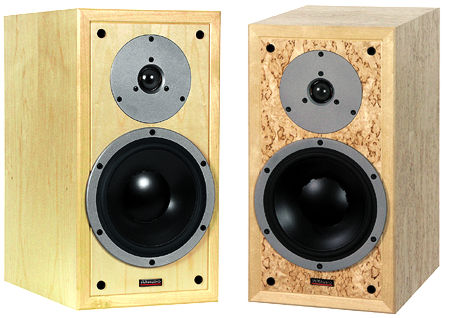
Not every interesting audio component gets a full review in Stereophile. Many more products are covered in Sam Tellig's, Art">http://www.stereophile.com/artdudleylistening">Art Dudley's, Michael Fremer's, Kal">http://www.stereophile.com/musicintheround">Kal Rubinson's, and John">http://www.stereophile.com/thefifthelement">John Marks' regular columns than I have the space to publish measurements for. However, I do ask for samples of products that I feel deserve to be measured, particularly when our original coverage raised more questions than it answered.

Epos M5 loudspeaker

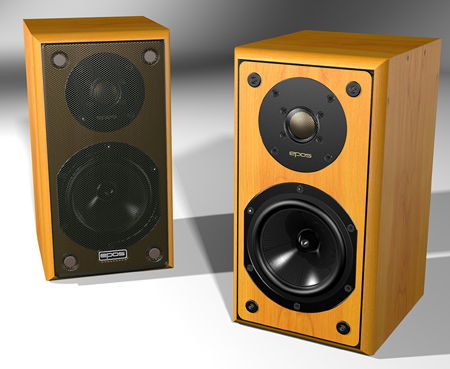
Following my favorable experience with Epos Ltd.'s entry-level loudspeaker, the ELS-3 ($329/pair; see my January">http://www.stereophile.com/loudspeakerreviews/104epos">January 2004 review), Roy Hall, of importer Music Hall, called me with some excitement about the new Epos M5 ($650/pair). In a crowded room at the Home Entertainment 2004 show in New York, I did a quick comparison of the M5 and ELS-3 under suboptimal conditions of multiple speakers in the room and Roy answering consumers' questions while pouring scotch for his dealers. Still, I was able to hear enough from the M5 to intrigue me, and with high expectations, I asked for a pair for review.

Evett & Shaw Elan loudspeaker

Like many audiophiles, I am finding myself listening to more and more music sitting in front of my computer. My experience with the little plastic-box horrors sold as "computer speakers" has not been positive, however, with even models from Altec Lansing and Cambridge SoundWorks scoring an "F." For a long time, therefore, I used a pair of RadioShack Optimus LX5s, stuck at the far ends of my desk because their unshielded drivers messed with the colors on my monitor. I tried and liked a pair of the A/V version of PSB's best-selling $249/pair Alphahttp://www.stereophile.com/loudspeakerreviews/241">Alpha;. Then Jonathan Scull recommended I try a pair of the diminutive Elans from Utah-based Evett & Shaw, with which he had been impressed at the 1999 Consumer Electronics Show.

Acoustic Research AR 303 loudspeaker

It's a common audiophile failing to remember the past as being much better than it actually was. (Though, of course, some things were better.) I remember the first time I heard a pair of Acoustic Research LST loudspeakers, in 1974 or thereabouts. Compared with the Wharfedales I used in my own system and the various Goodmans, Celestions, and home-brews I heard at friends' homes, the sound of classical orchestral recordings on the ARs was about as close to the real thing as I could imagine. And the AR ads reinforced my experience, telling me that musicians such as Herbert von Karajan also used LSTs. I never heard those speakers again, but occasionally I wonder how they would hold up today (footnote 1).

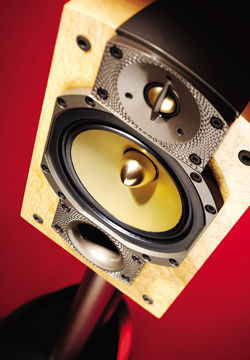
Amphion Helium2 loudspeaker

My normal practice in seeking out contenders for Affordable Speaker Nirvana is to pursue speakers I stumble across at our Home Entertainment shows, and to keep tabs on new designs from manufacturers whose wares have impressed me in the past. This time, however, editor John Atkinson called me out of the blue: "How would you like to review the Amphion Helium2 loudspeaker? It's the entry-level speaker in a Scandinavian speaker line distributed by Stirling Trayle of Quartet Marketing."

PSB Image B25 loudspeaker

Paul">http://www.stereophile.com/interviews/231">Paul Barton, founder of PSB Speakers International, is an icon of the North American speaker industry. A talented designer who has for many years produced innovative and cost-effective designs at a range of prices, Barton does not let time stand still, constantly updating and revising his designs. But what makes him unique, in my view, is that, unlike the designers at most North American speaker companies, whose successful affordable designs are trickled down from their more expensive models, Barton, like the British designers, seems to get most of his excitement from his budget lines. His original PSB">http://www.stereophile.com/loudspeakerreviews/241">PSB Alpha was, in its day, the most significant entry-level speaker made in North America since the original Advents of the 1970s.

Advertisement
Advertisement
Advertisement