Interviews

Sort By:  Post Date TitlePublish Date

Stereophile Editor John Atkinson at ListenUp!

In May 2009, JA gave dems comparing hi-rez recordings against CD and MP3 versions at the three ListenUp! stores in Colorado. This was part of the Music Matters program, in which audio retailers invite manufacturers and the occasional member of the audio press to demonstrate just how great music can sound on a high-end audio system. Before the Denver event, JA sat down with Adrienne Alterman to share his views.

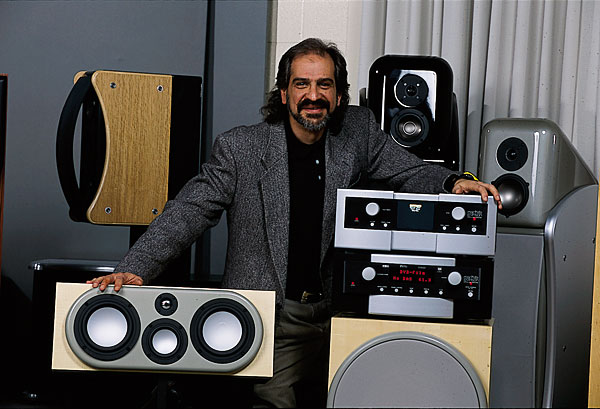
Arnie Nudell: From Here to Infinity

Imagine a speaker firm with an introductory product that pushes the outside of the performance envelope while tearing the pricing envelope to shreds. A reviewer in an audio journal that tilts toward the high end deems this speaker "appallingly expensive," notes he would have bought the test sample if he'd had the money, and confesses that being without it makes him feel "rather as though a member of the family has passed away." Now envision a speaker company at the peak of the industry sales curve, one so successful that a mainstream hi-fi magazine ranks it No.1 in market share for two separate years. Very different companies, right?

Loudon Wainwright III: a Biography in Song

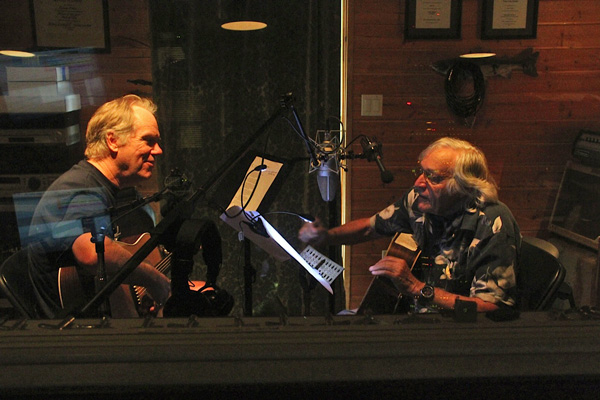
Photo: Aiyana Elliott

Even when Loudon Wainwright III (left in photo with Ramblin' Jack Elliot) was a young man he was writing autobiographical songs, and his old themes of family, sex, and death resonate more deeply on his new record, Older Than My Old Man Now. He usually performs solo, armed with just an acoustic guitar or a banjo, but most of his recordings present more heavily produced versions of LWIII's music. When I chatted with LWIII in late April I wanted to explore that dichotomy and how those transformations take place.

Ed Meitner: Audio Maverick

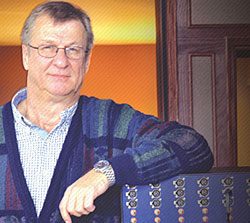
Ed Meitner is one of those rare individuals who charts his own course in audio product design. From his platterless turntable of the mid-1980s to his new Intelligent Digital Audio Translator (IDAT, reviewed elsewhere in this issue), Ed Meitner's products have been distinguished by original thinking and innovative engineering. Although not all his designs have been commercially successful, in each he has attempted to advance the state of the art by rethinking fundamental principles.

Ed is also pursuing an ambitious project that would radically change the way recordings are made. It began when he recorded an electric guitar through a 10" guitar-amp loudspeaker and was dismayed that it was impossible to even come close to capturing and realistically reproducing this apparently simple sound through another 10" speaker. This experience launched his investigation into why reproduced sound is never mistaken for live music, a quest that may result in a radically new recording technique.

Listening #112

In 1862, skepticism among the educated was exemplified by the medical establishment, which ridiculed Joseph Lister's notion of "animals in the air." By contrast, the professional skeptic of 2012—yes, it's now possible to make a comfortable living in the field—finds himself inconvenienced by 150 years of discovery, and makes do with ridiculing Lister for his Quaker faith. I guess that passes for progress in some circles.

What's His Naim? Julian Vereker

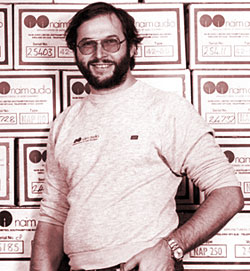
Editor's Introduction: One of the big industry stories of 1985 was the split, both personal and commercial, between the British Linn and Naim companies. Led by Ivor Tiefenbrun and Julian Vereker (footnote 1) respectively, both companies had started up in the early 1970s. Both men held similar views, both about the fat-cat complacency of British designers (which had led to a grievous sound-quality slump in the mid '70s), and about the system rethinking necessary for what some writers, unaware of the rigors of thought required by followers of that spiritual descendant of Fowler, William Safire, would term a "quantum leap" forward in sound reproduction.

Learning Lennon: Guitar Master Bill Frisell

For the musically prolific, releasing too many records too close together can be problematic or worse. Just because you can make a record every week in your home studio doesn't mean you should. The impulse to commit every golden thought and performance to tape without self-editing or even pausing to reflect screams narcissism run amok. Asking listeners—even dedicated fans—to then buy and spend time listening to half-baked nonsense that might have become something, given more time and care, is a sure career destroyer. There's truth in the old saw about building demand, avoiding saturation, and creating a hunger among the listening public. Most critical of all, despite downloads, piracy, and Lady Gaga's pointy hats and eggshell entrances, the old Hollywoodism still applies: while spontaneity may sound like a radical idea, you're only as good as your last album.

William Zane Johnson 1926–2011

We were saddened to hear of the passing, on December 10,of Audio Research founder William "Bill" Zane Johnson. Bill, who founded Audio Research in 1970 and became its Chairman Emeritus in 2008, is survived by his wife Nancy (left in photo) and family. We are preparing a tribute to Bill, to be published in the March 2012 issue of Stereophile, but meanwhile, we are reprinting here an interview Paul Messenger and I conducted with Bill that was originally published in the June 1983 issue of Hi-Fi News. (My thanks to HFN editor Paul Miller for permission. Stereophile's 1994 interview with Bill can be found here.)—John Atkinson

George Avakian: That Rhythm Man!

"So where did it all go wrong, George? When did the major-label record business begin slipping away?"

Before he can answer, I recall something George Avakian once told me over the phone. "Goddard Lieberson [former president of Columbia Records] said, 'I'm tired of sitting in A&R meetings with record guys. Get me some lawyers and accountants who don't want to argue about music.'"

"I don't remember saying that, but that's very interesting," Avakian says with a mischievous smile of recognition.

Advertisement
Advertisement
Advertisement