Floor Loudspeaker Reviews

Sort By:  Post Date TitlePublish Date

KEF Reference Series 103/4 loudspeaker
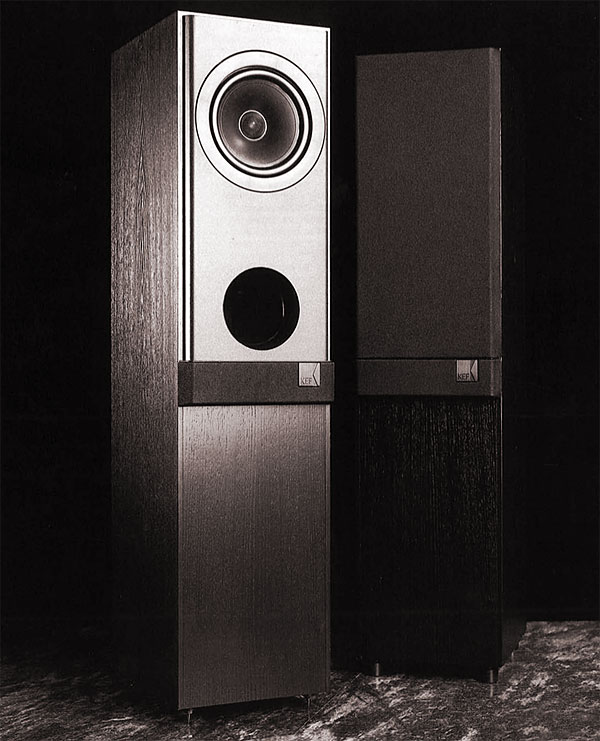
By now most readers will be familiar with the relatively new tuned-cavity method of low-frequency loading. Such designs have popped up all over the place of late, especially in those little satellite/woofer systems, but KEF can rightly lay claim to generating the design's theoretical basis, as JA described in his review of the KEF R107/2 loudspeaker in Vol.14 No.5 (May 1991). Essentially, the technique consists of loading the rear of a woofer in a conventional fashion—usually a sealed box—but also loading the front of the driver into another enclosure, ducted to the outside. Basically, the design acts as a bandpass filter with its response centered on the port-tuning frequency. The rolloff is smooth and rapid on either side of this frequency, providing a natural low-pass characteristic but thereby virtually mandating a three-way system. If properly designed, this configuration offers a number of theoretical advantages. The radiating element is actually the air in the port, which is low in mass. Low distortion is possible, as is relatively high sensitivity.
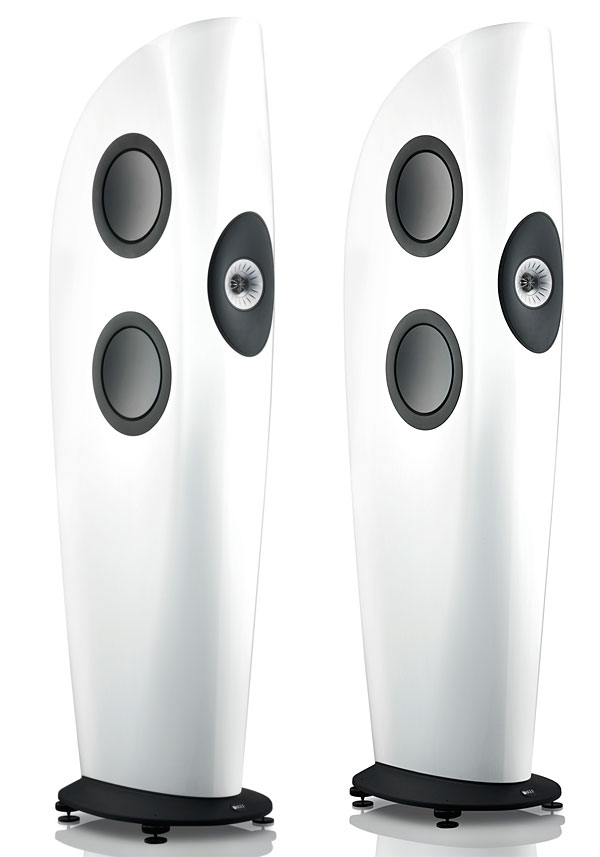
KEF Blade Two loudspeaker

The story's been often told: 30 years ago, British speaker manufacturer KEF was asked to design a small, spherical loudspeaker that could be used in a European project to research room acoustics. The speaker had to have wide, even dispersion, so KEF's solution was to mount the tweeter coaxially, on what would have been the woofer's dustcap. That "point source" drive-unit, called the Uni-Q, began appearing in KEF's commercial speaker models in 1989, starting with the Reference 105/3—but it wasn't until the appearance of KEF's 50th-anniversary loudspeaker, the LS50, which I reviewed in December 2012, that I felt that the Uni-Q drive-unit had fully fulfilled its promise, at least in a speaker I had auditioned in my own room.

Tekton Design Enzo XL loudspeaker

The CD era was well underway. Rudy Giuliani was about to sweep the crack hoes and squeegee humans off New York's garbage-filled streets. Disney was conquering Times Square. It seemed the perfect time for artists and audio weirdos like myself to go underground. Seeking economic sustainability, I hunkered down in my Seaport bunker and started a little business called Eddie Electric. I found a 23-year-old Japanese business partner named Ryochi who was dealing in big-E Levi's, bubble-back Rolexes, and antique Abarth cars. He was my Seaport, New York–Akihabara, Tokyo connection.

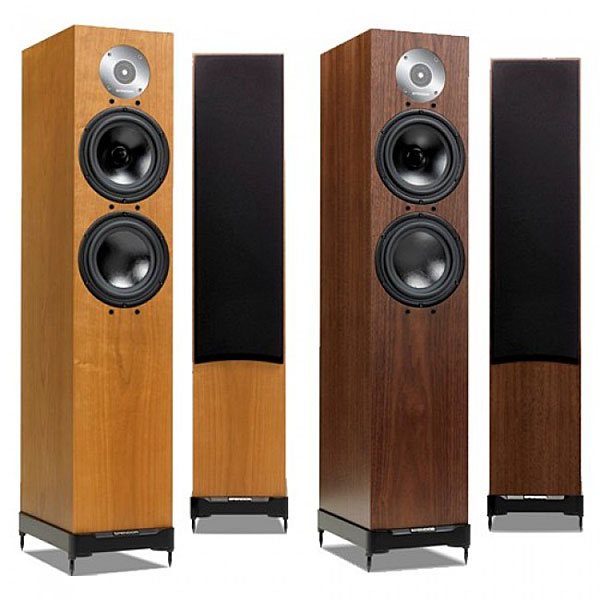
DALI Rubicon 8 loudspeaker

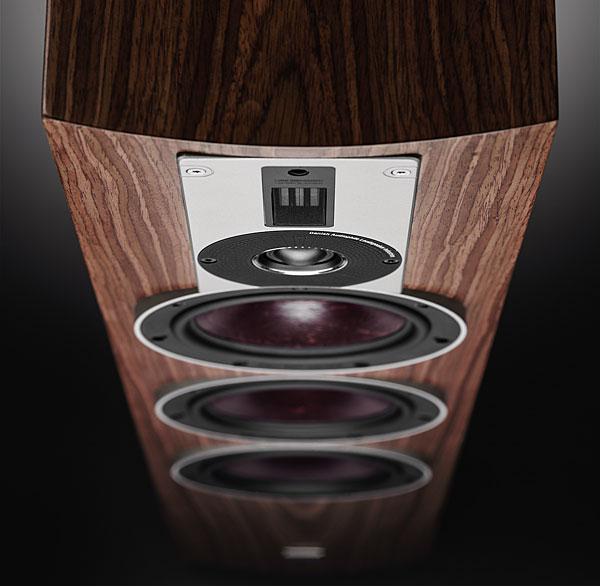
Looking back at our September 2014 issue, I think my review of the Triangle Signature Delta loudspeaker marked something of a watershed in the evolution of my taste in loudspeaker sound quality. For decades I have been a devotee of what might be called "British" sound: low coloration and, overall, a rather polite presentation, coupled with low sensitivity. The Triangle speaker opened my ears to what could be achieved with a very different approach: still-low coloration but high sensitivity, impressive clarity, and a hefty dose of what the late J. Gordon Holt called "jump factor," in which the leading edges of transients are neither smeared nor tamed. So when, last September, on a visit to Dallas and The Sound Organisation, the US distributor of Danish Audiophile Loudspeaker Industries (DALI), I encountered DALI's Rubicon 8 speaker (footnote 1), which had benefited from a low-loss design philosophy similar to the Triangle's, I asked for a pair for review.

GoldenEar Technology Triton One loudspeaker

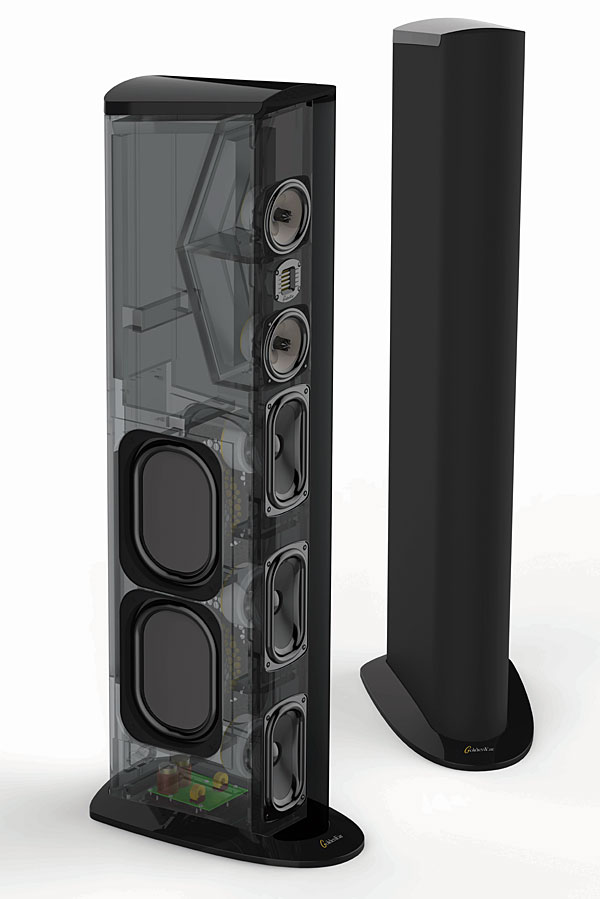
I reviewed GoldenEar Technology's first speaker, the Triton Two ($2999.98; all prices per pair), in February 2012. It was and is an outstandingly good speaker, but I thought then that if GoldenEar would apply the same expertise to the design of a speaker with fewer cost constraints, the results could be better still. Sandy Gross, president and CEO of GoldenEar, must have been thinking along similar lines when he named the speaker Triton Two, leaving One for a more ambitious future product.

Bryston Middle T loudspeaker

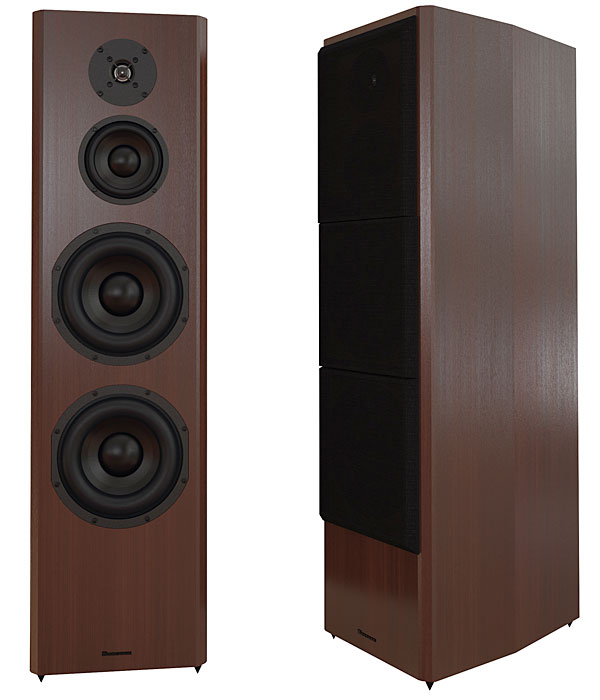
Readers of Stereophile need no introduction to Bryston, a venerable Canadian electronics manufacturer known for the quality and reliability of its amplifiers and preamplifiers, and for its unique 20-year warranty. In the past few years, Bryston has ventured into digital audio with notable success, producing D/A converters, multichannel preamplifier-processors, and music-file players. While an evolution from analog into digital audio would seem logical, their most recent expansion, into loudspeakers, is more surprising. Apparently, James Tanner, Bryston's vice president, designed a speaker for his own use, and it turned out well enough that the company decided to put it into production.

Monitor Audio Silver 8 loudspeaker

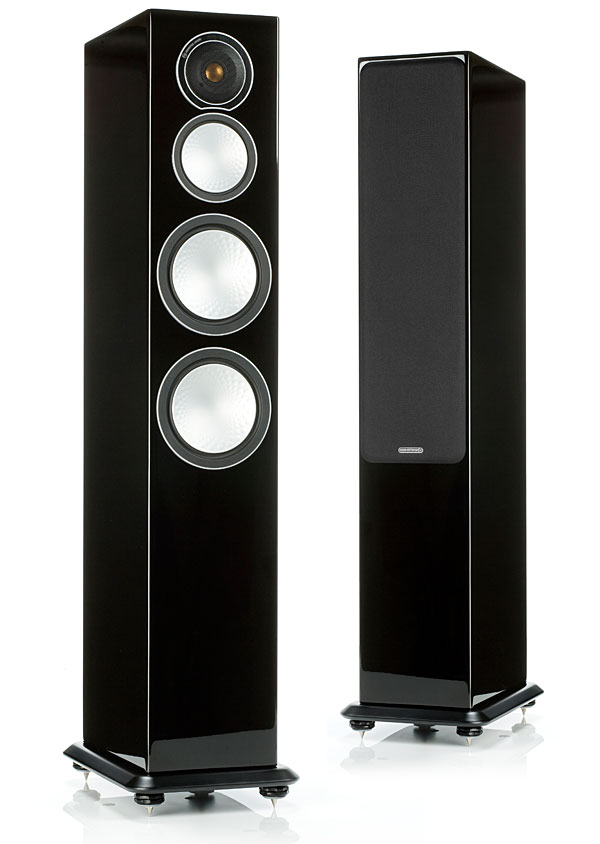
I remember reading about Monitor Audio speakers as I pored over British audio mags in the 1970s, before the economy was globalized. They were among the many worthy UK brands whose cachet was amplified by their unavailability in the US. This venerable brand has survived and flourished, while many others from the 1970s have disappeared, or become mere labels under the aegis of multinational corporations. The reasons for this success seem to be that Monitor has evolved their metal-cone driver technology, kept the focus on their core market, and continued to provide high-quality construction and finishes. So I was not surprised to read, at the back of the Silver 8's multi-language owner's manual, that the speaker was "Designed and Engineered in the United Kingdom, made in China."

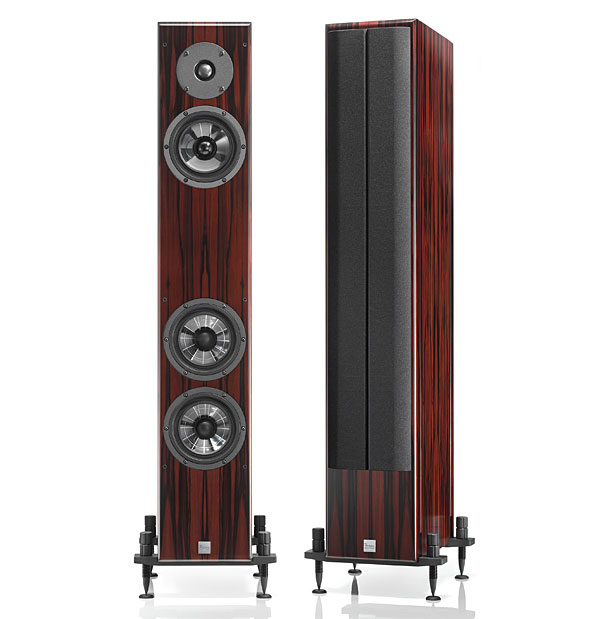
Vienna Acoustics Beethoven Baby Grand Symphony Edition loudspeaker

I went to Vienna. It was and is a beautiful city, with much of its late 19th- and early 20th-century character still intact. And while there will always be other claimants to the honor, it's arguably still the classical-music center of the planet. I managed to score standing room for a performance of Puccini's Turandot at the Vienna State Opera (as I recall, standing room at the time was the equivalent of about $1 US). Act 1 was so rough that it evoked catcalls from the unforgiving Viennese audience, but after that, things settled in nicely.

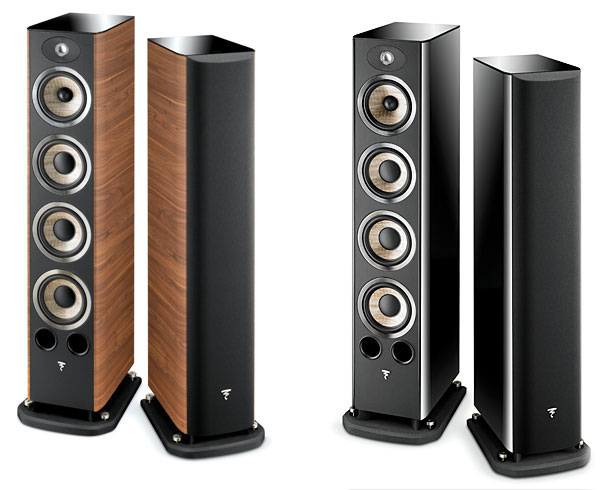
Focal Aria 936 loudspeaker

Founded in 1979 by Jacques Mahul, Focal—formerly known as JMlab and as Focal-JMlab—is one of audio's success stories. Beginning with a single speaker model produced in a small workshop in Saint Etienne, France, the company is still headquartered there, but has expanded to employ over 250 workers, making products exported to over 160 countries. All Focal products are engineered in France; only a few lower-priced multimedia models and headphones are assembled in the Far East.
Advertisement
Advertisement
Advertisement