Cable Reviews

Sort By:  Post Date TitlePublish Date

Alpha-Core Micro-Purl & TQ2 interconnect, Python MI2 speaker cable

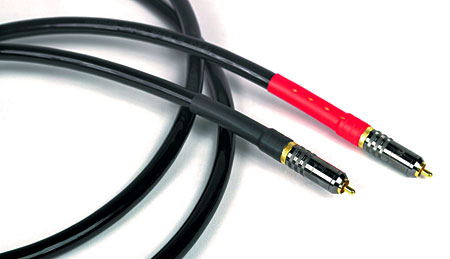
Everyone loves a bargain. Everyone loves finding an undiscovered gem. But for audiophiles on a budget, finding good, reasonably priced cables isn't a luxury but a necessity. In a $1000 or $2500 system, there simply isn't money for $500 interconnects or $1000 speaker cables. Even a $5000 system—which most of my well-educated, music-loving, affluent friends view as pretty extravagant, by the way—can't accommodate premium cables like the Nirvanahttp://www.stereophile.com/cables/800nirvana">Nirvana;, Synergistic">http://www.stereophile.com/cables/198synergistic">Synergistic Research, or Nordosthttp://www.stereophile.com/cables/1101nordost">Nordost; models that we reviewers rave about as "critical to getting the most out of your system."

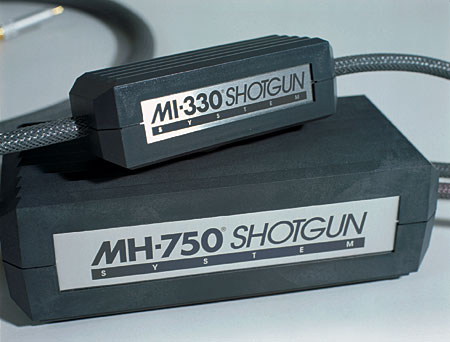
MIT MI-330 Proline Shotgun interconnects & MH-750 Shotgun speaker cables

In the last year I've written about several components of a truly engaging system: the VPI TNT Mk.IV turntable and JMW Memorial 12" tonearm (February '99), Grado Reference cartridge; the Wadia">http://www.stereophile.com/cdplayers/156">Wadia 830 CD player (October 1999); and Thiel's">http://www.stereophile.com/floorloudspeakers/216">Thiel's CS7.2 loudspeakers (February 2000). I've recounted the evolution of my listening-room setup as well, and described its optimization using ASC">http://www.stereophile.com/roomtreatments/215">ASC Tube Traps and Art Noxon's MATT test in the February issue. The final piece of the puzzle, and the one I'll tackle here, was the cable package from MIT: the MI-330 Shotgun Proline interconnects and the MH-750 shotgun speaker cables.

Nirvana S-X Ltd. interconnect

Recently, I caught myself smiling at a tiny ad for Nirvana cables that proclaimed them to be "the quiet cable." My smile wasn't because the claim was outlandish, which it wasn't, but because it was so typical of Nirvana Audio Products—small, understated, and all too easy to miss. The ad could just have easily and just as accurately have read "Nirvana...the quiet company."

HeadRoom/Cardas Fat Pipe headphone cables

When Audio Advisor's Wayne Schuurman contacted me about reviewing the Vincent">http://www.stereophile.com/headphones/1108vincent">Vincent Audio KHV-1pre headphone amplifier, I felt confident that I had everything I needed to handle the task, owning, as I do, both the AKG">http://www.stereophile.com/headphones/806akg">AKG K701 and Sennheiser">http://www.stereophile.com/thefifthelement/605fifth/index1.html">Sennhe… HD-650 headphones, which have long been my references. That oughta get 'er done, I thought.

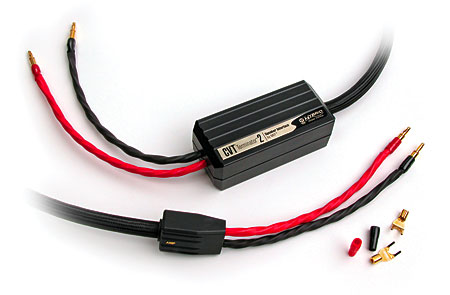
MIT CVT Terminator 2 interconnect & speaker cable

These are the first interconnects and speaker cables I have reviewed for Stereophile. Each of us has his little niche, and editor John Atkinson likes us to play in the sandboxes we most enjoy. For me, that has usually meant inexpensive speakers and expensive tube electronics. But there's another reason I've tended to shy away from cables.

Listening #63

I'm old enough to remember my family's first table radio that was made out of plastic. It was cream-colored, and it sat on the rearmost edge of our kitchen table: a less-than-timeless design in its own right, destined to be discarded at the end of one era and treasured again at the dawn of another, for more or less the same reason. But in 1958, a cream-colored plastic radio looked fresh, clean, and right, and its cheap wooden predecessor seemed dowdy and sad by comparison. That would all change in later years, of course. Then it would all change again.

Stereovox SEI-600II & LSP-600 interconnect & speaker cable

Stereophile editor John Atkinson said one evening in 1995, "What I find fascinating is that, in an industry as mature as audio cables, a new company can appear out of the blue and upset everything." He was gently poking fun at my admission that I found cable design fascinating, in particular the practice of combining different conductor materials.

Nordost Heimdall interconnect & speaker cable

The good news: Domestic audio has survived its first half century and continues to live above ground. The bad news: At an age when most hobbies can enjoy the luxury of splintering into smaller factions that hate each other with impunity, ours isn't big enough. There are too few audiophiles on Earth to indulge that kind of specialization, let alone support the very different magazines that would ensue—so we'll never get to enjoy such promising titles as Liberal Tube Lover (not that I didn't try), The Elderly Skeptic, or, of particular interest, Cable Hating for People Who are Barely Audiophiles in the First Place.

Advertisement
Advertisement
Advertisement