Budget Component Reviews

Sort By:  Post Date TitlePublish Date

Rega P3-24, RB301, & Elys 2 turntable, tonearm, & phono cartridge

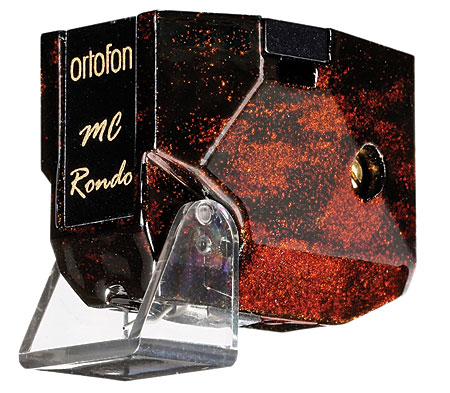
It's now been eight years since a Rega P3 turntable passed through my listening room. While the new P3-24 superficially resembles the P3 (and virtually every other Rega 'table), the company has made some significant changes, including upgrading to the high-quality, low-voltage (24V), electronically adjusted motor used in the more expensive P5, P7, and P9. As in those models, an electronic circuit trims the phase angle of the P3-24's motor coils, thus substantially reducing motor vibrations. In 1998, during a factory tour, a Rega engineer demonstrated the circuit's effectiveness to me. As he adjusted the circuit board's pot, vibrations from the motor dramatically decreased, until it was difficult to tell if the motor was spinning or not. Back then, this "hand-trimmed" motor technology was available only in the P9. The P3-24 uses a less sophisticated version of the same basic idea.

Energy Connoisseur C-2 loudspeaker

Reality check number one. Tired of reading about the latest and greatest $65,000 loudspeakers? Or even the current hot ticket at $2500? Such loudspeakers promise to bring you the audio truth, or the golly-gee-whiz, honest-to-gosh, absolutely positively real sound. And some of them do seem to come awfully close, though truth be told, we're still a long way from replicating reality—and will never do it with just two channels.

Music in the Round #30

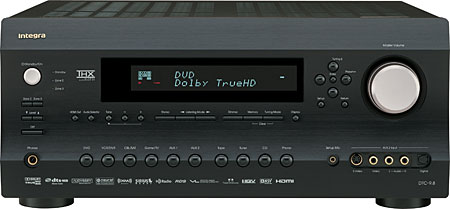
In Januaryhttp://www.stereophile.com/musicintheround/108mitr">January;, I reported on my experiences with the Integra DTC-9.8 preamplifier-processor, which I found to be outstanding with digital sources. That assessment was due, in no small part, to the performance of the Audyssey MultEQ XT room-correction system, which is included in the DTC-9.8. With only a little serious effort, MultEQ opened up the entire soundstage, making possible a better appreciation of the hi-rez sources now available on all sorts of discs. I have no doubt that any careful user can achieve similar satisfaction.

Paradigm Reference Studio/20 loudspeaker

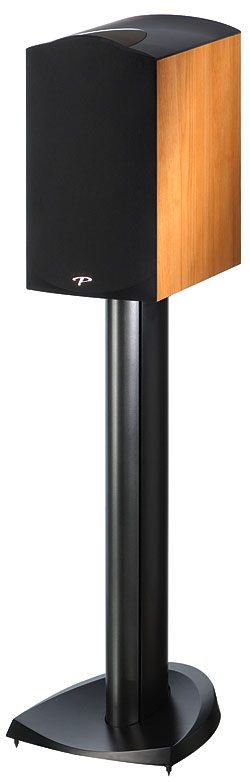
One of the first affordable loudspeakers I reviewed for Stereophile was the original Paradigm">http://www.stereophile.com/standspeakers/628">Paradigm Reference Studio/20 bookshelf model, in the February 1998 issue (Vol.21 No.2). At the time, I felt that the $650/pair speaker was a breakthrough—although not completely devoid of colorations, its ratio of price to performance set a benchmark a decade ago. I kept the Studio/20s around for several years to compare with other bookshelf speakers I reviewed, and they remained listed in Stereophile's "Recommended Components" for several years after that. The Studio/20 is now in its fourth (v.4) iteration, so I thought I'd grab a pair to hear how they compared with current affordable bookshelf designs.

The Fifth Element #47

US composer Morten Lauridsen's Lux Aeterna is one of the indisputable masterpieces of the 20th century. John Atkinson has recorded the male vocal group Cantus's performances of Lauridsen's O Magnum Mysterium (on Comfort">http://www.stereophile.com/musicrecordings/1105cantus">Comfort and Joy: Volume One, Cantus CTS-1204) and Ave Maria Dulcissima (on Cantushttp://www.stereophile.com/news/121007cantus">Cantus;, Cantus CTS-1207). (And great recordings they are—one engineer chum thinks JA's Cantus recording of OMM is the single best-engineered choral recording he's ever heard.)

Advertisement
Advertisement
Advertisement