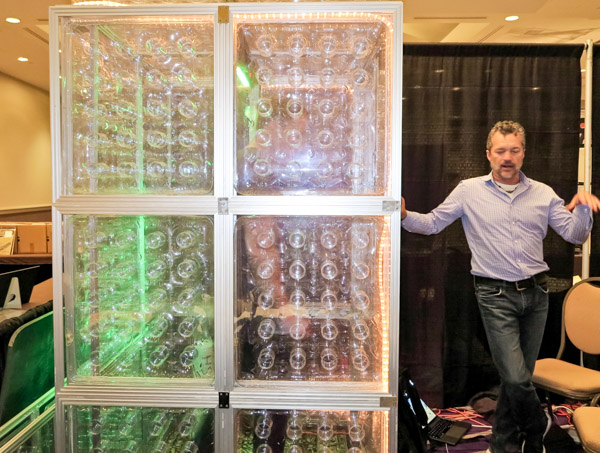
After Emiko Carlin of T.H.E. Show basically ordered me to check out AirHush’s display at T.H.E. Show, I spent a few minutes speaking with company CCO Michael Quinby.
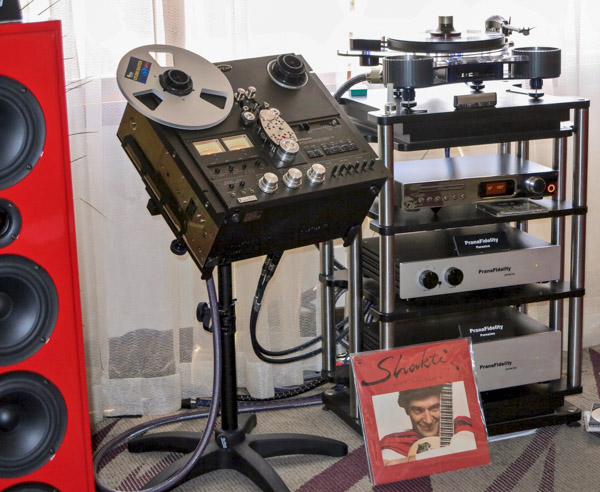
It took two tries over the course of two days to find a seat, but on Sunday afternoon, I finally squeezed into the room shared by EAR and PranaFidelity. The wait was worth it.
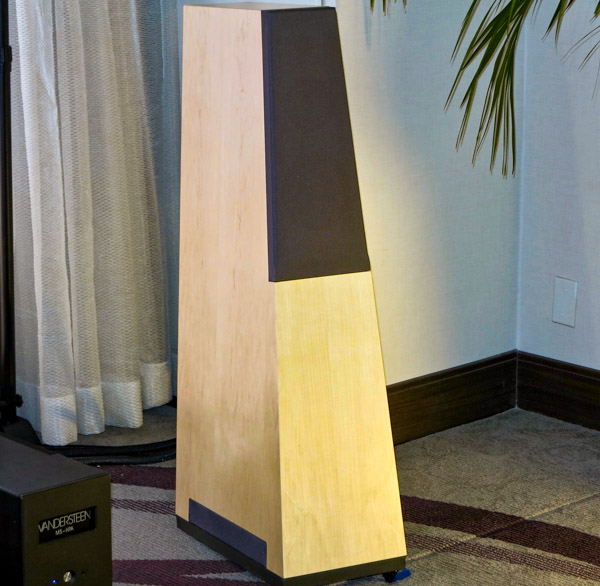
To these ears, the pairing of Vandersteen Quatro loudspeakers ($15,499/pair) and the company’s smaller M5-HPA monoblocks ($15,800/pair) with the Jeff Rowland Corus Stereo preamplifier + PSU ($21,900) and Conductor phonostage ($8500) is a winner.
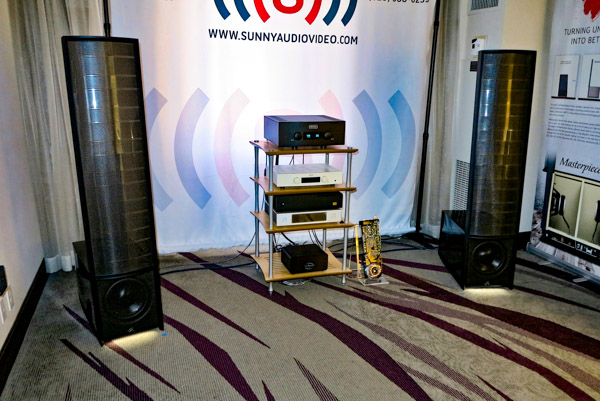
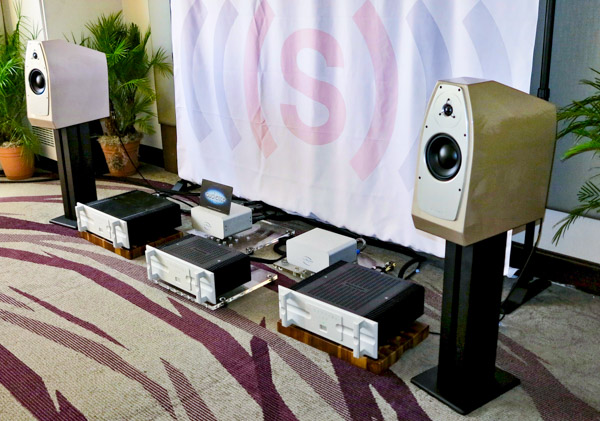
If Scott Walker Audio had staked out a mini-empire on floor 3, Sunny Components of Covina, California, did the same on floor 6. The first room I visited, of the four from Sunil Merchant, included Egglestonworks' 87dB-efficient Nico speakers ($4250/pair), ....
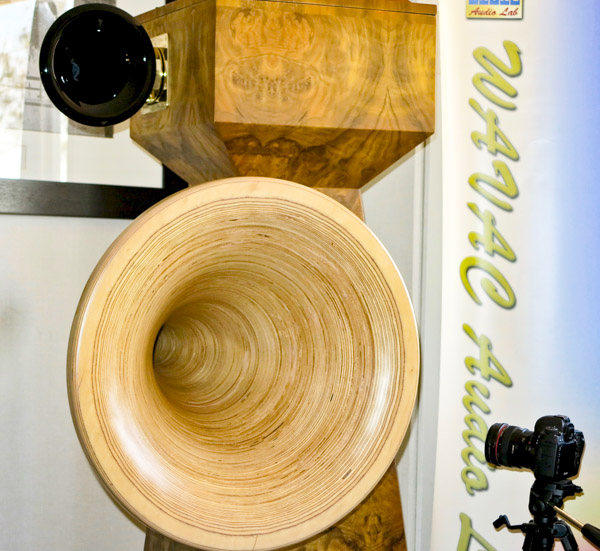
Eye candy, eh? Tune Audio’s Anima 3-way fully horn-loaded loudspeakers ($58,000/pair) claim 109dB sensitive. THEY certainly were drawing in listeners, to the extent that I had to visit twice before I could get into the room then slowly inch my way closer to the sweet spot.
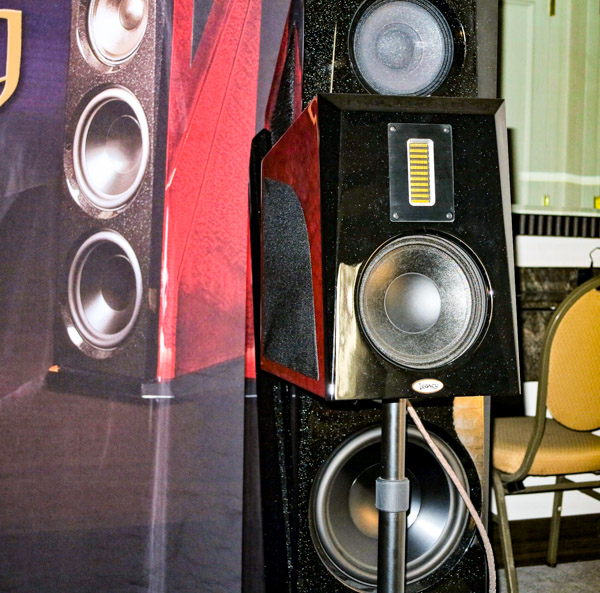
On an electric guitar track, the name of which I failed to get, the Legacy Audio Calibre Monitor ($5500/pair) got down, dark, and dirty in a good way while fighting one of the most wicked upper bass room resonances known to humankind.
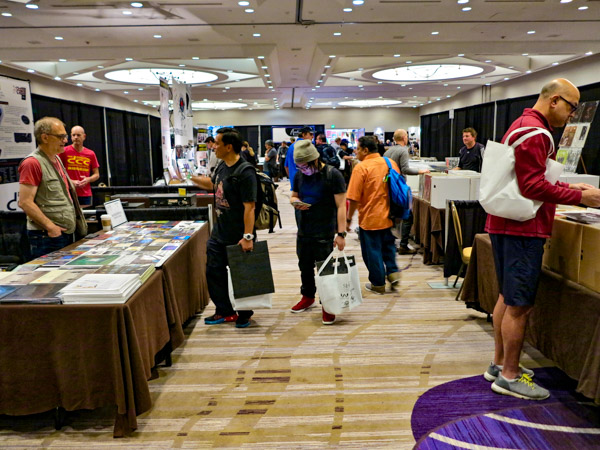
From the metaphoric opening bell on, the Marketplace was filled with music lovers hunting for analog and digital media as well as audio products. This photo, taken at 10:30 AM on Saturday, attests to the draw. Note MA Recordings’ Todd Garfinkle on the left, hawking his superbly recorded wares, some of which are available on vinyl or for download in hi-rez.