Fourteen Words

Out of habit now more than anything else, I keep my cell phone on the floor beneath my bed while I sleep at night. In the morning, when I wake, I still check my cell phone for any messages.


Out of habit now more than anything else, I keep my cell phone on the floor beneath my bed while I sleep at night. In the morning, when I wake, I still check my cell phone for any messages.
Back around Christmastime, when everyone around me seemed to be receiving iPods and gift certificates to the iTunes store, I thought I should give my loved ones <a href="http://blog.stereophile.com/stephenmejias/123107talk/">The MP3 Talk</a>. Now, John Atkinson, has prepared another version of <a href="http://www.stereophile.com/features/308mp3cd/index.html">The MP3 Talk</a>—live and in color with all sorts of cool graphs and stuff!
If you watch mainstream TV, you've probably seen it: The <A HREF="http://www.youtube.com/watch?v=7eI3frLu32Q">American Express Plum Card ad</A> that features catalog/online analog retailer <A HREF="http://www.MusicDirect.com">MusicDirect</A>. Filmed in December, with little advance notice, the ad debuted on February 19, and is expected to run for several months.
Donates $1 million to early-onset Alzheimer's research <A HREF="http://news.bbc.co.uk/2/hi/health/7291315.stm"</A>. Tells Alzheimer's Research Trust conference, "Personally, I'd eat the arse out of a dead mole if it offered a fighting chance."
<I>Blender</I> has just posted its nominations for <A HREF="http://www.blender.com/articles/default.aspx?key=18696">greatest record industry screw-ups</A>. I have a few quibbles, but as a whole, <I>Blender</I> tells a tale of monumental stupidity,from Decca passing on the Beatles because Dick Rowe was irritated that too many frantic teens were attempting to get into the Cavern Club to shutting down Napster without having a legitimate channel to replace it.
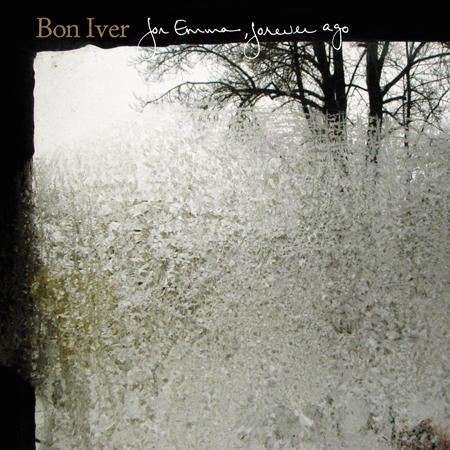
Like <a href="http://stereophile.com/thefifthelement/208fifth/">John Marks</a> and my uncle <a href="http://blog.stereophile.com/stephenmejias/021308sing/">Omar</a>, I am prone to enthusiasms. It's not unusual for me to hear some new piece of music and wind up feeling that I need it—<i>neeeeeeed</i> it. So what? Music is great. It <i>is</i> unusual for me, though, to hear some new piece of music and be so moved by it that I leave work early, race up Madison Avenue, charge down into Grand Central, take the 4 to Union Square, and face the many temptations of the vast Virgin Megastore to buy that new piece of music.

Even the most savvy <I>Stereophile</I> reader might wonder what a "network music player" is. Linn rightly considers a <I>music server</I> to be a combination of 1) stored digital files, 2) music-management software, and 3) a device that uses #2 to transfer #1 to your hi-fi. What Linn's Klimax DS <I>is</I> is a high-quality digital-to-analog converter (DAC) that receives digital data through an Ethernet connection rather than optical or electrical S/PDIF or AES/EBU inputs.
<A HREF="http://www.time.com/time/magazine/article/0,9171,1582330-1,00.html">Her…; an interesting article about Princeton University composer Dmitri Tymoczko, who has string theory mathematics to represent the relationship of musical chords to one another in a graphic form.
Bad news. Last June 15, in my <A HREF= http://blog.stereophile.com/fredkaplan/061507jazz/ >
first entry</A> of the “Jazz Messengers” blog, I broke the news that three months hence, Sonny Rollins, the world’s greatest living tenor saxophone player, would be playing a rare trio concert at Carnegie Hall—with Roy Haynes (one of the two greatest living drummers) and Christian McBride (an outstanding young bassist)—and that his own record label, Doxy, would release the results on CD along with a similar, recently unearthed, never-before-heard trio session that Rollins played at Carnegie 50 years earlier.