

Snell Type C/IV loudspeaker
 The Snell Type C/IV's design has been highly influenced by both the testing methods and philosophy of Canada's National Research Council in Ottawa. Other well-known loudspeakers to have benefited from the NRC's testing facilities include the Mirage M-1 and M-3, PSB Stratus Gold, the Waveform, and Camber 3.5. The NRC provides a variety of services to loudspeaker designers, notably use of their testing facilities which include a full-sized anechoic chamber. In addition, the NRC is heavily involved in carefully controlled blind listening comparisons between loudspeakers, used to aid the loudspeaker designer while the product is under development. The NRC doesn't provide design services, but rather the means of testing and evaluating work in progress and finished products.
Despite not offering design aid, many loudspeakers created with the NRC's testing and listening laboratories share some common philosophies. Chief among these is the belief that flat amplitude response is far and away the most significant factor in listener preferences and thus should be the paramount design goal. Many NRC-influenced loudspeakers share steep crossover slopes, wide dispersion, smooth off-axis response, and pay considerable attention to the way the loudspeaker interacts with the listening room.
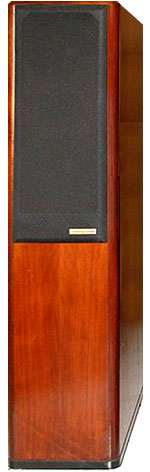 Last July I reviewed the $4850/pair


 Thelonious Monk: The Life and Times of an American Original
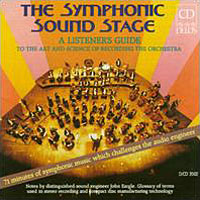 It is often said that anyone with a recorder and a couple of microphones can record an orchestra. It's true, assuming you can get permission to do it (another story entirely). But that statement fails to address an important question: "How well?"