Klipsch Shifts Gears
Memorial Day is the traditional beginning of summer. This year, it will mark a new chapter for <A HREF="http://www.klipsch.com">Klipsch Audio Technologies</A>.


Memorial Day is the traditional beginning of summer. This year, it will mark a new chapter for <A HREF="http://www.klipsch.com">Klipsch Audio Technologies</A>.
<A HREF="http://www.thewiz.com/wiz/app/CeMain">The Wiz</A> may not be long for this world. On Monday, February 10, <A HREF="http://www.cablevision.com">Cablevision Systems Corporation</A> announced that it would sell or close its remaining 17 consumer electronics stores, all in the New York metro area, New Jersey, and Connecticut. The announcement came only a few days after Circuit City announced major <A HREF="http://www.stereophile.com/news/11569/">cutbacks</A> of its workforce and the elimination of sales commissions.
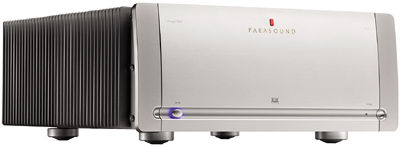
Michael Fremer investigates the <A HREF="http://www.stereophile.com//amplificationreviews/774/">Parasound Halo JC 1 monoblock power amplifier</A>, exclaiming, "The 5-to-1 ratio of cost to retail price suggests that the "raw" cost of the JC 1 is about $600—a number almost impossible to believe, given the superb build quality and sheer heft of this powerhouse monoblock." And then there is the sound.
The quest to secretly track music fans continues: <A HREF="http://www.philips.com">Royal Philips Electronics</A> and <A HREF="http://www.digimarc.com">Digimarc</A> announced last week that they have signed a new agreement that extends the licensing of Digimarc's digital watermarking patents to include audio applications as well as a broader range of video applications.
One might assume that the mutually dependent businesses of electronics manufacturing and retailing would track each other in perfect unison. That's often true, but they can sometimes get wildly out of sync with each other. It's one of the great economic mysteries.
Start policing your employees' use of file sharing networks or we sue you. That was the threat from the Recording Industry Association of America (RIAA) and Motion Picture Association of America (MPAA) to Fortune 1000 companies last week as the organizations announced the publication and distribution of a guide "to assist US companies in preventing copyright abuse on their computers and networks."
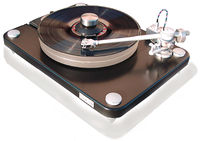
Oh, I talk a good game when it comes to the whole music-lover-<I>vs</I>-audiophile thing. But I admit that when it comes to record players, I'm just another hardware junkie. I love turntables and tonearms for more than the musical enjoyment they give me. Turntables and tonearms are my favorite toys.
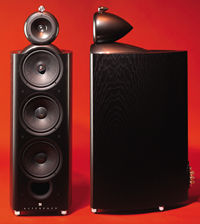
The very last review I wrote for <I>Hi-Fi News & Record Review</I> (these days just plain <I>Hi-Fi News</I>)—before <A HREF="http://www.stereophile.com//asweseeit/352/">crossing the Atlantic</A> to take up the reins at <I>Stereophile</I> in May 1986—was of KEF's then-new flagship speaker, the Reference 107. That rave review appeared in the English magazine's July 1986 issue, and was followed by <A HREF="http://www.stereophile.com//loudspeakerreviews/550/">equally positive reports</A> from <I>Stereophile</I>'s writers.

Consider the coelacanth. In 1938, a healthy specimen of this Paul Simon-sized fish was pulled from the Indian Ocean, not far from the mouth of South Africa's Chalumna River. But prior to that happy event (depending on your perspective, of course: the sight of the coelacanth's long, fleshy fins probably made for some very <I>un</I>happy creationists), the scientific community believed the animal in question was extinct, and had been for 65 million years.
Thirty years ago, the upstart audio company NAD revolutionized the manufacturing of consumer-electronics components by "internationalizing" the process. Instead of physically making products, NAD hired a project team in one location to design a product that was then built at a sub-contracted factory located elsewhere. The arrangement allowed NAD to go into business with relatively little capital outlay and low overhead. Other companies have since copied this ingenious business model, and, as transportation and communication have improved, doing so has become easier and more efficient. It has brought prices down and quality up—mostly in the low and middle segments of the high-end audio and video markets.