
Stephen Mejias

A Decent Equipment Rack
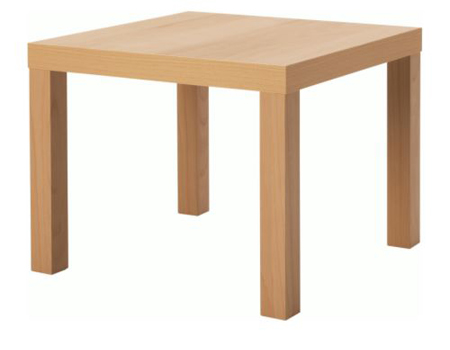
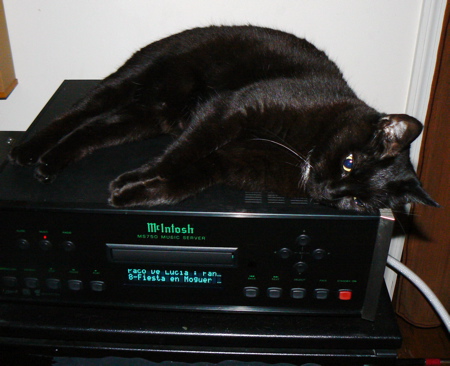
It started as a joke. I told my uncle, also a huge Mets fan, that if the Mets didn't make it to the playoffs, I'd get rid of my television. What would I need a television for anyway? All I ever watch are Mets games, and I can get my news from the internet or the radio. The idea became more attractive as I thought of how much easier it would be to swap audio components without an enormous, old 27" Sharp television set getting in the way. I might even be able to hock the television for a sweet pair of bongos, or something similarly musical and pretty. They've got some nice rhythm sticks over there at Jemma Loan on Newark Avenue. A trumpet? A few harmonicas? Who knows? Plus, without the easy distraction of television, I'd inevitably read and write more, listen to more music, maybe even exercise a bit. All good things.

Continue Reading »

Monk Day

I forgot to note Thelonious Monk’s 90th birthday on Oct. 10. Some advice for a lifetime: If you come across people who doubt his mastery as not only a composer but also a pianist, don’t trust their judgment on anything. Linked below, from the early-to-mid ‘60s, is an especially Monkish clip.

Continue Reading »

Martial Solal at the Vanguard (Part 2)

Martial Solal’s early set at the Village Vanguard tonight was as exuberant as expected. The ghost of Tatum was riding high, as the French pianist, celebrating his 80th birthday with only his third appearance in New York City in the past 44 years, mad-dashed through a dozen or so standards—including “Caravan,” “I Can’t Get Started,” “My Heart Belongs to Daddy,” even “Body & Soul”—in ways that no one has ever heard them, carving up the scores like a Cubist (more Braque than Picasso, with shards of Duchamp tossed in for wit), stretching and squeezing bars, yet somehow sustaining the tempo and the melody with tenuous but seamless aplomb. His music might be a mere virtuosic lark, were it not for his harmonies—brooding, bristling, caramel-rich chords, clusters of them, alternately embellishing, paring down, or playing against the conventional changes.

Continue Reading »

Rosen/Mozart

In my opinion, Charles Rosen's <I>The Classical Style</I> contained some of the most cogent thinking on Mozart ever written, so when he calls Hermann Abert's <I>W. A. Mozart</I> "the best book on Mozart ever written," I listen.

Continue Reading »
Advertisement
Advertisement
Advertisement