Michael Fremer

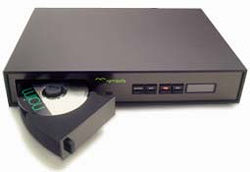
Naim CDX CD player

To compartmentalize or not to compartmentalize, that is the question. Does one review an expensive CD player at the dawn of the 24-bit/96kHz digital age by pulling a "Clinton," standing defiantly before a jury of audio peers to deliver a speech on the state of the CD art, boxing in, roping off, and all but ignoring the new, supposedly unimpeachable medium?
Continue Reading »

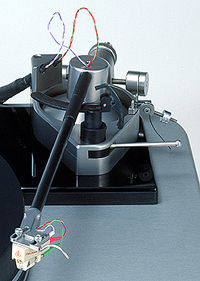
Immedia RPM-2 tonearm

If the sole criterion for choosing a winner in today's hotly contested premium arms race was original thinking, the Immedia RPM-2 might well come out on top. While some of its design details resemble those found on other products, in many significant areas the arm is unique—not for uniqueness's sake, but in order to efficiently implement some clearly considered goals. If the unipivot RPM-2 bears a resemblance to any other contemporary arm, it is Naim's highly regarded ARO—which I've never heard. The similarity, though, would appear to be superficial.

Continue Reading »

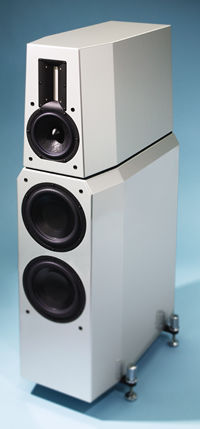
Rockport Technologies Merak II loudspeaker & Sheritan II subwoofer

No one has ever accused Rockport Technologies' Andy Payor of under-engineering a product, and this set of gleaming black beauties is no exception. The system is available in two configurations: as the two-way Merak II for $19,500/pair, including sturdy custom cradle-stands with integrated crossover; and as the Merak II/Sheritan II, a three-way, two-box floorstander that, to afford them at $29,500, will reduce some to living in the speakers' shipping crates. You could do worse for housing than checking into the Sheritan Rockport: The wooden crates are almost exquisitely finished.

Continue Reading »

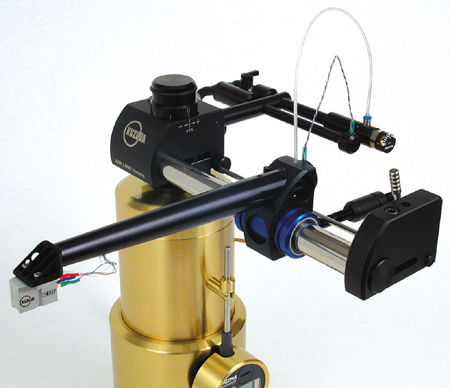
Kuzma Air Line tonearm

The lacquers from which LPs are pressed are cut in a straight line, and that's how the LP groove should be traced. Even when set up perfectly, a pivoted arm describes an arc across the disc surface, maintaining tangency to the groove at only two points on that arc. Yet despite numerous attempts at building and selling linear-tracking tonearms, few remain on the market, and most are fraught with technical problems. Linear-tracking arms can be anything <I>but</I> linear, committing more sins of geometry as they meander across the record surface than do their pivoted brethren.

Continue Reading »

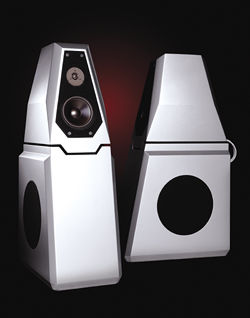
Audio Physic Kronos loudspeaker

Thirty-one flavors may work for an ice-cream chain, but a speaker manufacturer who sets out to please every sonic palate ends up with a serious identity crisis, pleasing no-one. From its inception in 1985, Audio Physic, based in Brilon, Germany, has been an event-oriented speaker company. Founder and original chief designer Joachim Gerhard focused much of his attention on providing listeners with the sensation of "live" by emphasizing coherent three-dimensional imaging and soundstaging&mdash;though not to the exclusion of timbral accuracy. Except for the Medea, based on a Manger driver (a fascinating design nonetheless), every Audio Physic speaker I've heard has fulfilled the company's mission statement.

Continue Reading »

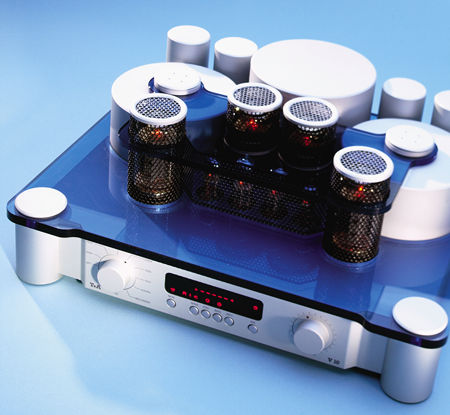
Jadis RC JP80 MC Mk.II preamplifier

"It costs as much as a car&mdash;and not a used jalopy, either." That's what goes through your head as you contemplate this magnificent $20,190 piece of audio jewelry. I don't mean "jewelry" pejoratively; the tubed Jadis RC JP80 MC Mk.II is a gorgeous, gleaming hunk of retro-looking machinery. Two hunks, actually: an equally large remote power supply is connected via an umbilical cord terminated with an elbow connector the size of house plumbing.

Continue Reading »

Aerial Acoustics Model 20T loudspeaker

Loudspeaker design is an art and a science. Anyone who tells you it's only one or the other is probably building or listening to some awful-sounding speakers. Design a speaker in an anechoic chamber for the "theoretical" world, and there's no guarantee it will sound good in the real one. Even building a speaker that excels at "real-room" measurements doesn't guarantee that it will sound all that convincing when reproducing music. We can't measure everything, and what we can measure can't be reliably ranked in terms of what's important to most listeners.
Continue Reading »
Advertisement
Advertisement
Advertisement