Michael Fremer

Analog Corner #215: B.M.C. Phono MCCI phono preamplifier

In July 2008 I reviewed the intriguing Phono 2Ci moving-magnet/moving-coil phono preamplifier from Aqvox Audio Devices. Though it then cost only $1400, the Phono 2Ci's current-input circuitry represented a high-tech departure from the typical voltage-gain circuits used by almost everyone else. Although keeping its retail price so low resulted in some sonic compromises, it sounded remarkable, and tough to beat at the price.
Continue Reading »
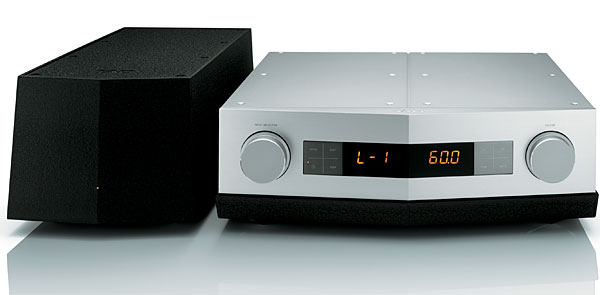
TAD C600 line preamplifier

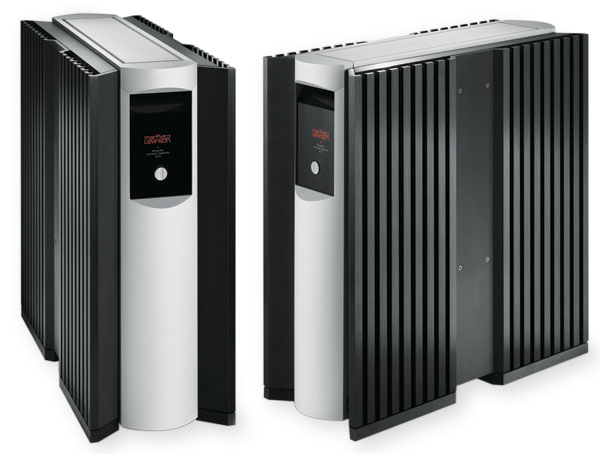
In the early 1970s, Stereophile's founder, J. Gordon Holt—a man I used to describe, with all due respect, as having been clothed by the haberdasher to the homeless—said that Audio Research's SP-3 tubed preamplifier was "the closest thing available, in fact, to the ideal straight wire with gain" ie, it would amplify the signal without editorializng in any way. Back then, the SP-3 cost $595. Today it would cost around $3500. But TAD's C600 dual-mono, solid-state, balanced preamplifier costs more than 10 times that: $42,000.
Continue Reading »

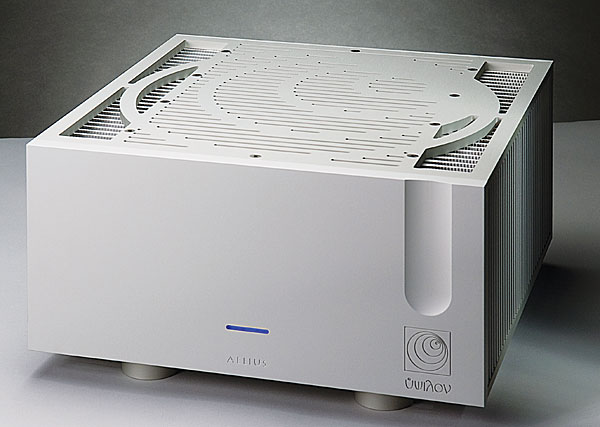
Ypsilon Aelius monoblock power amplifier

I knew nothing of Ypsilon when I first saw its products in a room at an overseas audio show. Even though the speakers in this system were complete unknowns, I was convinced that it was the electronics that were responsible for the magical balance of what I was hearing. That was confirmed when I reviewed the VPS-100 phono preamplifier in August 2009 and PST-100 Mk.II preamplifier in July 2011.
Continue Reading »

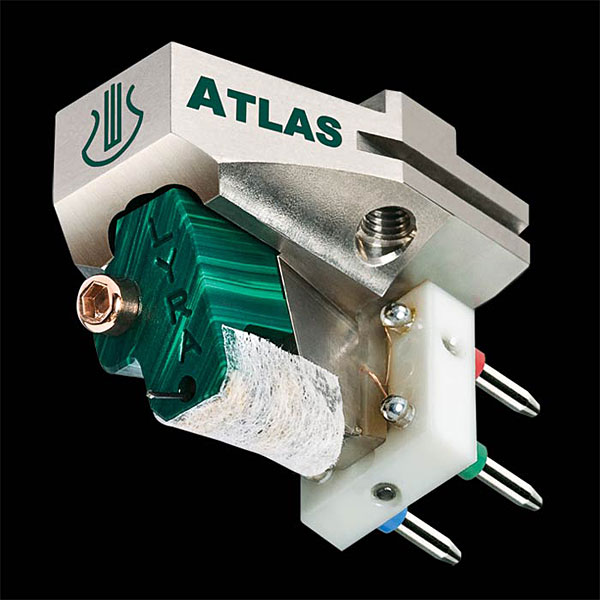
Lyra Atlas MC phono cartridge

At the 2012 Consumer Electronics Show, I spoke with Lyra's Jonathan Carr about the Atlas. He told me that, rather than having started as a blank sheet of paper, the Atlas is an outgrowth of the Kleos ($2995), which I reviewed in January 2011, when I thought it Carr's best balanced design yet, even if it didn't have quite the resolution of the Titan i. Like the lower-priced Delos ($1650, reviewed in August 2010), the Kleos included Carr's New Angle technology, which mechanically aligns the coils to be perfectly positioned relative to the front and rear magnets when the stylus is in the groove.
Continue Reading »

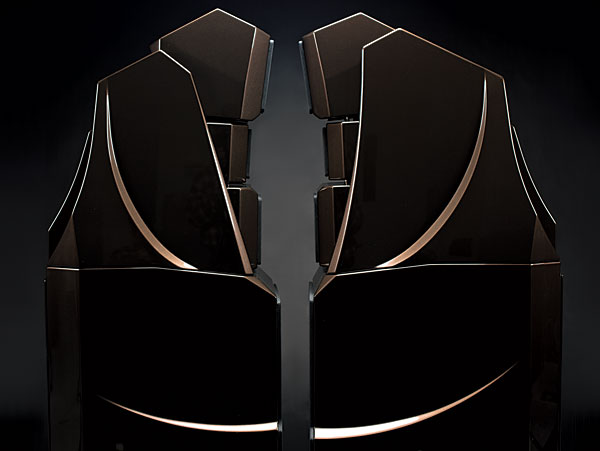
Wilson Audio Specialties Alexandria XLF loudspeaker

The Wilson Audio Specialties Alexandra XLF costs $200,000/pair. So does a Ferrari. Perhaps if Wilson Audio Specialties sold as many pairs of XLFs as Ferrari sells cars, the price might drop. For now, $200,000 is what you pay.

Can a loudspeaker possibly be worth that much? Add $10,000 for speaker cables, and that's what I paid for my first home in 1992. Today, the average American home costs around $272,000, which is likely less than the cost of an audio system built around a pair of Alexandra XLFs.

Continue Reading »

Mark Levinson No.53 Reference monoblock power amplifier

Mark Levinson founded Mark Levinson Audio Systems in 1972, but sold it, and the right to market audio gear under his own name, to Madrigal Audio Laboratories, then owned by the late Sandy Berlin, in 1984. Harman International bought Madrigal in 1995. As well as Mark Levinson, Harman's Luxury Audio Group now also includes digital processing pioneer Lexicon, speaker manufacturer Revel, and JBL Synthesis. The Mark Levinson brand is now headquartered in Elkhart, Indiana, at the Crown Audio facility, another Harman-owned brand. The No.53 ($25,000 each; $50,000/pair) is Mark Levinson's first new Reference series monoblock since the No.33, way back in 1993, when Madrigal owned the company. Like other Mark Levinson products, it is manufactured at an independent facility in Massachusetts.
Continue Reading »

darTZeel NHB-458 monoblock amplifier

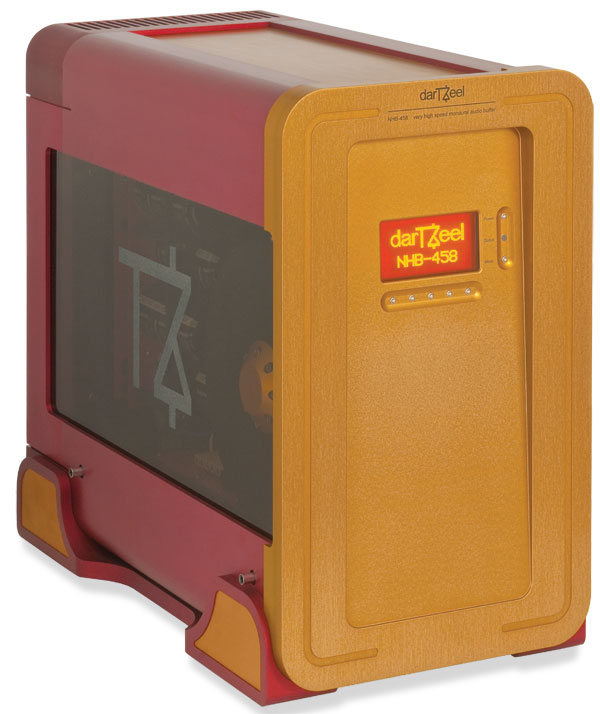
A recent (unpublished) letter to the editor argued that the reference for audio perfection is the sound of real instruments in a real space. The writer claimed that, since the art and/or science of audio is advancing, and because it is a "scientific truth" that the closer you get to perfection, the less divergence there is components, that therefore there should be less difference in sound among the components listed in Class A of Stereophile's "Recommended Components" than among those in Class B, much less Class C. This should be true of loudspeakers, he said, but even more true of top-rated amplifiers, since "they inherently have less divergence."
Continue Reading »

London (Decca) Jubilee/Reference phono cartridge

London phono cartridges still carry the famous Decca name (even if only in parentheses), but they are now produced by John Wright, a precision engineer and ex-Decca employee. Wright (not to be confused with his IMF and more recent TDL loudspeaker-designer namesake) was assigned the rights in 1989 by Decca's Special Products division (footnote 1), when the company's new owner, Racal, decided that they didn't want to be involved in the manufacture of audio equipment. Wright worked for 20 years in Decca's phono-cartridge division, where he gained a wealth of experience. As well as manufacturing the current range of London cartridges, he is also responsible for servicing and overhauling older Decca models.
Continue Reading »
Advertisement
Advertisement
Advertisement