Listening #77
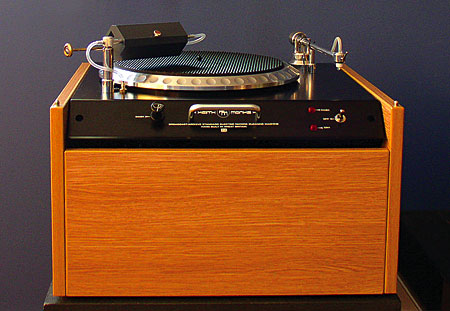
<I>Faith is the substance of things hoped for, the evidence of things unseen.</I>—Hebrews 11:1


<I>Faith is the substance of things hoped for, the evidence of things unseen.</I>—Hebrews 11:1
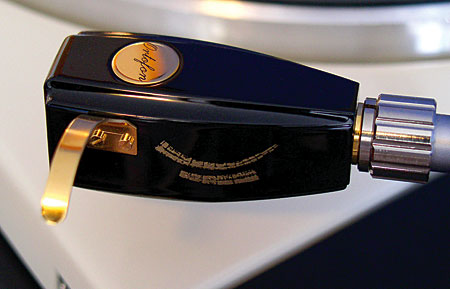
<I>"Glory to the genius of Edison!"—Nikolai Rimsky-Korsakov</I>
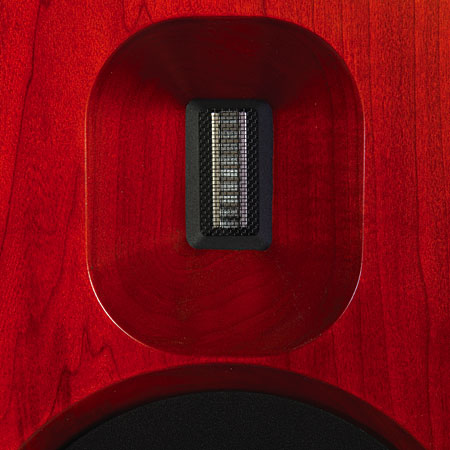
I know from conversations with other reviewers that this sort of thing happens all the time: Something new comes along—a product from a company we've never heard of, a technology we've never encountered before, whatever—and when we're impressed, we end up wondering if the thing is really as good as we think. We're insecure, just like you (footnote 1).
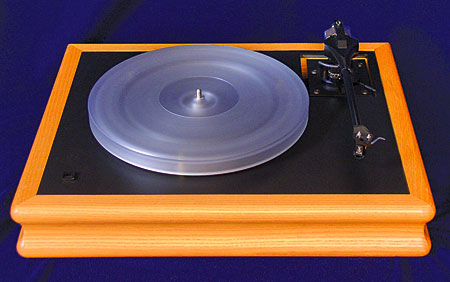
During a century of development of the phonograph, dozens of different things have been considered crucial to its performance: lack of bearing noise, lack of motor noise, freedom from runout error in the platter, high moment of inertia in same, immunity to all manner of unwanted vibration, and so forth. But now I wonder if the most important factor of all hasn't been overlooked, or at least misunderestimated, throughout much of that time: Could it be that motor <I>torque</I> is more critical than any of us imagined?
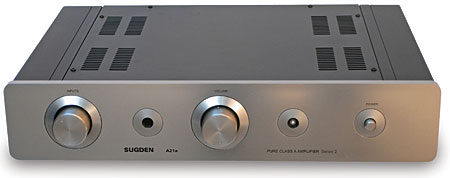
Winter has returned to Cherry Valley, New York, and I'm reminded of a bad habit that I used to conceal: On cold mornings I started my car <I>well</I> before driving off, then actually weighted down the accelerator pedal—with the heavy socket tray from my toolbox—in an effort to keep the idle high, and thus more quickly warm the windshield and the interior. Whether my lazy trick had the desired effect is a matter of some debate, but I wish now that I hadn't been so wasteful and so casually fouled the air.
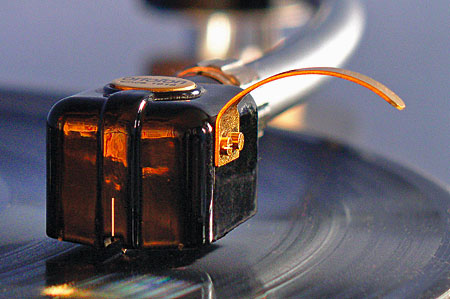
The 78rpm train has been derailed for the time being. The KAB Souvenir VSP Mk.II phono preamplifier, which I intended to review in this space, has yet to arrive from its manufacturer, owing to a delay in the availability of certain parts. The Elberg MD12 Mk.III preamp has yet to arrive from <I>its</I> manufacturer, owing to a recent redesign. The Sentec EQ-10 preamp is here but has a broken switch I haven't got around to fixing. The McIntosh C-8 preamp, a lovely vintage piece that's available for peanuts on the used market, is still undergoing renovation by someone who isn't me.
I was walking through the woods one day when I happened on a large, flat rock near the base of an old ash tree. Conditioned as I am from such rambles with my daughter, whose interest in wildlife echoes that of my own childhood, I bent down and lifted one end of the rock, hoping to catch a glimpse of some exotic creature or another: perhaps a delicate ring-necked snake, or a plasticky-looking red eft. The rock came loose without too much effort and teetered on its broadest edge, but before I could let it flip to one side, I recoiled in horror: There, amid the millipedes and ant larvae, was a cluster of teeny-tiny, nasty-looking old men, writhing in such a tangle that I couldn't even count them. They were bespectacled, to a one, and mostly bald—I could tell quite easily, despite the berets worn by some of them—and each pair of feet was shod in a teeny-tiny pair of off-brand Birkenstock copies, with thin, shiny black socks underneath.
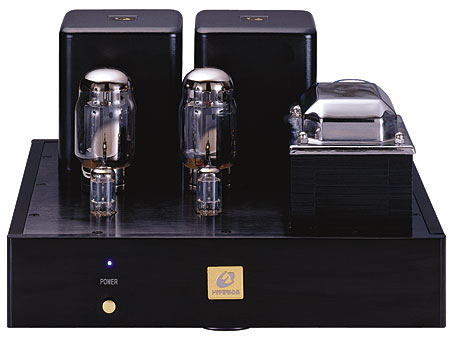
Remarkably, I set out to audition the Hyperion HT-88 amplifier ($2800/pair) over two years ago, only to be confounded by shipping errors, miscommunications, and, in the end, a stealthily defective tube. I almost gave up.
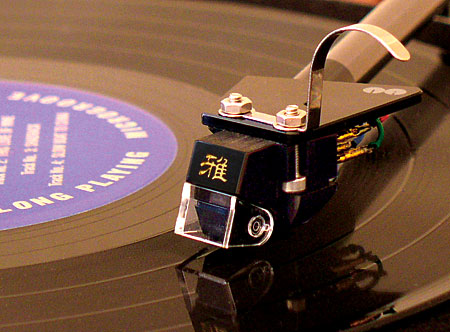
I'm old enough to remember when "Made in Japan" was an insult. As a child, I saw that phrase on only the cheapest or craziest toys—some stamped out of tin and cupped together by a tab with a fiendish edge, some molded from a distinctively smooth, brittle plastic. The latter included a wind-up bunny on wheels that my father brought home one day: my favorite toy, ever. (It came with a double-barreled dart gun that I seldom used, partly because I loved the bunny too much to shoot it, and partly because the suction-cup darts didn't stick to that kind of plastic in the first place.)