Robert Baird, Phil Brett, Ray Chelstowski
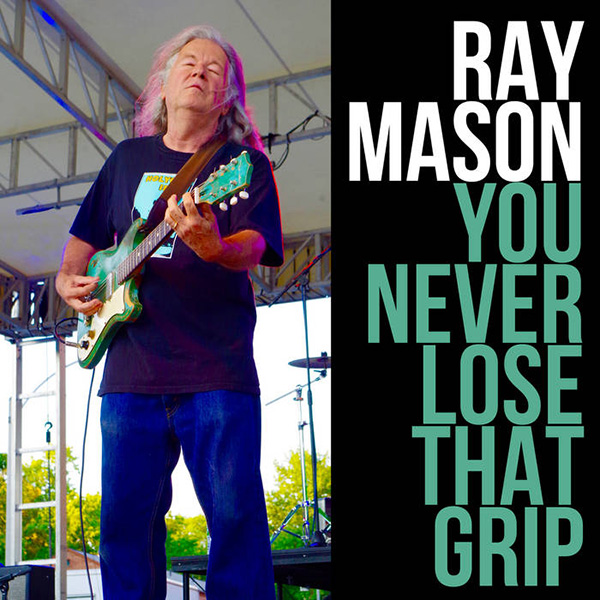
Ray Mason Keeps His Grip
"I keep my ears open. I've been listening to new stuff by people I have been following for years like Nick Lowe and The Straitjackets, Rodney Crowell, Kathleen Edwards, and Lucinda Williams. And then Craig Finn. I don't own any Hold Steady albums, but I love his last two solo albums. He has a new one coming out that [Adam] Granduciel from War on Drugs produced. And The Beths of course, Expert in a Dying Field. I remember hearing [The dB's] Pete Holsapple raving about that on the web and I went, I've gotta get that album!"
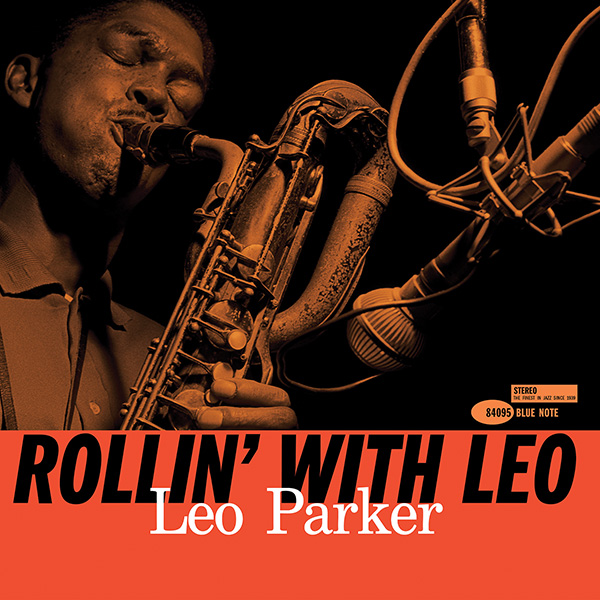
Recording of May 2025: Joe Henderson: Multiple
Milestone/Craft CR 00845 (LP). 1973/2025. Orrin Keepnews, prod.; Elvin Campbell, Al Vanderbilt, engs.
Performance ****½
Sonics ****½
The essence of jazz is supposed to be the free-flowing exploration of ideas and expressions. Yet hardcore fans of the music have the unnerving habit of supporting and denigrating the work of the same player from record to record. Artistic growth is often seen as a negative. Even devoted fans might not follow an artist who veers off into a stylistic direction they abhor. The classic example is Miles Davis, who went through several artistic reinventions during his long career. Many of those who love Kind of Blue recoil from Dark Magus, On the Corner, or You're Under Arrest. So-called fusionadding influences from rock and/or funkis most often the villain in these judgments.
After starting out as a hard-bop devotee in the early 1960s, with such classic Blue Note sessions as Page One, Our Thing, and Inner Urge, Joe Henderson grew curious about funk, about adding it to his jazz mix. In 1973, on Orrin Keepnews's Milestone label (now owned by the Concord Music Group), Henderson cut Multiple, one of the highlights of his discography.
Revinylization #64: k.d. lang's All-Analog Ingénue
Styled as "cowpunk" by many, the album caught the ear of pub-rocker Dave Edmunds, who produced the band's next, rockier album, Angel with a Lariat. That album, in turn, found its way to Patsy Cline's one-time producer Owen Bradley, who in 1988 produced lang's solo debut, Shadowland, on Sire Records. Shadowland and the Reclines' final album, 1989's Absolute Torch and Twang, convinced lang that she was too adventurousnot to mention too gay and Canadianfor the 1980s country music establishment.
Holly Cole's Dark Moon
"On Dark Moon, you hear the essence of when we discover a song," she said during a recent interview. "We had very brief rehearsals, and then went in and recorded. I had a lot of faith in this band, and that's why I cherry-picked them. They know me, they know I'm a minimalist, and we were able to arrange in the studio. Some of the tracks are first takes. The more complex the arrangement, the longer it took. They are all three, four takes at the most. People have to be hard listeners in this band, or it will fail. That's the case on Temptation, and that's on this record."
Recording of April 2025: Humble Pie: Smokin'
Analogue Productions APP 168 (LP). 1972/2024. The Pie, prods.; Alan O'Duffy, Keith Harwood, Kevin Gray, engs.
Performance ****
Sonics ****½
The ultimate indication that an audiophile reissue is worth paying for lies in its resale value on the secondary markets, especially eBay and Discogs. If there are lots of copies for sale that are open and played, it's usually a sign that folks are disappointed. On the other hand, if a reissue titleand this covers Analogue Productions' 2009 reissue of Humble Pie's Smokin'routinely fetches upwards of $100 on the secondary market (and sealed copies above $200), it means, first, that the pressing has probably sold out (a good sign) and, second, that it's probably worth the lucre.
In October 2024, AP repressed its much-sought-after 180gm reissue of Smokin', mastered by Kevin Gray from a ½" flat-tape copy of the original master tape. As this review was being written, copies were still available. It comes packaged in a Stoughton Printing tip-on jacket. It's a high-quality product all around.
Revinylization #62: Lou Donaldson
A lot of people turned to see who dared profane the label within earshot of beloved Blue Note president Bruce Lundvall and his staff, including the late Tom Evered. A gasp of recognition followed when it was discovered that those words had come from Lou Donaldson, one of the few original Blue Note bebop stars still out partying and playing music in the 21st century.
The Beatles in Mono According to Kevin
I'm even more pleased that it's all behind me."
Dave Dexter Jr. From his autobiography, PlaybackIt's almost too easy to make Dave Dexter Jr. the villain in the story of the Beatles' fumbled introduction to America. A devoted denigrator of rock'n'roll who thought it was a passing fad meant for the kiddies, and who also thought John Lennon played "lousy harmonica," he was just one of the many older music fans who were sure that Elvis Presley's hips had been a corrupting influence on America's youth, not to mention on good music.
The head of International A&R at Capitol Records, then owned by the UK's EMI, Dexter was no fan of British acts in general. He also turned down Manfred Mann, The Animals, The Yardbirds, and The Hollies.