Jim Austin

Power According to Pass
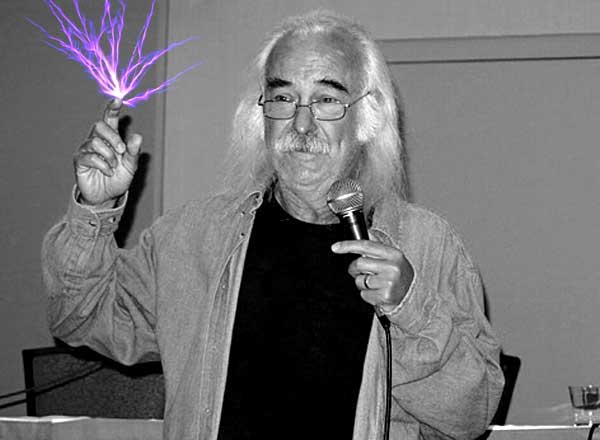
Virtually all of the active components in your system—DACs, preamplifiers, power amplifiers—work by modulating the DC output of their power supplies with an AC music signal. Surely, then, the more perfect your household AC is, the more perfect your audio system's output will be. Analogies abound—to dirty water used in distilling good whiskey, to inferior thread used to weave fine fabrics—and all amount to the same thing: you can't make a silk purse out of a sow's ear.
Continue Reading »
Noise, Resolution & Benchmark

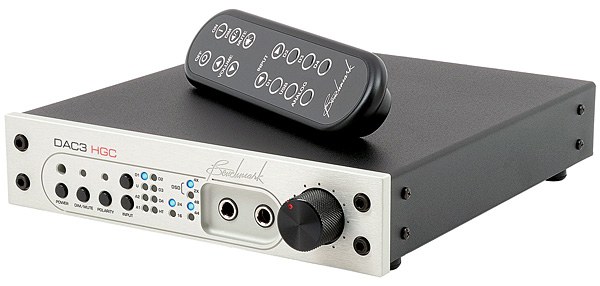
The most notable aspect of Benchmark Media Systems' DAC3 HGC ($2195), which I favorably reviewed in the November 2017 Stereophile (footnote 1), is its low noise floor. John Atkinson's measurements corroborated Benchmark's claim that the DAC3 is capable of "at least" 21-bit performance. While significantly less than the theoretical potential of a 24-bit data format, 21 bits is still the state of the art, and corresponds to a dynamic range—the ratio of the highest achievable digital-domain volume to the DAC's internal noise—of 128dB. That's well above the dynamic range that most power amplifiers can achieve. A good-measuring high-end solid-state amplifier is likely to have a dynamic range—the highest attainable ratio of signal to noise—of about 100dB ref. its maximum power.
Continue Reading »

What's Wrong With Classical Record Reviews

I attend at least a couple of dozen classical-music performances each year. I also read reviews of recordings and live performances, and have even dabbled in writing them. Why, then, do I find classical music reviews so frequently annoying?

It's the vocabulary. In these reviews I often see words that I rarely see used elsewhere: scintillating, irresistible, delightful. One venerable reviewer for Gramophone magazine has used the word "beguiling" 100 times in some 900 reviews. When I read such words, I envision the poor music critic writhing in his (occasionally her) listening chair, approaching an involuntary state of aesthetic ecstasy. It isn't a pretty image.

Continue Reading »

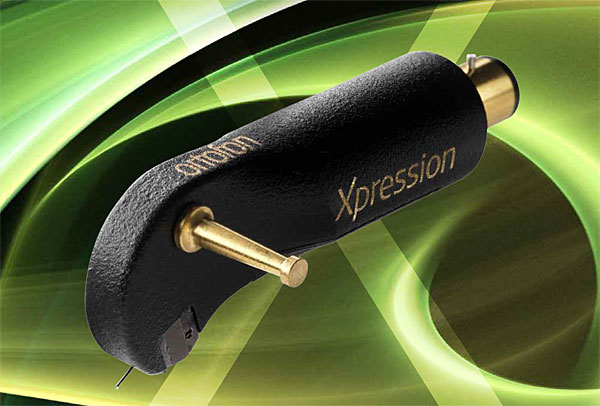
Ortofon Xpression pickup head

I listen to music in all formats, but my most ecstatic home listening experiences have always involved vinyl. It's probably something to do with the fact that, like most people my age and older, I grew up listening to LPs—in my case, played on a Technics SL-210 turntable, and through an Aiwa receiver with beautiful green tuner lights and a pair of early Polk Audio studio monitors. I'm drawn, surely, to an improved version of the sound I heard back then. It's a powerful sentimental connection.
Continue Reading »

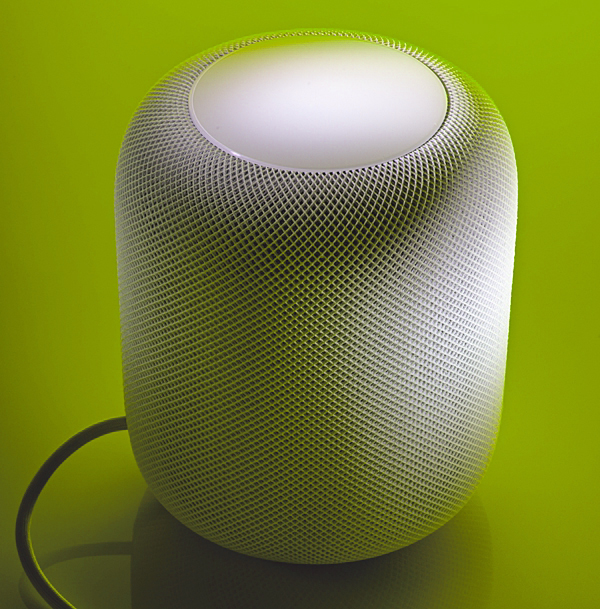
Apple HomePod smart speaker

It's after 5pm on Wednesday, and I'm finishing up the listening part of my review of Apple's wireless speaker, the HomePod ($349). On a whim, I've just asked Siri to play me some drinking songs.

I mention this because the HomePod's "smart" features—its integration with Siri and the Apple Music streaming service—is a big part of its appeal. In its natural element, the HomePod provides a way of accessing music that, although as old as our century, to me is still new and unfamiliar: Forget your hoary music collection, your Rolling Stones and Beethoven. Decide what kind of music you want to hear—a genre or a mood—then leave the choice to Siri and her algorithmic minions.

Continue Reading »

Highway 61 Revisited

Photos: Jim Austin

I'm sitting in a rented Nissan just off Highway 61—yes, that Highway 61—looking out at a Shell station through the bug-stained windshield and across a litter-strewn, not-yet-planted cotton field. It's late March, and I've just left Clarksdale, Mississippi, on my way to Memphis. Leaving Clarksdale made me thoughtful, so I've pulled over to jot down a few notes.

Continue Reading »

The Sound and the Image

It's not surprising that many people, like me, love nice cameras and good stereo gear. In my worse moments, I attribute this to mere consumerism: We love expensive stuff and the thrill of buying something new, whether for reproducing music or creating visual images. In my better moments, it's clear to me that there's more than that to this common taste for audio and photography, and more to the hobby of so-called perfectionist audio.
Continue Reading »

MQA: Aliasing, B-Splines, Centers of Gravity

The right thing at the wrong time is the wrong thing.—Joshua Harris

The sampling theory formulated by Claude Shannon in the late 1940s had a key requirement: The signal to be sampled must be band-limited—that is, it must have an absolute upper-frequency limit. With that single constraint, Shannon's work yields a remarkable result: If you sample at twice that rate—two samples per period for the highest frequency the signal contains—you can reproduce that signal perfectly. Perfectly. That result set the foundation for digital audio, right up to the present. Cue the music.

Continue Reading »

MQA, DRM, and Other Four-Letter Words

In an article published in the March 2018 Stereophile, I wrote that critics have been attacking MQA, the audio codec developed by J. Robert Stuart and Peter Craven, by accusing it of being lossy. The critics are right: MQA is, in fact, a lossy codec—that is, not all of the data in the original recording are recovered when played back via MQA—though in a clever and innocuous way. For MQA's critics, though, that's not the point: They use lossy mainly for its negative emotional associations: When audiophiles hear lossy, they think MP3.
Continue Reading »
Advertisement
Advertisement
Advertisement