Gramophone Dreams

Sort By: Post DateTitle Publish Date

Gramophone Dreams #88: TEAC VRDS-701T CD transport
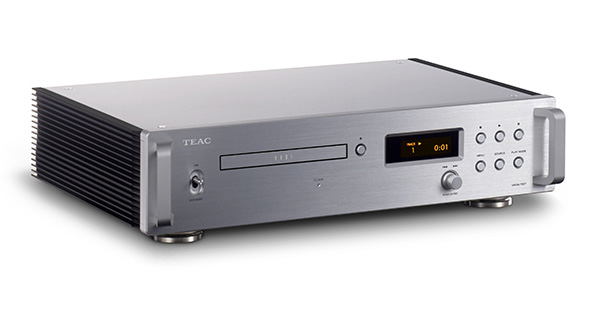
It's the late 1980s, and I'm soldering tube amplifiers on a plywood bench. I decide on a whim that it's time to break down and buy a CD player to supplement the Dynaco tuner and Dual cassette deck in my workroom music system.


I was a slow starter with digital because of my early take on CD sound: It was emotionally drained with grumbling distortions in the bass and an off-timbre midrange, crowned by a thin, artificial treble, and penetrated by an eerie, unnatural silence whenever the musicians stopped playing. I thought cassettes had higher fidelity and that CDs would be a passing fad, but I kept browsing CDs at Tower Records, and the itch to buy some was getting pretty strong.


One of my friends said, "Maybe it's not the conversion principle that's to blame but something else, like an imperfect CD player?" That interesting thought had not occurred to me, and it obviously occurred to lots of engineers, because they are still trying to improve the quality of CD playback by adjusting the mechanism.
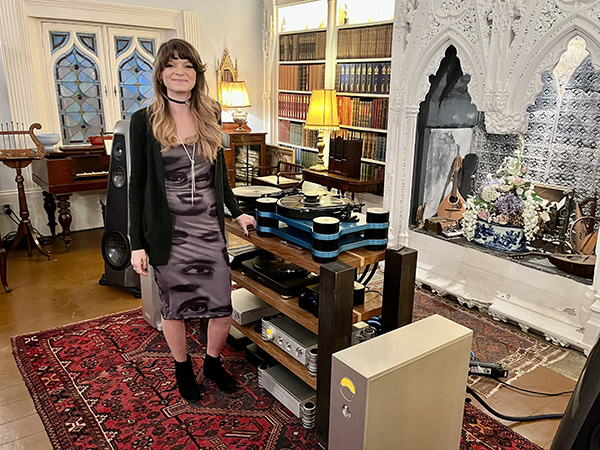
Gramophone Dreams #87: Deejay Coolosities, AudioQuest Yosemite tonearm cable, Nagaoka MP-110 phono cartridge

SME’s Kathryn "Kat" Ourlian deejays a turntable shootout. Photo by Michael Trei.


One August night in 1965, I parked in the driveway of my best friend Derf Marko's house and let myself in the back door. As I entered, I could see to the bottom of the basement stairs, where I observed a loud pulsing darkness with plumes of agreeably acrid smoke floating up through the stairwell. Back in the darkness, I heard Derf/Fred and another person making declarative statements in loud unintelligible bursts. When I reached the bottom of the stairs, Marko's basement rec room looked like a trashed-out tiki bar illuminated by a single red Christmas light hanging just above a Dual turntable. The room was dark to a point where it was impossible to walk without stepping on records or to make out who was there and what was going on. I slouched on a couch, closed my eyes, and let my mind follow the sounds of rock drummers wailing like angry cats.


Soon it was obvious: Marko was frantically playing one drum solo after another while some crazy old dude kept hollering for the next solo before the last one finished. The revved-up stranger kept slapping his knees, muttering, and drumming along with each different drummer. Stacks of unsleeved LPs littered the linoleum floor and pink wool couch I was slumping on. But unbelievably, Marko adeptly—without cursing, fumbling, or hesitation—located every solo he wanted.


I found out later that the crazed "old guy" was Ginger Baker!

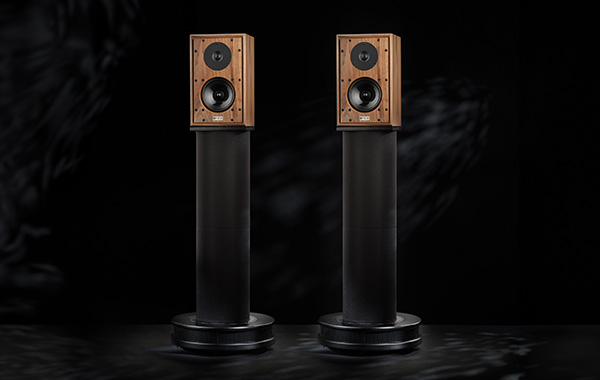
Gramophone Dreams #86: Harbeth P3ESR XD loudspeaker and Nelson subwoofer/stand

After lifelike timbres and speed-train momentum, how a loudspeaker projects its energy into my room is the main thing that determines how my sound system feels as I listen to it. When I review loudspeakers, I try to notice the unique tone and force of their "voice" as they speak into my room. Do they stand too close, stick out their chests, and brag loudly in third harmonics? Or do they have small voices that force me to lean in to make out what they're saying?


With a miniature box speaker like my reference Falcon Gold Badge LS3/5as or the similarly sized Harbeth P3ESR XDs, which I'm auditioning this month, I have to sit very close to experience any of their direct, "off-the-cone" energy. If my listening position gets too far away or the speakers are positioned too far apart or too far from the wall behind them, the sound thins and loses body.


I didn't need to sit close to those 1947 Altec A5 Voice of the Theatre horns I used to use.

Gramophone Dreams #85: Let the Right Brain In; the Hagerman Audio Labs Piccolo Zero head amp

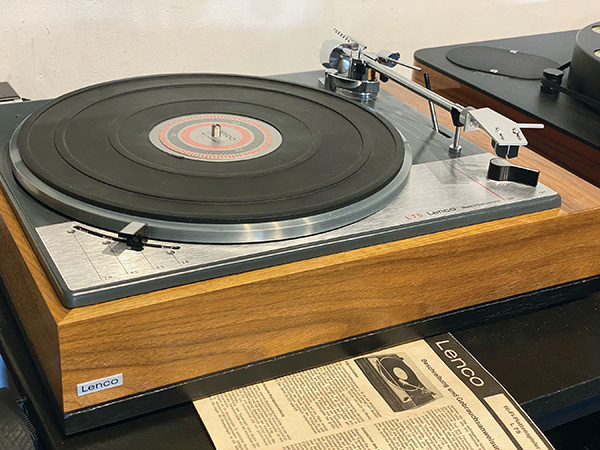
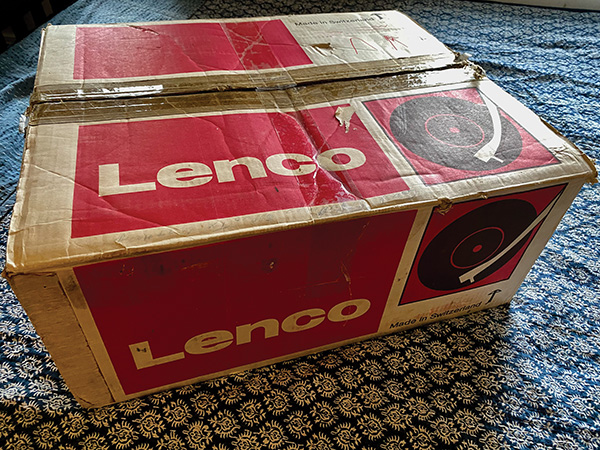
In the months since I told my Lenco story in Gramophone Dreams #79, two of my friends have bought L75s, and now they're enjoying them more than their shiny movie-star decks. One told me he has put more than $2000 into a Lenco L75 he bought online for $350. When I asked how his hot-rodded Lenco compared to his fancy belt drive, he replied, "You can feel it. The Lenco's motor pulls like a team of Clydesdales. It makes my belt drive feel like a pony pulling a child's cart."


When I asked him what he thought his rebuilt Clydesdale deck, with its new bearing, Jelco tonearm, and Grado Prestige Gold cartridge, was doing that his well-regarded belt drive was not, he replied, in a low, serious voice, "I think it gets more of the first part of a note."

Gramophone Dreams #84: dCS Lina D/A processor and Lina Master Clock

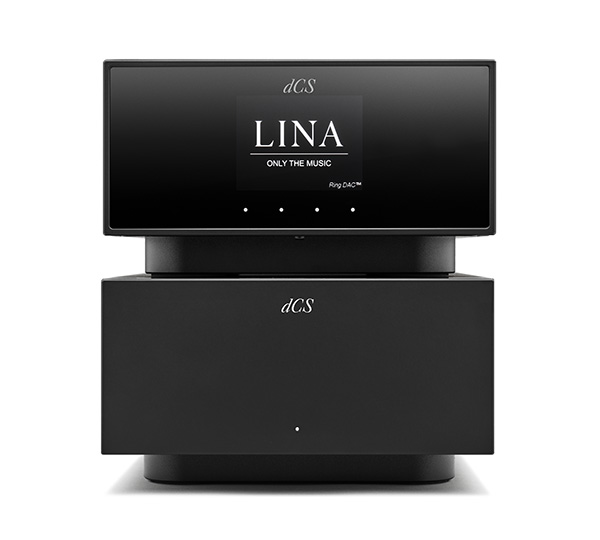
I was at least 40' away when I spied my first dCS Lina stack at CanJam. It was black, sitting conspicuously on a table emitting a strong Space Odyssey Monolith vibe. I can't remember which headphones I used, but I do remember how good it felt to face the stack and experience its startling clarity, showing off the bass end of a piano keyboard with a force I could feel in my shoulders. That impactful piano bass plus the stack's matte-finish, neo-Brutalist façade, and feels-like-cashmere volume control, made a strong first impression.


We all know everything sounds like what it looks like—right? It also sounds like what it's made of, who made it, and how much it costs. Well, the $13,500 Lina D/A converter could hardly look more different or feel or cost more different than the $46,500 dCS Vivaldi. The Lina is dCS's lowest priced streaming DAC, so it has to sound less good than my long-term reference Bartók, or the Bartók Apex I reviewed in Gramophone Dreams #75. That's just logical, right?

Gramophone Dreams #83: Benz Micro Gullwing SLR, Goldring Ethos phono cartridges, Meze 109 Pro headphones

It was almost Christmas, a perfect, chilly, blue-sky day to visit the Met Museum and see the Manet/Degas show before it ended. On my way, walking north on Madison Avenue, I passed the uptown branch of Gagosian Gallery and noticed a brightly lit poster behind thick glass announcing their exhibition of American artist Brice Marden's last paintings. The title of the show was "Let the painting make you," which sounded like an invite and a challenge, so of course I had to go in. I was in the perfect mood to ride in Gagosian's swanky private elevator and see how a famously serious painter with a six-decade career chose to communicate his last thoughts.

Gramophone Dreams #82: IKIGAI Kangai-level cables, dCS Lina headphone amplifier

Decades ago, when I was peddling million-dollar sound systems, an astute potential customer asked me: "If I buy your very expensive system, what will I get that I'm not getting with my less expensive system?" Smiling my best fatherly smile, I whispered to his ear, "Goosebumps, tears, and laughter."


With a slightly worried look, he asked, "How much did you say those silver cables cost?"


Thirty years later

Changing audio cables always changes the sound of my system, sometimes a lot but usually just a little. Typically, the sonic effects of cable changes are modest shifts in focus, tone, or transparency. But sometimes during blue moons I've seen a new set of cables turn a blah, dull, fuzzy system into a macrodynamic, microdetailed one. Or turn a cool, mechanical-sounding system into something fierce and mammalian.

Gramophone Dreams #81: Feliks Envy headphone amplifier

I always say I can't find what I'm not looking for, which doesn't mean I always know what I'm looking for. And not knowing what I want is unsettling. Recently, I was reminded of the thoughts of French polymath-philosopher René Girard (1923–2015), who suggested that people are not actually motivated by specific things like lust or capital or power, as major philosophers have declared, but by subtle, disconcerting forces of existential desire for something outside ourselves, never actually knowing what that something is.


Girard explains how this not knowing drives history and invention. His main premise is that we feel desire but, not knowing what we desire, mimic the desires of others. These "others" we mimic constitute a third element, interrupting the lines of force between a person and the objects desired. This, according to Girard, makes desire, and by extension human evolution, a nebulous but powerful anthropological force engaged in forming human cultures.


In other words, you might like big speakers and fat speaker cables, but maybe only because people around you appear to like them. Same with cars and clothes and lovers.

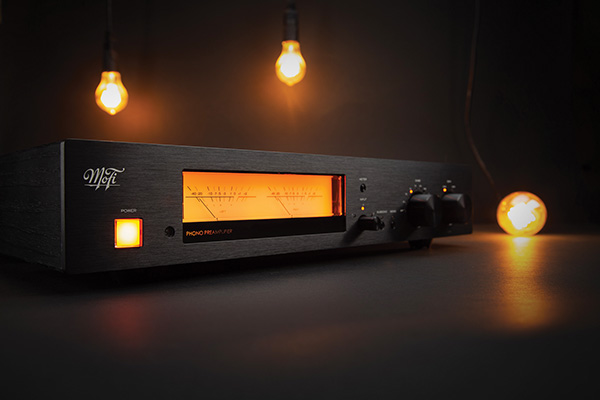
Gramophone Dreams #80: Mobile Fidelity Electronics MasterPhono

During my cub reporter days at Stereophile, I was always on the lookout, casting about for midlevel analog components I might latch on to, ones that could join my long-term daily-driver reference system by complementing the character of my midlevel DeVore Fidelity Orangutan O/93 and Falcon LS3/5a loudspeakers. I was searching for these basic traits: alive and vigorous, clear and well-sorted, relaxed and natural. One of my first-ever Stereophile reviews, in the October 2014 issue, was of Sentec's EQ11 phono preamplifier, which featured six EQ choices, selectable from the front panel, Bakelite knobs, Switchcraft switches, and a gray Hammerite-paint finish.


When I reviewed the Sentec, I owned three turntables and about 300 records. But phono stage–wise, I was a beggar and a borrower, hoping a friend's phono pre or some review product would jump out of the deck and become my reference.

Gramophone Dreams #79: a Vintage Lenco L75 turntable & the PrimaLuna EVO 100 phono stage

My adoptive mother, Lily Mae, was a retired businesswoman and former fashion model turned stay-at-home mom and artist-painter with famously good taste in everything. She raised me to have good manners, an "active awareness of color and texture," and "an eye for form." She expected me to critique her paintings, her decorating, and her wardrobe, urging me constantly to develop "good taste in everything."


In Lil's world, a perfect day was for me to skip school and go with her clothes shopping at Marshall Field's, where it was my job to sit in a plush chair offering comments about which outfits had the best fabrics and best "complimented her form." She always said "form is bones" and fashion is about "how fabrics hang on people's bones."

Advertisement
Advertisement
Advertisement