RMAF 2008

Sort By: Post DateTitle Publish Date

AV123's Big Boys

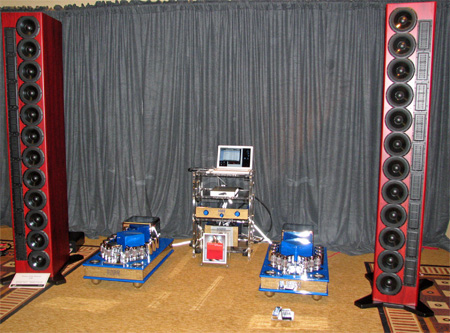
Over in the Tech Center Hyatt, Mark Schifter's AV123 corralled a huge room in which to showcase their soon-to-be-shipped flagship LS9 Focus Line Source speaker ($5999/pair). Powered by gorgeous Dodd Audio KT-88 monoblocks (approx. $40,000/pair—there was no literature on hand), the brand new Ultra Fi Music Stream USB-connectable DAC ($3499) with a proprietary analogue output stage designed by Larry Moore, a Ridge Street Audio USB cable that he waxes ecstatic about, and a laptop equipped with every kind of classical music (except what I wanted to hear), the system was creating astoundingly large-scale, believable images and enveloping sound. While designer Danny Richie's proprietary woofer array was issuing tremendous bass, a touch of brittleness on the highs gave evidence of the fact that the planar-magnetic tweeters had hardly broken in. You can bet that I'll be back again on Sunday to hear how they sound with some more hours on them. What this speaker does for the price is astounding.
The Bass We Love

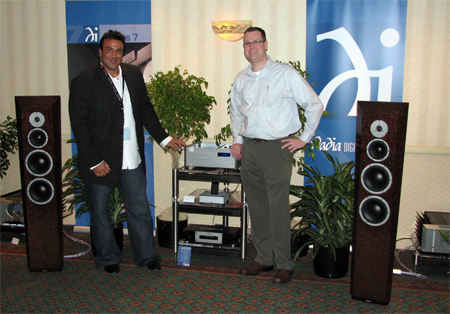
If there's anything I expect from Dynaudio, it's superb bass. Dynaudio's 30th-anniversary Sapphire ($16,500/pair) certainly produced copious amounts of bass. But the speaker gave me far more than sheer volume. In combination with the Wadia 781i transport/DAC ($15,000), Pass Labs XA100.5A monoblocks ($16,000/pair), Grand Priz Monaco Amplifier Stand, and XLO Signature 3 SE-1 power cords ($1100/8'), S3-2.2 balanced interconnect ($900/m), and S3-4.2 digital cable ($455/m), the system delivered some of the most well-proportioned, beautifully delineated bass I've ever heard. The opening of Mahler's Symphony 2 is rich with the sound of cellos, violas, and basses, and this system nailed each and every line with rare beauty. On the other end of the spectrum, soprano Elly Ameling's voice radiated angelic sweetness. Pictured with the equipment they represent are Dynaudio's Michael Manousselis (l) and Wadia's Martin E. Cooper (r).


Hansen, BAT, dCS, and TARA Pack Them In

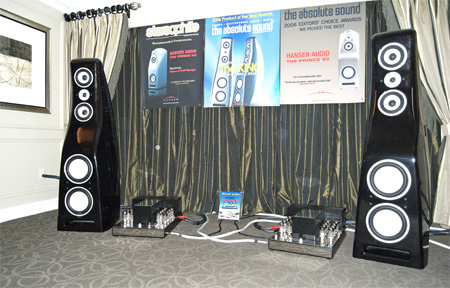
The room was standing-room only, with three rows of chairs, both side walls, and the back walls filled with folks eager to hear one of the dream systems assembled by Denver retailer Audio Unlimited. Where shall we begin: the dCS Scarlatti Stack which consists of the CD/SACD transport, DAC, master clock, and upsampler/digital-to-digital converter (by my math $81,000 total, and by anyone's math a fair hunk of change); the BAT REX linestage ($20,000), BAT VK-P10SE phono stage with new Super Pak Premiere ($16,000), BAT VK-600M SE monoblocks ($26,000); Running Springs Audio Dmitri Conditioner Premiere ($4,000); Hansen's new Audio Emperor loudspeakers ($60,000/pair); or the little bundle of TARA Omega Gold and 0.8 cables that together cost at $36,000 but probably far more? The take-no-prisoners sound was stunning. So stunning that some of the people were pinned to the back wall. Wow!


Nordost Takes a Quantum Leap

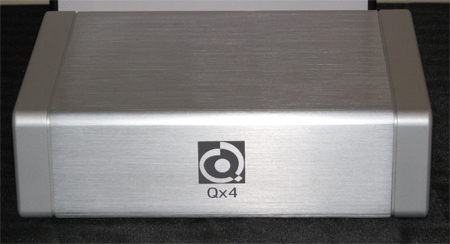
Not every breakthrough product available through cable manufacturer Nordost costs an arm and a leg. The new Quantum Resonant Technology products distributed worldwide by Nordost Corporation are a prime example. While the QX-2 costs $1700, and the larger QX-4 costs $2500, their amazing effects on sound suggest a product I'd expect to cost far more.


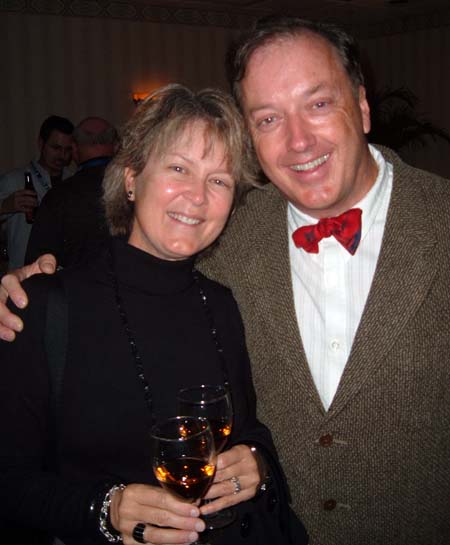
Ann Poor and Philip O'Hanlon

I had the great pleasure of meeting Ann Poor. That's Ann there, two-fisting it, standing beside On A Higher Note's bow-tied Philip O'Hanlon. Audiophiles may be more familiar with Ann's husband, Balanced Audio Technology's Geoff Poor. Oh, yeah&#151I got to speak with Geoff, too, but Ann was way more interesting.


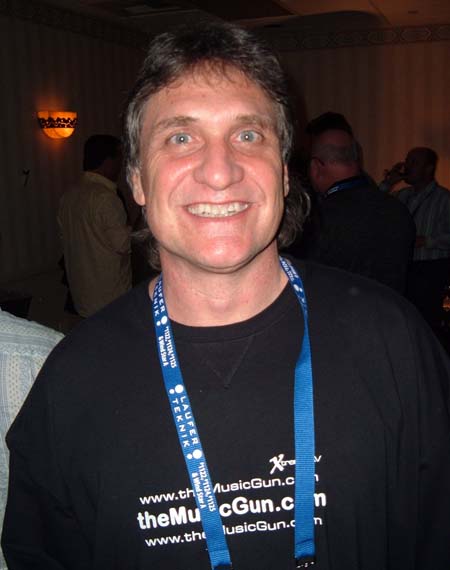
The Music Gun

Hosted by Luxman, Synergistic Research, and Vivid Audio, the event was billed as "a private reception of fine music, conversation, and superb wine." Gus Gus played in the background, the room was filled with smiles, and, indeed, the conversation flowed as easily as the wine. While it was great to become reacquainted with some familiar faces, I also enjoyed the opportunity to make new connections.


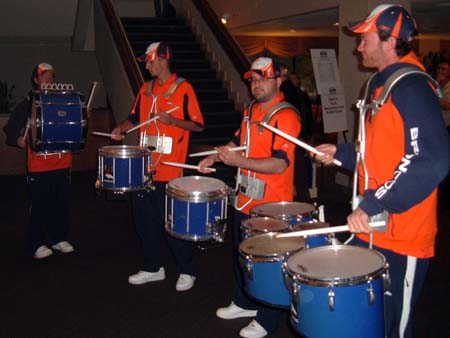
Real Sounds

I was walking through the lobby of the Marriott when I heard the most wonderful, realistic music. Some system was recreating the sound of a marching band rocking some really badass beats, with such immediacy and impact and such wealth of color and emotion that it was almost like the real thing. It sounded like the guys in the parking lot at Shea Stadium after a Mets victory. In fact, it was extraordinarily realistic.


MBL's Stunning Achievement

Oh my God. What a sound! The lighting and my distance from the speaker doesn't allow you to see it clearly, but there's a little cross inside the radiating grille atop the workings of MBL's Radialstrahler Reference mbl 101 Mk.II speakers ($59,990/pair) that drives home the religious experience that listening to an all-MBL system can create.


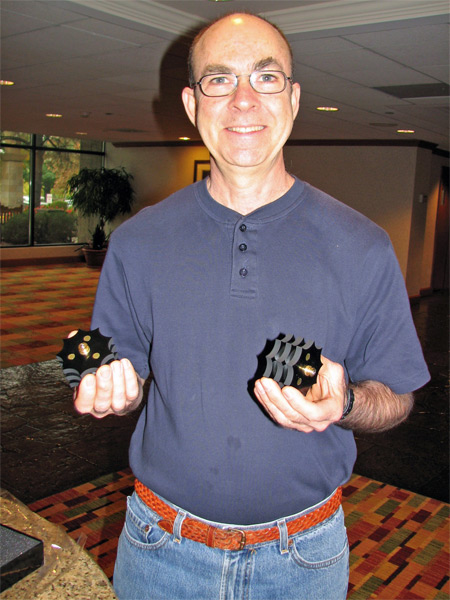
Marigo Mystery Feet

I know. It sounds a bit like a Beatles flashback. (Note the psychedelic colors on Ron Hedrick's face, for reasons that only the Marriott lobby's lighting designer can explain). But this seems to be a very 2008 product. Marigo's Ron Hedrick spent 2 years building 120 prototypes before releasing his VX Mystery Feet for amplifiers, DACs, and other components ($699/set of three), and TR Mystery Feet for digital transports and CD players ($659/set of three). Each support foot consists of 32 parts, with 10 constrained layers of composite material that are first heated, then pressed at 1000psi. Hand-assembled, the feet include little brass inserts on the component end to distribute energy. You balance your components on the protruding little brass thingees on one end and pray there's no earthquake.


Gradient Laura

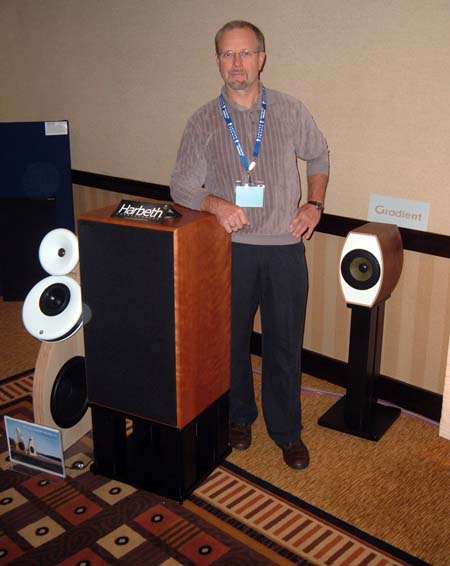
And here is Walter Swanbon of Fidelis AV, importer for Harbeth and Gradient loudspeakers. Here you can get a better sense of the size of the M40.1 loudspeakers. To Walter's left is the newest member of the Gradient family, the Laura ($3995/pair). Intended for use in conjunction with the Helsinki or as a stereo pair, the Laura employs a coaxial drive unit and is designed to be positioned in close proximity to the front wall of your listening room. It's pretty, too.


Advertisement
Advertisement
Advertisement