Audacious Audio

Sort By: Post DateTitle Publish Date

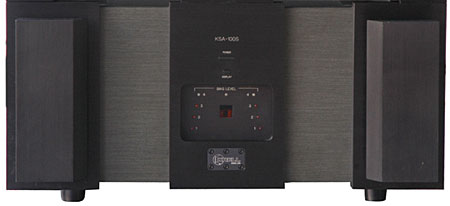
Krell KSA-300S power amplifier

It was a dark and stormy night. A biting, cold wind cut through Sam's skimpy jacket; ice crystals clung tenaciously to his bushy moustache. As he approached his front door, visions of a toasty-warm, Krell-heated listening room softened the chill. He could feel the glow already; his Krell amp had been on all day, awaiting his return.

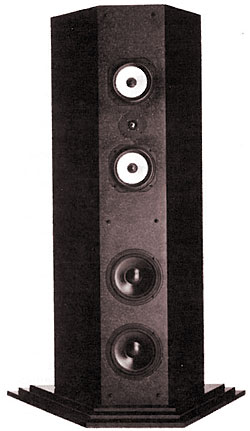
Counterpoint Clearfield Metropolitan loudspeaker

893count.250.jpgWhile Clearfield Audio may be a new name to many of you, it represents the marriage of two well-established members of the high-end community: Counterpoint and designer Albert Von Schweikert. Counterpoint had been working to add speakers to its product lineup for some time. The partnership with Von Schweikert, whom Stereophile readers will remember as the designer of the Vortex Screen favorably reviewed by Robert Harley in July 1989, fills out Counterpoint's high-end product line from source—the company showed a CD transport at the June 1993 CES—to speaker.


The Metropolitan

The developmental history of Vortex speakers provides a meaningful framework for the design of the Clearfield offerings, especially the Metropolitans, or Mets. Like the Vortex designs, the Mets are three-ways with transmission-loaded bass. Like the Kevlar Reference Screen (reviewed by Robert Greene in The Abso!ute Sound's "double-issue" 83/84, December '92), the Mets use Kevlar-coned midrange units from Focal that cover a broad range from 125Hz to 2kHz. What's dramatically different is the overall driver layout.

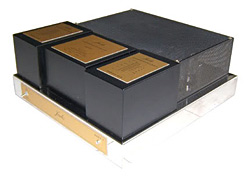
Jadis Defy-7 Mk.II power amplifier

Owning a powerful tube amplifier is like owning a classic automobile. Great pleasure may be had, but ownership involves a little more care and maintenance than usual.
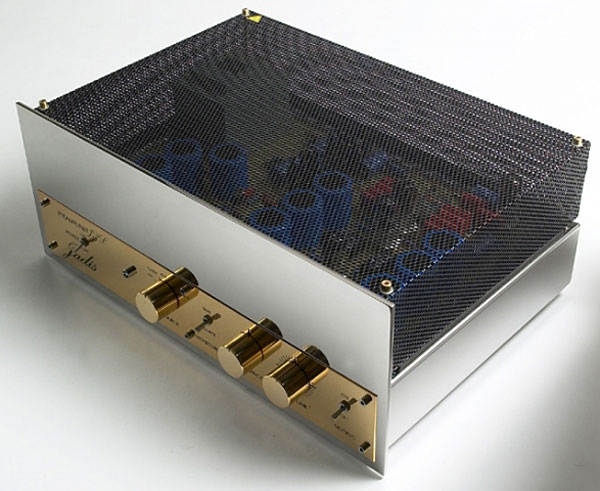
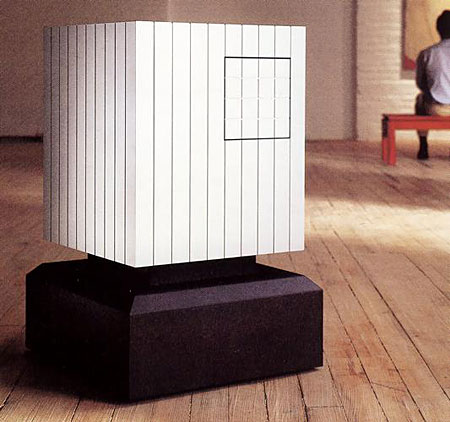
Jadis, an audiophile company specializing in all-tube amplifiers and operating out of a small French town, has enjoyed a good reputation for some years, even if some of its models have suffered from the reliability problems that occasionally afflict the largest tube amps. Another problem area is that of power consumption and heat output. In common with class-A amplifiers and high-bias A/B types, including solid-state models, larger tube amps give off substantial heat. The Defy-7's 240W idling consumption may or may not be welcome, according to your location and the season.

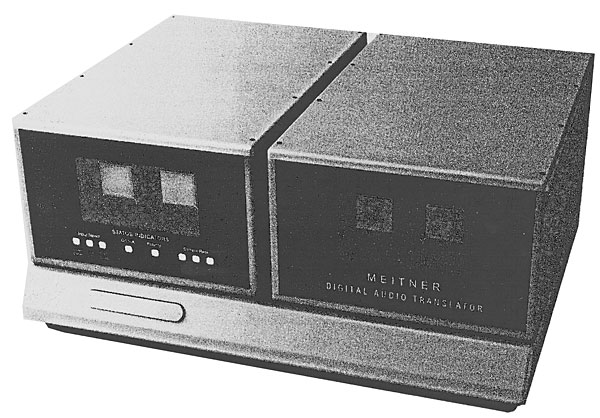
Meitner IDAT D/A processor

There are as many ways of designing a digital-to-analog converter as there are engineers. One approach is to select parts from manufacturers' data books and build the product according to the "application notes" provided by the parts manufacturers. This is the electronic equivalent of a paint-by-numbers kit.


A more creative engineer may add a few tricks of his own to the standard brew. Bigger and better regulated power supplies, careful circuit-board layout, tweaky passive components, and attention to detail will likely make this designer's product sound better than the same basic building blocks implemented without this care. Indeed, the vast range of sonic flavors from digital processors containing very nearly the same parts attests to the designer's influence over a digital processor's sound.

Jadis JPL line preamplifier

In its comparatively few years in the marketplace, the line-level preamplifier appears to have established commercial parity with its full-function big brother. That this was inevitable was clear as far back as the mid-'80s. The advent of the CD and the proliferation of digital sources argued for a modular approach to preamp design. In such an environment, line-level sources (eg, DAT, CD, even analog tape) deserve special attention.

Sound-Lab A-1 electrostatic loudspeaker

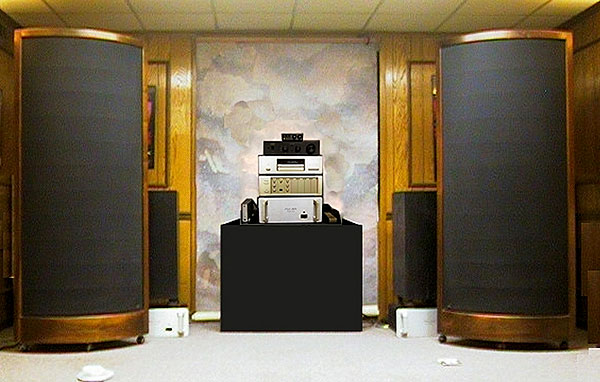
Designer Dr. Roger West got his first taste of electrostatic transducers many years ago during a stint with Janszen (remember the Janszen tweeter?). To realize the potential of the full-range electrostatic loudspeaker (ESL), he and Dr. Dale Ream formed a new company dedicated to ESL research and development. West describes this company, Sound-Lab Corp., as "the electrostatic speaker specialists."

Proceed CD Library

I think I've finally figured out the secret of Stereophile's success. You, cherished reader, don't read this mag because it's chock full o' reviews of tantalizing audio gear (even though it is). And you don't read this mag because JA and RL strive so hard to keep the literary quotient as hi as the fi (even though they do). And I know you don't read this mag cuz trusting yer own sensory input is a mighty scary proposition indeed so you look to Stereophile as to a Holy Bible that eases your Earthly burden by telling you, Ah say Ah say TAILING YEW what to buy (do you?).


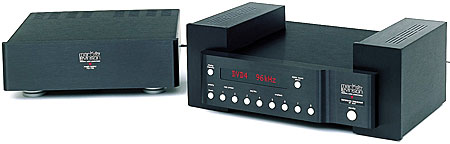
Mark Levinson No.30 Reference Digital Processor

Over the past two and a half years, I've auditioned and reviewed a number of digital audio products. It has been a fascinating experience both to watch digital playback technology evolve and to listen to the results of various design philosophies. The road to more musical digital audio has been a slow and steady climb, with occasional jumps forward made possible by new techniques and technologies. Making this odyssey even more interesting (and confounding), digital processors seem to offer varying interpretations of the music rather than striving toward a common ideal of presenting what's on the disc without editorial interjection.

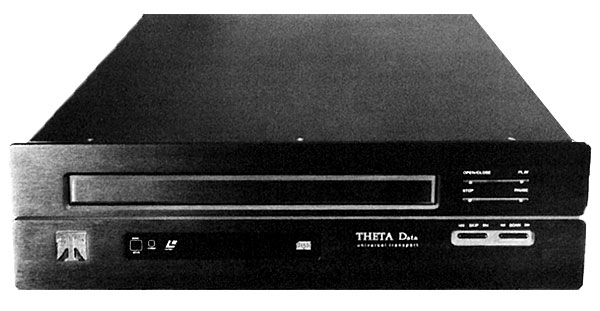
Theta Data universal disc transport

"In the fields of observation, chance favors only the mind that is prepared."


When Louis Pasteur uttered these words more than a hundred years ago, he must have speculated that they would apply equally well to future circumstances as to the events of his day. What he couldn't anticipate, however, was the technology to which his insight now seems so appropriate.

Goldmund Mimesis 8 power amplifier

To judge from the $6400 Mimesis 8, Goldmund walks its own way when it comes to power amplifier design. High-end solid-state amplifiers from US companies like Krell, Mark Levinson, Threshold, and the Jeff Rowland Design Group marry massive power supplies to large numbers of output devices (these often heavily biased to run in class-A), built on chassis of such nonmagnetic materials as aluminum. By contrast, the Mimesis 8 has a magnetic (steel) chassis, and uses a relatively modest power supply, that for each channel based on two main 4700µF reservoir capacitors. The 8 offers just two pairs per channel of complementary output MOSFETs (Hitachi K134/J49). These carry a modest bias current of around 80mA total.
Advertisement
Advertisement
Advertisement