Integrated Amp Reviews

Sort By: Post DateTitle Publish Date

NAD C370 integrated amplifier
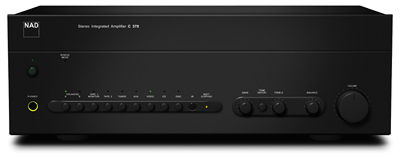
NAD has been out there on the leading edge of entry-level high-end sound long enough that some audiophiles reckon they invented the category. Sure, we should give serious props to the likes of Creek, Rotel, Musical Fidelity, Arcam, Denon, and Parasound, all of which have made significant contributions to the musical aspirations of budget-conscious pilgrims. But I continue to harbor warm feelings about my last extended visit with an NAD component: the inexpensive yet supremely musical L40 CD Receiver, which I reviewed in the June 2000 Stereophile.
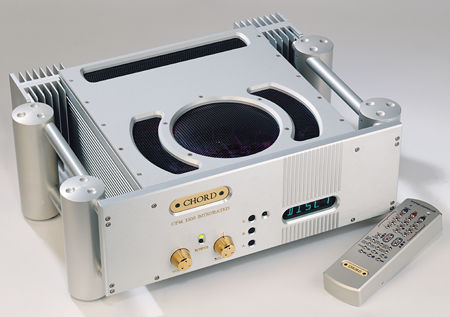

Chord CPM 3300 integrated amplifier

With its high-end heart and home-theater brain, Chord's powerful CPM 3300 integrated amplifier ($9500 with the aluminum-cylinder Integra leg option, $8950 without) is a uniquely fascinating audio product well worth considering. High-tech innards and magazine-cover good looks don't hurt either, but what originally got me interested was the superlative sound Chord products have consistently delivered at trade and consumer shows when paired with Wilson-Benesch loudspeakers.

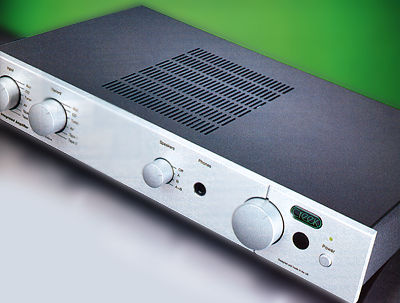
Creek 5350SE integrated amplifier

Creek Audio founder/designer/co-owner Michael Creek is a quiet, friendly, unassuming man. Unlike some ego-driven electronics designers who tout their products very loudly from their pulpits, Michael Creek has been quietly designing high-quality, musical, and affordable integrated amps in black-metal boxes for nearly 20 years. His target market is the passionate music-lover who wants something a notch above an entry-level NAD or Rotel receiver, but whose bank manager would frown on splurging on electronic separates.


VTL IT-85 integrated amplifier

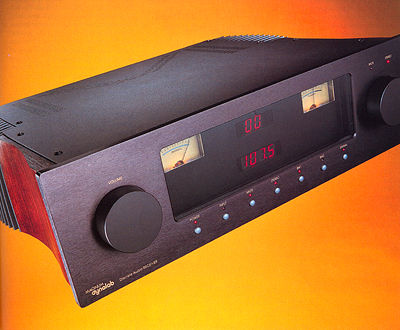
Having evaluated any number of integrated amplifiers in the past year or so, I've repeatedly been impressed by the ways in which designers build versatility and sonic distinction into their single-box designs. In matching those that sounded and measured the best—such as the tubed E.A.R. V20 (October 1999) and the solid-state Magnum">http://www.stereophile.com//amplificationreviews/329/">Magnum Dynalab MD 208 receiver (January 2001)—with appropriate speakers and source components, I was able to attain high-resolution musicality with a minimum of fuss. Crave high-end sound but require even less complexity? You could dispense with interconnects altogether by integrating a high-quality CD player into a remote-controlled receiver, as Linn has with the diminutive Classikhttp://www.stereophile.com//digitalsourcereviews/307/">Classik; that I reviewed last November.


Magnum Dynalab MD 208 receiver

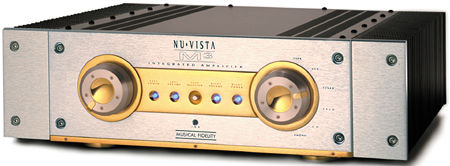
Musical arguments in favor of separate components are compelling and well-documented. But there's also something musical to be said about reducing the number of power sources, keeping signal paths short and direct, and hard-wiring connections between components rather than employing multiple sets of interconnects. So while a designer must inevitably confront certain tradeoffs, the explosive growth and popularity of single-box products in the past few years contradicts the received wisdom passed down by some of the more sniffy audiophiles: that such unduly proletarian products are terminally compromised in terms of absolute levels of music reproduction.


Legend Audio Design Starlet integrated amplifier

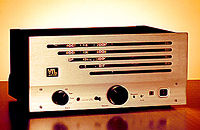
In the ongoing audiophile debate over the relative merits of solid-state vs tube amplification, compelling cases can be made for the overall musicality of both methods. And while there's a lot to be said for the dynamic headroom, bass focus, clarity, frequency extension, and silent performance of solid-state gear, it's funny how much you can come to miss the aural verities of tube electronics after a prolonged absence.


Denon AVR-4800 THX Ultra digital surround receiver

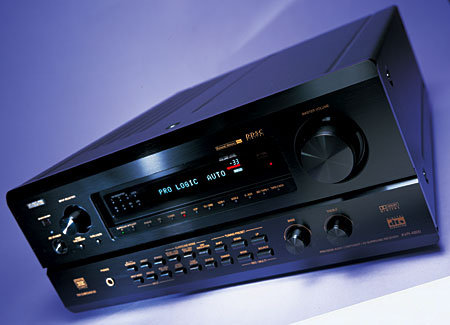
July came in this year like September: cool, crisp night air and bright, clear days. The humidity and temperature remained low throughout the week I spent setting up the Denon AVR-4800 surround A/V receiver. So, crouched down behind its crowded rear panel, wiring up eight loudspeakers and multiple inputs, I wasn't sweating from the temperature. Launching the new multichannel Denon AVR-4800's surround audio-visual system required hard work, trial and error, and an emergency trip to the UPS terminal in the Bronx. While there were great musical pleasures ahead, the path to music-surround knowledge was rougher than I ever imagined it might be.


Mark Levinson No.383 integrated amplifier

When I learned that Madrigal Audio Labs was marketing their first integrated amplifier, the Mark Levinson No.383, I felt this was a big change for the Connecticut company. Mark Levinson literally started the high-end marketing revolution back in the early 1970s by manufacturing cost-no-object separate amplifiers and preamplifiers. The purist designs had one overriding rule: employ the simplest circuit path possible. Each amplifier or preamplifier used only individual circuit-board components (no integrated circuits) and had a minimal number of controls, eschewing elaborate switches and tone controls. Mark Levinson Audio Systems and its successor, Madrigal Audio Laboratories, has continued this philosophy of separate components for the past 25 years.


Advertisement
Advertisement
Advertisement