Integrated Amp Reviews

Sort By: Post DateTitle Publish Date

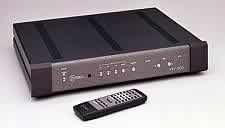
Classé CAP-100 integrated amplifier

With the price of high-end audio increasingly reaching for the stratosphere, audiophiles appear to becoming much more value-conscious. This trend is reflected in the recent popularity of CD players over separate transports and processors, and particularly in the sudden resurgence in integrated amplifiers. An integrated amplifier makes a lot of sense: the buyer saves the cost of two chassis, two power cords, two owner's manuals, and an extra pair of interconnects. You also get a simpler system.
Krell KAV-300i integrated amplifier

Is Krell risking its reputation? With the KAV-300i, an integrated amplifier that was originally envisaged as an export model, but for which home demand is clearly increasing, the Connecticut-based amplifier manufacturer is dabbling in low-cost territory. Previous Krell amplifiers have been known for their prodigious drive capability. Time and time again, it is found that the true measure of the bass performance of a big speaker isn't realized until a Krell power amplifier is brought into service. But how could an amplifier with a meaty 150Wpc specification and full remote control be built to sell for just $2350.


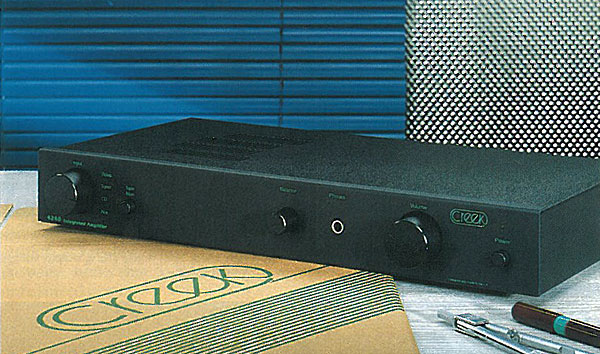
Creek 4240 Special Edition integrated amplifier

In this, my first equipment review for Stereophile, I'll begin by explaining my philosophy regarding reviewing inexpensive components. In my quest for products by designers who strive to establish new benchmarks for reproducing sonic realism at lower prices, I'll be looking for "value" components (a more appropriate term than "budget") whose designers logically fall into two camp. . .

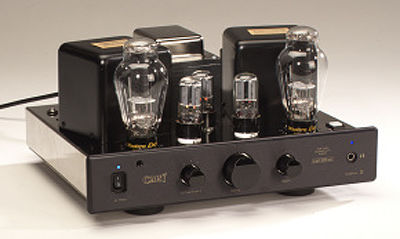
Cary Audio Design CAD-300SEI integrated amplifier

As strongly as I believe that the listening experience is the most reliable method of judging the quality of audio equipment, I've been biased against single-ended tube amplifiers because of their quirky measured performances. Without having heard single-ended under good conditions—much less living with an SE amplifier—I had concluded that many listeners must like them because they're euphonically colored by large amounts of low-order distortion and impedance interactions with the loudspeakers. SE amplifiers seem to be a departure from the goal of making the electronics transparent. Moreover, the range of loudspeakers suitable for SE amplifiers is so restrictive that I wondered why anyone would bother with these underpowered distortion-generators. I had fallen into a trap that I've repeatedly railed against: drawing conclusions without firsthand listening experience (footnote 1).


Exposure XV integrated amplifier

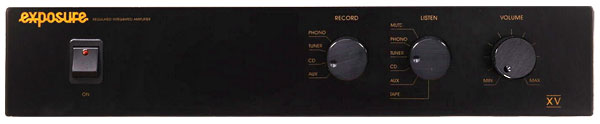
American audiophiles have long had a love-hate relationship with British integrated amplifiers. On one hand, they often provide superb musicality, sell for a moderate price, and don't take up much room. On the other, these British alternatives to Adcom or B&K separates often have low power output, nonstandard connectors, idiosyncratic appearance (footnote 1), and dictate the kind of speaker cable and interconnects you can use.
Advertisement
Advertisement
Advertisement