Budget Component Reviews

Sort By: Post DateTitle Publish Date

California Audio Labs Sigma D/A processor

Though their first CD player featured a vacuum-tube output stage, California Audio Labs is recently known for making good-sounding, moderately priced solid-state CD players, like the Icon Mk.II that Jack English reviewed in July 1992 (Vol.15 No.7). The Sigma, a $695 tubed D/A converter, furthers their reputation in both areas.

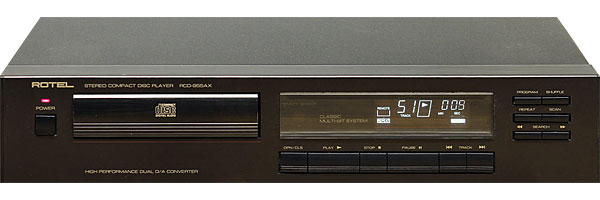
Rotel RCD-955AX and RCD-965BX CD players

On the mantel sat a stuffed Culo snake from Nuevo Laredo, with a red rubber tongue in freeze-frame flick. Above the bookcase hung the mounted head of a wild poi dog, killed in self-defense in Sri Lanka with only a Phillips-head screwdriver. A table-lamp made from a shellac'd, puffed-up frog wearing a sombrero and playing the contrabassoon bathed the room in a soft cream glow.

NAD 5425 CD player

One of my favorite parts of writing for Stereophile is reading all the heartfelt letters our readers take the time to write me. There's nothing I like better than to kick off my boots, stretch out on the futon-couch, and let the groovy love vibes just shine off the pages. Time doesn't always permit a reply, but for now...AS in MD: thanks! RP in CA: sure, why not? And SH in IN: I've tried that, but it chafed.

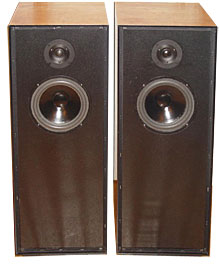
Snell Type E/III loudspeaker

One question posed by John Atkinson at the July 1991 Stereophile Writers">http://www.stereophile.com/features/109">Writers Conference had to do with the ease of reviewing: Is it harder to write a bad review of an expensive product than a good review? I find it hardest to write a good review of an inexpensive product. If I admire a less expensive loudspeaker, for example, it may become a recommended component, and can displace a more expensive speaker (that received mixed comments) from our twice-yearly rankings. This can be a big responsibility; even a conditional rave of a low-cost product means that JA may assign another Stereophile reviewer to do an immediate follow-up report. The Snell Type E/III loudspeaker may be a good case in point.


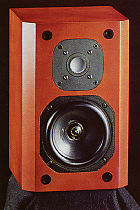
JMlab Micron & Micron Carat loudspeaker

Let me take you back some 40 years to the mono days of the early 1950s. It's unlikely that the minimonitor genus of loudspeakers, of which this French JMlab is a prime example, would have survived back then. There was the practical problem of available amplifier power. The average amp could squeeze out no more than 10 to 15W into an 8 ohm load—far less power than the typically insensitive minimonitor demands for adequate dynamic headroom. But that in itself would not have sufficed to displace the minimonitor from the marketplace. After all, "high-power" amps (50-watters) could be had at a price.


Audio Alchemy Digital Decoding Engine v1.0

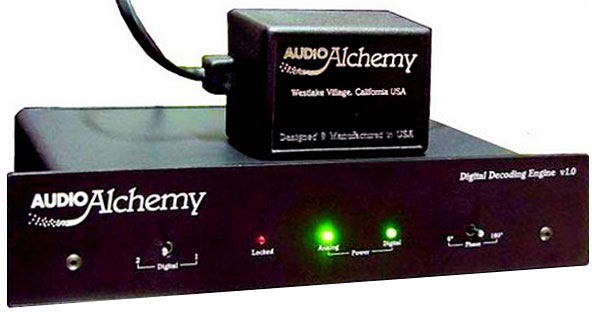
No, the $399 price listed in the specification block isn't a misprint. And yes, the Audio Alchemy Digital Decoding Engine v1.0 is indeed a full-function outboard digital processor. And since this is the August issue, not April, you can stop worrying that this review is some kind of joke.


The $399 Digital Decoding Engine is for real.

Phase Technology PC80 loudspeaker

In some ways, building an inexpensive yet musical two-way loudspeaker is a greater design challenge than creating a cost-no-object reference product. Although the latter is a much more complex endeavor, the venerable two-way box seems to bring out the creativity and resources of the designer. Rather than throw money at the product in the form of more expensive drivers, enclosures, or components, the designer of a low-cost two-way is forced to go back to the basics, rethink closely-held tenets, and rely on ingenuity and sheer talent to squeeze the most music from a given cost. Consequently, the inexpensive two-way is the perfect vehicle for designers to develop their skills. If one has mastered this art form, one is much more likely to achieve success when more ambitious designs are attempted.
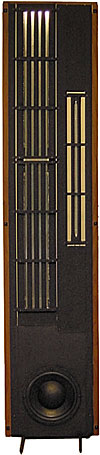

Snell Type K/II loudspeaker

In some ways, building an inexpensive yet musical two-way loudspeaker is a greater design challenge than creating a cost-no-object reference product. Although the latter is a much more complex endeavor, the venerable two-way box seems to bring out the creativity and resources of the designer. Rather than throw money at the product in the form of more expensive drivers, enclosures, or components, the designer of a low-cost two-way is forced to go back to the basics, rethink closely-held tenets, and rely on ingenuity and sheer talent to squeeze the most music from a given cost. Consequently, the inexpensive two-way is the perfect vehicle for designers to develop their skills. If one has mastered this art form, one is much more likely to achieve success when more ambitious designs are attempted.

Advertisement
Advertisement
Advertisement