
J. Gordon Holt

Sort By: Post DateTitle Publish Date

The Well-Tempered Arm
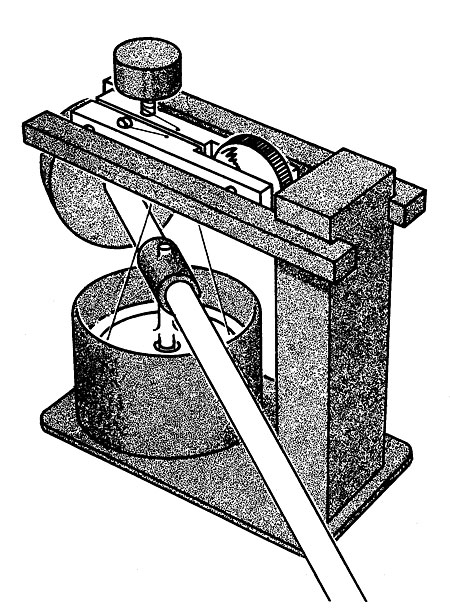
Remember Rube Goldberg? He was a cartoonist during the late 1920s to early 1950s who specialized in devising the most outlandish and ingenious devices ever conceived by man, before or since. A Rube Goldberg mousetrap, for example, would occupy an entire small room. In taking the bait, the mouse would tip a balance beam, dropping a steel ball into a gutter, down which the ball would roll to strike a paddle whose spin would wind up a string that hoisted a weight into the air until it reached a trigger at the top, which would then release the weight to drop onto the unsuspecting mouse. Splat!
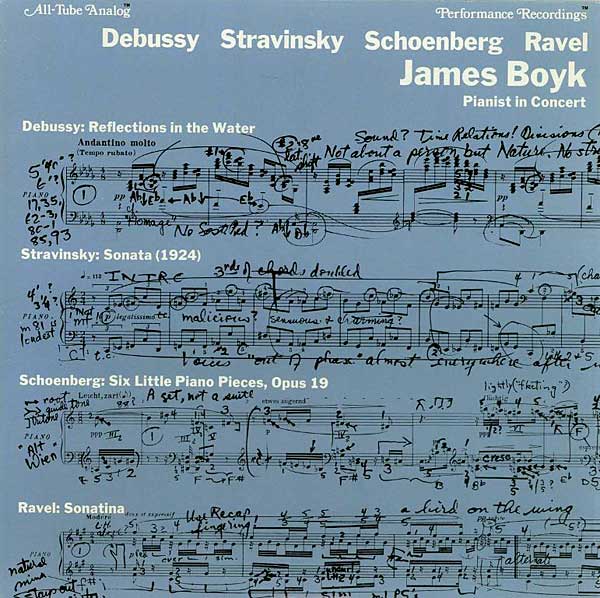

Meridian MCD & MCD Pro CD players

Well, it was inevitable. Prior to the MCD, every CD player had been a product of a major Japanese or European manufacturer, and we all know what kind of audio electronics "major" manufacturers usually design: adequate, but rarely much better. The MCD is the first player from a small, perfectionist-oriented firm, and an English one at that (Boothroyd-Stuart).


Snob Appeal

A number of recent letters have accused us of snobbishness and elitism because we devote so much space to reports about components that "common folk" can't afford. We are "snobbish" because we seem to look down on anything less perfect than a Wilson WAMM speaker system or an Audio Research SP-10 preamplifier. And we are "elitist" because we seem to show little interest in any components which fall short of state of the art. Far from being chastened by these letters, I am proud, to declare that they are right on target.

Recording of January 1985: Works for Piano

Performance Recordings is the closest thing to a one-man label. James Boyk is president, A&R director, musical director, recording engineer, production manager, jacket notes author, and the star performer. He is also Artist in Residence and lecturer in music and engineering (specifically sound recording and reproduction) at Cal Tech. And he happens to be one of digital's most ardent detractors, having conducted, and widely publicized, several controlled listening tests that proved to his satisfaction that digital recordings are destructive to musical sound. (I will not question his methodology or conclusions here; suffice it to say that James is as stalwartly pro-analog and anti-digital as it is possible to be.)

Recording of December 1984: Beethoven: Symphony 9

1284rotm.promo.jpgBeethoven: Symphony 9 in d, Op.125 ("Choral")
Berlin Staatskapelle and Rundfunkchor, Otmar Suitner, cond.; Dietrich Knothe, chorus master; Magdaléna Hajóssyová, soprano; Uta Priew, contralto; Eberhard Büchner, tenor; Manfred Schenk, bass.

Denon CD383C7-7021 (CD).


This is a positively stunning performance, abetted by one of the best-sounding orchestral recordings on CD to date.


I have long felt that the best reading of Beethoven's Ninth ever committed to records was an antique Columbia 78 set with the Vienna Philharmonic and Felix Weingartner (later released on an abominable-sounding LP: SL-165). I almost hate to day it, because the oldest idols die the hardest, but Suitner's is better! This is a monumental, consummately joyous Ninth that leaves the listener with a wonderful feeling of elation. If the orchestral playing is at times a little less than world-class and a couple of the soloists not quite up to star level, so what? This may well be the definitive Ninth on CD, both interpretively and sonically.

The Second Sense

When it comes to video, most audiophiles are insufferable snobs. These normally reasonable people, who are among the first to admit that great sound in a motion picture theater makes a great film much more enjoyable, nonetheless. scoff at the very idea of augmenting their own sound with images, or of trying to create the kind of audio-visual experience in their home that they routinely enjoy at the cinema. Doing that involves video, which they equate with TV, which they equate with LCD (footnote 1) dross. This is unfortunate, because visuals can enhance good sound, and good sound can do wonders for non-TV video programs like Hollywood motion pictures.


Yamaha CD-X1 & CD-2 CD players

CD player prices continue to go down and, surprisingly, sound quality goes up; the Yamaha CD-X1 is an example of both. It's a front-drawer loader with some interesting innovations. Pushing the Open/Close button opens the drawer; it can be closed either by pushing the same button again or by pressing lightly against the end of the open drawer. (We understand this was done because many such players have been damaged by users trying to force the drawer shut by hand.)


The unit has three operating modes: Auto, Manual and Single. In Auto, play begins as soon as the drawer is closed, or as soon as the AC is turned on if a disc is already loaded. In Manual, play begins only when you press the Play button. Single is the same as Manual except that the unit goes into Pause after playing a single selection. Pressing Pause then plays the next selection.

Advertisement
Advertisement
Advertisement