As We See It

Sort By: Post DateTitle Publish Date

Best Wishes for the New Year

I'm sitting here in front of the trusty Toshiba 286 laptop on December 31, 1992, stuck with apparently incurable writer's block; in a couple of hours, we will be taking off en famille for the latest of Larry Archibald's legendary New Year's Eve parties. I wish I had something to write about for this month's "As We See It" essay; I wish...I wish...you know, there are a number of things I really wish for right now, yet I don't believe there is a component out there that can give me what I want.


"If it sounds good..."

"...and measures bad, then you're measuring the wrong thing!" If one motto could sum up this magazine's philosophy, this would be it. Too many times we have discovered components that sounded musically fabulous while offering measured performance that was, at best, merely competent. Yet recently, I'm starting to lose confidence in that old saw.


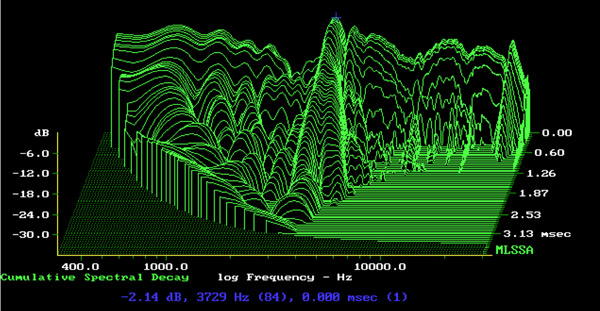
On a number of occasions, I or another of Stereophile's reviewing team has heard a product sounding flawed in ways later revealed by measurements. A closed story, you might think—but consider the NEAR-50M loudspeaker reviewed by Dick Olsher in this issue. Despite hearing many good things in the speaker's sound, Dick was bothered by a tonal-balance problem in the low treble. He was also disturbed by a lack of integration between the tweeter and midrange unit. When I measured the '50M, my response graphs (footnote 1) pretty much explained why Dick heard what he heard. Nevertheless, other reviews of this loudspeaker have been ecstatic in their praise, one even stating that it was "one of the most transparent and balanced dynamic loudspeakers available at any price" (my italics).

Mark Fisher

Some time ago I wrote about the need for high-end audio companies to constantly reinvent themselves: You may be receiving accolades for your latest and greatest product, but you'd also better be well along the path to developing its replacement. High-end audio is a field of constant change; no product remains supreme for long.


As We See It: Between the Ears

Audiophiles constantly seek ways to improve the experience of hearing reproduced music. Preamps are upgraded, digital processors are compared, turntables are tweaked, loudspeaker cables are auditioned, dealers are visited, and, yes, magazines are read—all in the quest to get just a little closer to the music.


I Have Heard the Future...(DSP Room Acoustics Correction)

Dateline—Chicago, May 30, 9:00pm. Exploding fireworks lit up the sky above the Chicago river as 200 leading high-end designers gathered in the Hotel Intercontinental for Stereophile's 30th Anniversary banquet. After a repast of four gourmet courses and five wines, the time came for after-dinner speeches to celebrate Stereophile's past and high-end audio's future. Publisher">http://www.stereophile.com/asweseeit/593">Publisher Larry Archibald described his adventurous transition from the high-end car business to risky publishing. Introducing J">http://www.stereophile.com/historical/712">J. Gordon Holt, he praised JGH's uniquely lucid writing and his unflinching insistence that equipment designed to reproduce music should be judged on its ability to do just that—the unconventional view that launched high-end audio.


Where Did We Go Wrong?

Editor's Introduction: Thirty years ago this month, in September 1962, J">http://www.stereophile.com//interviews/66/">J. Gordon Holt, lately Technical Editor of High Fidelity magazine, was working on the contents of the first issue of his">http://www.stereophile.com//features/708/">his brainchild The Stereophile, a magazine that would judge">http://www.stereophile.com//asweseeit/711/">judge components on how they actually sounded. We thought it appropriate, therefore, to use the occasion of the 1992 Summer Consumer Electronics Show, held in late May in Chicago, to invite some 200 members of the international high-end industry to a dinner to celebrate the occasion. Larry Archibald dug deep into the magazine's coffers; Ralph Johnson took time off from organizing the 1993 High End Hi-Fi Show to burn up the long-distance telephone lines faxing invitations; the conversation was excellent, the food superb, and the wine even better. Which is probably why the venerable JGH took the opportunity to remind the assembled luminaries what this whole business is supposed to be about. Here follows the text of his speech. I hope you find it as stimulating reproduced in these pages as did those who heard it live.—John Atkinson


A Clash of Values?

In the April 1992 Stereophile, reader Hilary Paprocki expressed his belief that recording engineers are unconcerned about sound quality. Indeed, he went so far as to allege that engineers intentionally use inferior miking techniques so that they can bill clients for additional time spent trying to fix the sound. The example he used was the engineer who places a microphone directly in front of a guitar amplifier, a technique Mr. Paprocki felt captured only "4%" of the sound. Mr. Paprocki also likened recording engineers to "featherbedders."


It Don't Mean A Thing If It Ain't Got That Schwing

Epiphanies only come when you stop looking for them, and mine came in a room full of preschoolers watching cartoons at a Pizza Hut. I was taking my little nieces Alix (4) and Casey (1) out for dinner, and the last thing on my mind was audio; we wanted to PARTY! So my girlfriend Dara and I bundled them up in their car-seats and we high-tailed it over to the Hut, with visions of continuous-loop Tom'n'Jerry and cheap buffet pizza dancing in our heads.


Advertisement
Advertisement
Advertisement