Interviews

Sort By: Post DateTitle Publish Date

Walter Sear's Analog Rules

The first thing you notice about Walter Sear's legendary">http://www.searsound.com">legendary Manhattan studio is that it feels so darn comfortable. Sear Sound doesn't have a wall of gold records, gleaming million-dollar consoles, or the latest high-resolution digital workstations, but a quick stroll around the three studios reveals a treasure trove of tube and analog professional gear: a pair of Sgt. Pepper–era Studer recorders plucked from EMI's Abbey Road studios; an early Modular Moog synthesizer Sear built with Bob Moog; and a collection of 250 new and classic microphones.

A Glorious Time: AR's Edgar Villchur and Roy Allison

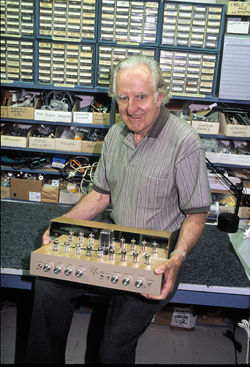
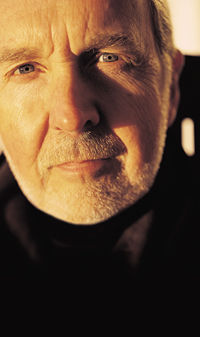
Editor's Note: In 1954, a New York writer and teacher reinvented the world of audio with the modest-looking Acoustic Research AR-1 loudspeaker. A small fraction of the size of the behemoths that were then de rigeur for the reproduction of bass frequencies, Edgar Villchur's loudspeaker went as low with less distortion. Perhaps more importantly, the AR-1 pioneered both the science of speaker design and the idea that a low-frequency drive-unit could not be successfully engineered without the properties of the enclosure being taken into account.


Jim Fosgate: Of (Surround) Sound Mind

Jim Fosgate fits the category of Classic American Inventor to a T. This softspoken, quietly intense man has earned 18 patents and founded three successful electronics companies. In the late 1970s, he pulled out of the car audio business to follow his quadraphonic bliss, and designed the Fosgate Tate 101, arguably the finest quad decoder of the era. He also created the best-selling matrix surround processor of all time, Dolby's Pro Logic II, and in 2003 won an Emmy for the Development of Surround Sound for Television. He now serves as a senior executive consultant for Fosgate Audionics, a division of the Rockford Corporation.


Tom Jung of DMP: Making Musical Sense

Tom Jung's career has been dotted with numbers. In 1969, he and a partner founded Sound 80, a Minneapolis recording studio named by an advertising wizard who had previously conjured up the appellation Cure 81 for a Hormel ham, supposedly while sipping Vat 69 scotch. Some years later, engineers from another Midwestern company with a numeral in its name, 3M, stopped by with an experimental tape recorder that also employed digits. Those zeros and ones proved critical to the recordings Jung went on to engineer and produce at his next company, Digital Music Products, better known as DMP.


Dan D'Agostino of Krell: Power Is As Power Does

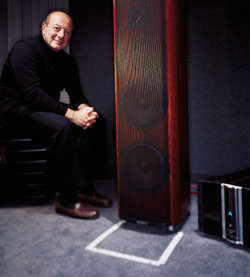
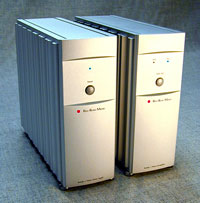
Maybe Dan D'Agostino was destined to develop and build a line of products distinguished by their sheer might. After all, he grew up just blocks from a natural phenomenon synonymous with power: Niagara Falls. Even today, when the 56-year-old D'Agostino returns to his boyhood home to visit his parents, he enjoys pulling on a pair of shorts and going for a long run in the adjacent park, which resounds with the Falls' unrelenting thunder.


Jim Winey: Maggies Man

The Pennsylvania Gazette documented an early connection between music and an American named Winey when, in 1759, it listed for sale as part of an estate "a middle sized organ, having eight stops." Interested parties were directed to one Jacob Winey, a Philadelphia merchant.


Mark Levinson's Milestone Year

Mark Levinson, born December 11, 1946, celebrates an important anniversary in 2002. Exactly 30 years ago he jogged onto the playing field of high-end audio, so early in the game that fans, then few and far between, could count the players on their fingers.
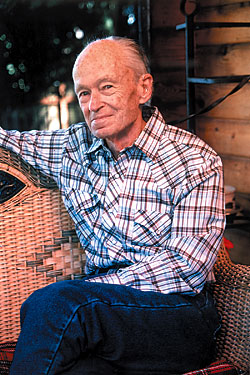
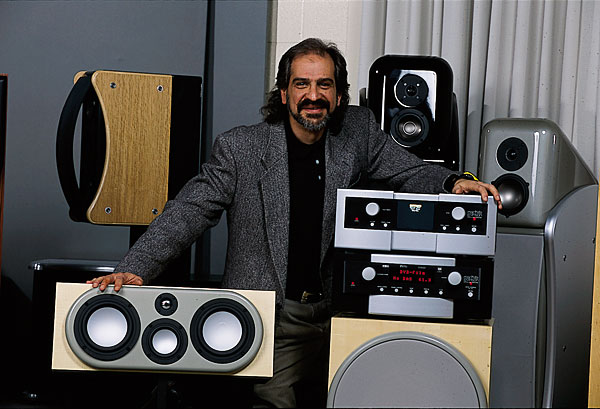

The high-fidelity industry seems a logical home for a jazz musician like Levinson, who once envisioned a career playing flugelhorn and double bass, but his voyage into audio was a detour that could be said to have begun at age 22, when he took a job working on a film about Joan Baez. "It was a joy to find people willing to pay me to do something," quips the trim, youthful 55-year-old, who is quick to recall his "nonexistent income as a musician."

The Search for Roy DuNann

I don't remember the year, but I remember the moment when I first became intensely curious about Roy DuNann. It must have been about 1975, right after I moved to Seattle. I bought a Sonny Rollins LP called Way Out West, took it home, cued it up on my Thorens turntable, dropped the tonearm, and suddenly I was in a room with Rollins and Shelly Manne and Ray Brown. It was a shipping room with records stacked on shelves all around the musicians, but I wouldn't know that until many years later.


Ikonoklast: Linn's Ivor Tiefenbrun

In July 1877, Thomas Edison wrote that he was sure he would "be able to store up & reproduce at any future time the human voice perfectly," and the word phonograph soon began showing up in his lab notes. By the time Ivor Tiefenbrun stepped onto the audio industry soundstage, nearly a century had passed, and even discriminating listeners took the record player for granted. But Tiefenbrun had discerned sonic differences among players, and he knew that his LP12—he had built a prototype for personal use—was a superior performer. When people told him that turntables do no more than go 'round and 'round, he would rebut them by pointing out that speakers merely go in and out.

Phil Muzio, Madrigal's CEO

Photo: Mercury Pictures: Chris Fitzgerald


Madrigal's chief executive officer is known for working well into the night, but that's been a goal of his since boyhood. For many years he dreamed of becoming a professional guitarist, and even dropped out of Yale to satisfy a ravenous musical appetite. "Enough of trying to be a Renaissance man," Phil Muzio recalls thinking at the time. His aim was to be out there on the bandstand making music.

Advertisement
Advertisement
Advertisement