

Analog Corner #258: Dan D'Agostino Momentum Phonostage & Gold Note Tuscany Gold MC cartridge
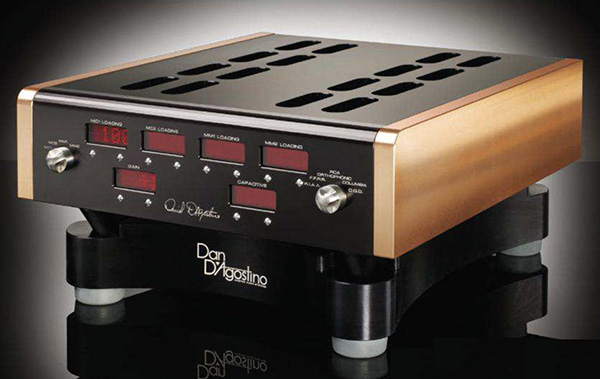
At the beginning of this century, when the vinyl resurgence was at best nascent and few believed it would be as strong as it is today, Boulder Amplifiers manufactured a phono preamplifier that cost $29,000. I reviewed that model, the 2008 (now discontinued), in the July 2002 issue. With a power supply that would probably be more than adequate for a high-wattage power amp, it was built to a standard approached by few other makers of phono preamps...
With his lines of power amplifiers and preamplifiers well established, Dan D'Agostinothe founder, CEO, and chief designer of the company that bears his nameset about designing a phono preamplifier.
Analog Corner #259: Audio Union Döhmann Helix 1 turntable and Schröder CB tonearm
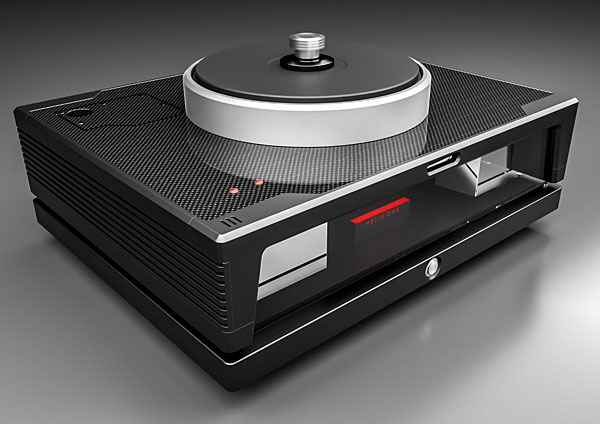
The ability to fine-tune a vinyl playback system is part of what makes it possible to combine an archaic technology with modern thinking and materials to create musical magic, and take listeners to new heights of ecstatic musical pleasure. It's why so many young people are tuning in to vinyl, and helps explain why just today, as I write this, it was announced in the UK that, for the first time, revenues from sales of vinyl exceeded those from downloads.
Analog Corner #260: CH Precision P1 phono preamplifier
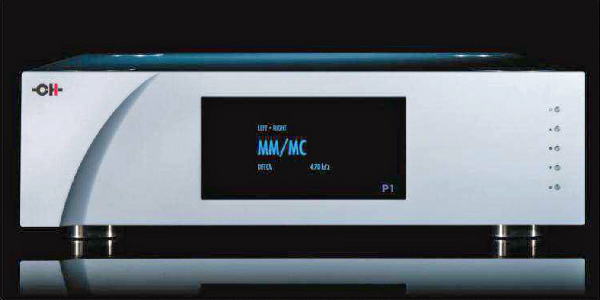
Although Swiss-based CH Precision is a relatively young company, its core design team has been involved in high-performance audio for many years. Their website doesn't state the company's age, but something there did provide a hint: Among the design team's previous activities was work for another Swiss company, Anagram Technologies...I hadn't made the connection between Anagram and CH Precision when Raphael Pasche, the latter's electronics design engineer, visited last fall to install CH Precision's P1 dual-mono phono stage and the optional X1, a discretely regulated, outboard linear power supply that's claimed to exhibit ultralow levels of noise. The P1 can be ordered as a stereo preamp for $31,000; add $17,000 for the identically sized X1 power supply. Or one mono P1 can be used for each channel, for $55,000 plus $34,000 for two X1s. Expensive stuff.
Analog Corner #261: Brahms Symphonies Direct to Disc from the Berlin Philharmonic
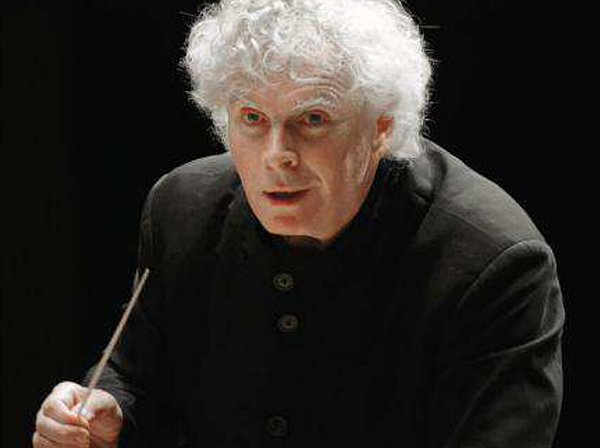
In November 2016, the Berlin Philharmonic made a stunning record-release announcement: a boxed set of all four Brahms symphonies, conducted by Sir Simon Rattle, on six LPs, recorded and mastered direct to disc in September 2014. The release would be limited to 1833 setsa quantity chosen in honor of the year of the composer's birthat a price of 499 per set.
Analog Corner #262: CH Precision P1 phono preamp, darTZeel NHB-18NS Mk.2 preamp, Shunyata Research Denali power conditioners
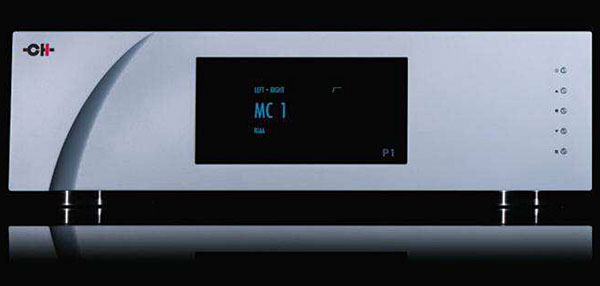
CH Precision's P1 phono preamplifier, which I wrote about in the April 2017 issue, is not going back to its manufacturer. The longer I used it, the more obvious it became that I couldn't part with it, even though I said I couldn't afford it. The cost was stiff even at the accommodation price (at retail, the CH Precision P1 and its optional X1 power supply are $31,000 and $17,000, respectively, footnote 1), but I decided I could afford it, and bought it for myself as a 70th-birthday present. No, I can't hear as well as I did 30 years ago, but my listening is better than ever.
Analog Corner #263: Zesto Andros Téssera phono preamp & Acoustic Signature Ascona turntable and TA-9000 tonearm
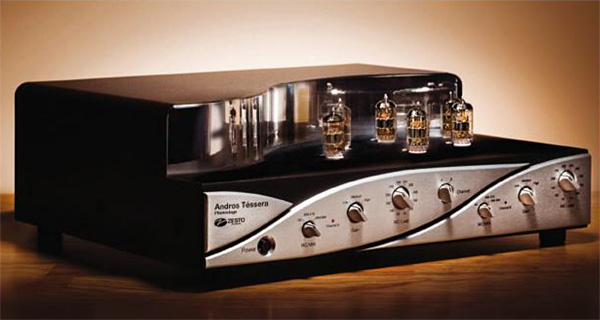
Maybe you've seen the widely circulated New Yorker cartoon: Two guys stand in front of a nicely drawn, tubed audio system, under which are shelves full of LPs. One guy says, "The two things that really drew me to vinyl were the expense and the inconvenience."
Analog Corner #264: Ortofon Windfeld Ti Cartridge
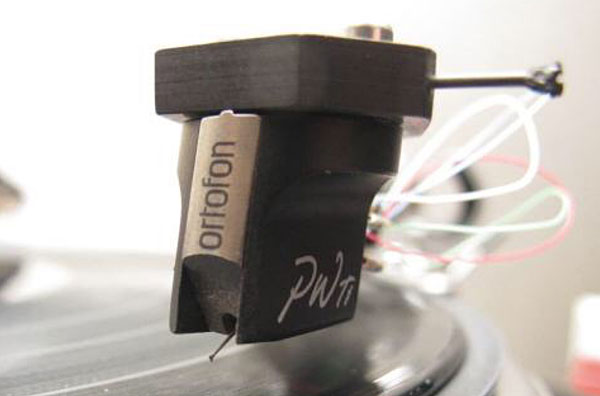
Ortofon (footnote 1), which turns 100 in 2018, launched the original Windfeld cartridge nearly a decade ago. Named for cartridge designer Per Windfeldwho had just retired at age 75, after 30 years with the companythat top-of-the-line cartridge cost $3400 at the time of its introduction.
Analog Corner #265: Notes from the Road (Hi-Fi Shows & MQA)
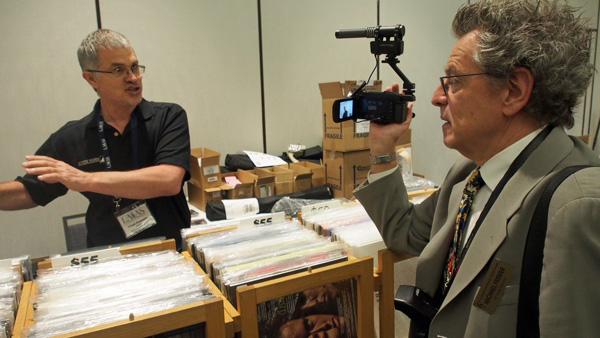
At audio events held by the Los Angeles and Orange County Audio Society, I'm usually called on to speechify about one thing or another, or to roast an honoree at one of the Society's December Galas. But at the spring 2017 Los Angeles Audio Show, Bob Levi, the Society's president, quipped, "This is one awards dinner where you won't have to entertainso relax and enjoy!"
Analog Corner #266: SME: Stirred, Not Shaken
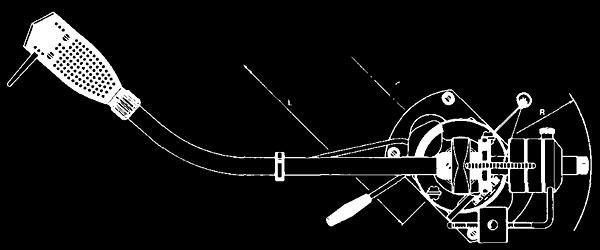
The death of a company founder, whether sudden or expected, often produces trauma. Whoever was tapped to replace the visionary Steve Jobs would be handed a thankless task, but at Apple, timid Tim Cook's so-far unimaginative performance as caretaker demonstrates the difficulties of succession. As Jobs beat Sony to the iPod, Cook let Amazon beat him to the Alexa.
Analog Corner #267: Reed Muse 3C turntable & Reed 3P tonearm
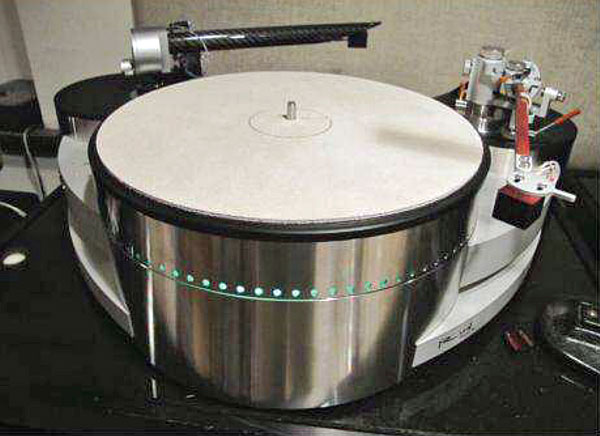
The Reed 3P tonearm, which I reviewed in my April 2016 column, was an impressive piece of imaginative engineering and manufacturing prowess. I asked Reed's importer, Axiss Audio, if I could hold on to the 3PI was already planning to review Reed's Muse 3C turntable. I'm glad I didthe 3P ($5000) and 3C ($15,000) make an outstanding combination. (When the only complaint you have about a turntable is that the cable from its power jack to the power supply isn't long enough to reach the floor, you can be sure you're going to write a very positive review.)