

Classic Records issues DADs---high-quality music DVDs
In a press conference held January 9 at the 1998 Winter Consumer Electronics Show in Las Vegas, Classic Records announced the debut of the Classic 24/96 digital audio disc "DAD" series of audio-only DVD-Videos. (Video information is included on the disc but represents only a tiny fraction of the data space.)
Classic Records Lining Up First DVD-Audio Releases
Back when DVD players were first released in the US, Classic">http://www.classicrecs.com/">Classic Records was among the first companies to exploit the fact that early machines, though intended for the video enthusiast, could play a 24-bit/96kHz audio recording as well as movies (see previous">http://www.stereophile.com/news/10072/">previous story). These early high-resolution discs, which Classic called DADs, were intended to hold us over until DVD-Audio (then thought to be just around the corner) would finally hit the market. More than two years later we're still waiting for DVD-A, but Classic intends to be ready when it finally appears.
Classical Gets Web Boost
Classical music fans will be happy to learn that Vivendi Universal has decided to give two of its classical labels a state-of-the-art web facelift. Deccahttp://www.deccaclassics.com">Decca; and Philips">http://www.philipsclassics.com">Philips Classics are combining their resources and launching a single new site this month designed by trendy web developer Razorfish.
Classical Heaven?
One of the great tragedies of Tower Records' lingering demise was that classical music lovers lost perhaps their most reliable source of recordings. Say what you will about brick-and-mortar record stores, there was something wonderful about finding what you wanted where it was supposed to be. Just try looking up, say, Bruckner's Fourth Symphony on Amazon and see what you get. (Amazon's AI, as good as it is, is a classical music idiot.)
Classical Live on Google Play Music
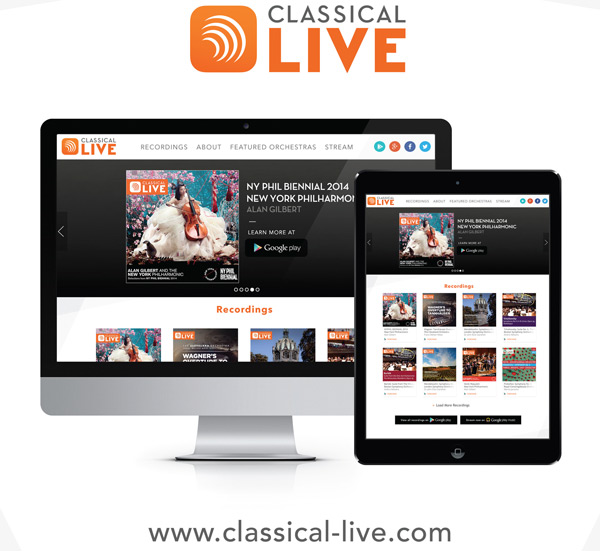
In a major plus for the accessibility of classical music on the web, Google Play Music recently launched its Classical Live initiative. Through an exclusive contract with five major symphony orchestrasBoston Symphony Orchestra and new Music Director Andris Nelsons, The Cleveland Orchestra and Music Director Franz Welser-Möst, London Symphony Orchestra and Sir John Eliot Gardiner, New York Philharmonic and Music Director Alan Gilbert, and Royal Concertgebouw Orchestra of Amsterdam and Music Director Mariss Jansonsthe organizations will offer live recordings for download and streaming exclusively on Google Play for the first six months they are made public.
Classical Music Lovers Keen Downloaders
Surprise! If you love Beethoven, Schnittke, Reich, and Richard Strauss, and frequently play classical music on your iPod or hard drive, you're far from alone. Results of an Internet poll of classical music listeners commissioned by the British magazine Gramophone reveal that 75% of those surveyed use 21st-century media—everything from PCs to MP3 players—and 57% have ripped some of their classical CD collection to another digital format. In fact, 20% of respondents not only download classical music legally, but prefer to listen to it on their MP3 or other digital music player.
Classical Musicians Embrace the Internet
With the music industry in retreat from classical music, dozens of the nation’s symphony orchestras, opera and ballet companies have decided to bring their work directly to the people. On June 12, an association of 66 orchestras and opera groups signed an agreement with the American">http://www.afm.org/">American Federation of Musicians (AFM) that will let them put their music on the Internet, without interference or fee extraction by the recording business.
Classical Stations Win Top Rankings
Over-the-air classical music broadcasting is becoming increasingly rare, but classical has got a huge listenership on the Internet, according to a survey by rating service Arbitron">http://www.arbitron.com">Arbitron, Inc., which early this month announced that three classical music stations were among the five most listened to on the Internet.
Classified Ads Come to the Stereophile website
There is no denying that buying pre-owned high-end gear can easily provide the biggest bang for the audio buck. Many of us got our first glimpse of sonic nirvana after scoring some second-hand component at a fraction of its retail price. Or perhaps you've just bought a new product and need to unload that old classic hanging out in the closet. Stereophile wants to help.
Clear Channel Communications will Unload 72 Stations in Merger Deal
The radio industry's frenzy of mergers and acquisitions has slowed down but hasn't stopped. San Antonio-based Clear">http://www.clearchannel.com/">Clear Channel Communications Inc., one of the largest radio broadcasters in the US, has agreed to acquire AMFM">http://www.amfm.com/">AMFM Inc., another major player. The merger will give Clear Channel more than 850 stations nationwide. The deal hinges on Clear Channel unloading 72 of its stations in 27 markets to comply with Federal">http://www.fcc.gov/">Federal Communications Commission rules limiting the number of stations that can be owned by a single operator.