

Wadia Digital and Hales Design Group Join Forces
Merger mania in high-end land: Loudspeaker manufacturer Hales">http://www.halesdesigngroup.com/">Hales Design Group and digital audio manufacturer Wadia">http://www.wadia.com/">Wadia Digital Corporation are joining forces to create what the companies' executives are calling "new digital products for the new millennium." The announcement was made February 14 at Wadia headquarters in River Falls, Wisconsin.
Wadia Returns as Division of Audio Video Research
Briefly gonehttp://www.stereophile.com/news/10843/">gone; but not forgotten, Wadia Digital will return as a division of Audio Video Research, Inc. (AVR) of Ann Arbor, Michigan, a new company formed in December, 2000 by combining the assets of Wadia and Digital Imaging Corporation. Wadia products, including the 861 and 831 CD players and 27ix processor, will be shown at CES in January, 2001.
Wadia's Assets Sold; Kinergetics Research Folds
Venture capital group Shared Ventures is now the legal owner of the assets of Wadia">http://www.wadia.com/">Wadia Digital Corporation. Wadia's majority shareholder, Shared Ventures, acquired the company's name, intellectual property, and physical inventory at a public auction in Minneapolis on September 12. The law firm of Siegel, Brill, Greupner, Duffy, and Foster, P/A, of Minneapolis, managed the auction. Originally scheduled for late August, the auction was postponed for two weeks after a flurry of interest following the publication of an official notice in the Minneapolis">http://www.startribune.com/">Minneapolis Star-Tribune.
WAMM Master Chronosonics in West Palm Beach, Florida
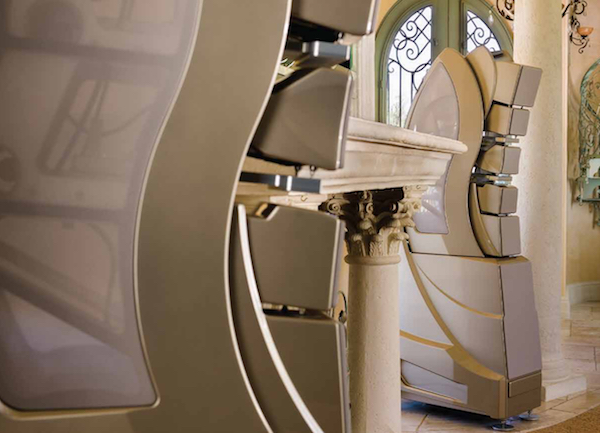
On Friday, November 22, from 4–9pm, at Audio Advisors in West Palm Beach, Florida, Peter McGrath of Wilson Audio will be demonstrating the WAMM Master Chronosonic with the WAMM Master Subsonic Subwoofers.
Wanted: EE PhD Candidate
See it, hear it. That is the essence of an engineering project underway at the University of Applied Sciences in Fribourg, Switzerland—one that needs the assistance of a highly qualified PhD student.
Warner Backs CD/DVD-Audio Hybrid
Warner">http://www.warnermusic.com">Warner Music Group is supporting efforts by the DVD Forum to create a hybrid dual-layer CD/DVD-audio disc, according to reports from New York the first week of December. WMG, a unit of AOL Time Warner, is one of the music industry's principal backers of the DVD-Audio format.
Warner Bros. Announces "Remasters" Series
Audiophiles have complained since the earliest days of the compact disc that music reissued in the digital format often doesn't sound as good as it does on the original LPs. For nearly 20 years, such complaints have been dismissed by ordinary music lovers and by music-industry executives as the rantings of purists, but at least one major label is now admitting that many early CDs were not very good.
Warner Bros. "Gives Up" on Classical
This is old news, but you may not have read it anywhere: Warner Classics no longer exists as an "active" label. Gramophone published a news item breaking the story on June 2 and Norman Lebrecht apparently analyzed and excoriated the move in his La Scena Musicale web log shortly thereafter. We say "apparently," since Lebrecht's site now reads www.scena.org is now expired.
Warner CEO: "We Were Wrong."
Speaking at the GSMA Mobile Asia Congress in Macau on November 13, Warner Music Group (WMG) chairman and CEO Edgar Bronfman, Jr. warned mobile phone executives to heed the mistakes of the record industry as it moved forward.
Warner Drops DVD-A Prices
Things are looking up for high-resolution audio, with price drops for DVD-Audio discs announced by one major record label in a move to attract a larger audience.