

Gramophone Dreams #58: Stax SR-X9000 headphones, EAR Phono Classic, Bob's Devices Sky 20 SUT
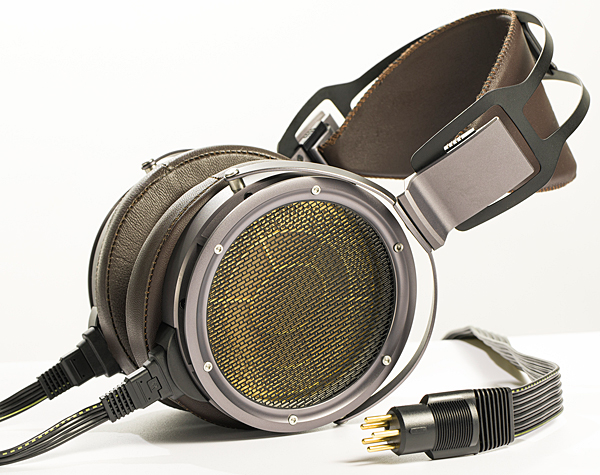
A month ago, I ran into my Russian neighbor in the hall. As usual, he asked me what I was reviewing. (Vladimir likes to come over and listen, then find fault with everything I play.) When I told Vlad I had Stax's new top-of-the-line earspeaker, the SR-X9000, he lit up and exclaimed, "I need to hear it," adding that he has been a lifelong Stax fanatic and owns at least five different models, "dating way back."
Gramophone Dreams #62: Dan Clark Audio Stealth & Warwick Acoustics Bravura headphones
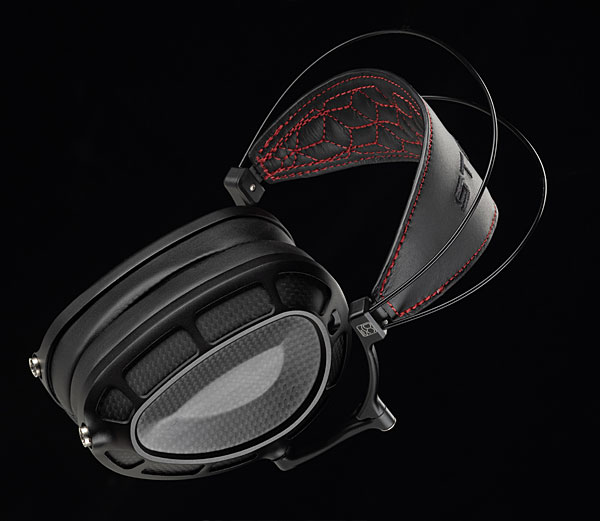
I am an artist by trade. Saws and brushes and cameras are some of the tools I use. The aesthetic quality of the things I make is determined not by my skill with tools but by the dynamic relationships I establish among space, color, tone, and shape.
Of those elements, shapes are the most important because they are the first thing a viewer notices and the chief vehicles for transmitting sentiment and artistic intent. Stylized shapes, like those in popular art, may induce superficial responses in the viewer. Taut, Euclidian shapes suggest their author is of a higher mind; the Parthenon and Pantheon exemplify this type of shape making.
Gramophone Dreams #64: Meze Audio Elite headphones & HeadAmp GS-X mini Balanced headphone amplifier

I have a peephole in the door to my first-floor apartment. It looks down a straight hall to a glass wall framing the front door of my building. For 13 years, its job has been to let me see who is ringing my buzzer and who is making a racket in the hall.
Gramophone Dreams #7

The golden rays pouring in through the left oculus transport a tiny child carrying a cross: ". . . the devil was vanquished, as if he had just swallowed the bait in the mousetrap." In his essay "'Muscipula Diaboli,' The Symbolism of the Mérode Altarpiece," the late art historian Meyer Schapiro explains how every object, every surfaceeven the smoke, light, and volume of spacedepicted in the famous triptych by Robert Campin (ca 13751444) is a coded symbol explicating the mystical underpinnings of Netherlandish Protestantism.
Gramophone Dreams #72: Abyss Diana & Focal Utopia headphones; Eleven Audio Broadway & Naim Uniti Atom HE amplifiers

Since the 1980s, I've been asking every speaker designer I meet, "What amplifier do you recommend using with your speakers?" Annoyingly, they always say, "My speakers are easy to drive. Any amp will do." Whereupon I'd whine, "Aww, come on man, don't feed me that. What amp did you use when you were designing the speaker?" The closest any manufacturer came to providing a real answer was Wendell Diller of Magnepan, who, when I reviewed his .7 quasi-ribbon speaker, said, "We used an amp of our own design. It's not for sale. But any amp that doubles its power into 4 ohms will be fine." Wendell's answer helped me choose effective amplification and feel more confident about my conclusions.
Unlike loudspeaker manufacturers, headphone manufacturers know that which amp a reviewer uses could make or break a review of their product. So, wisely, they seem grateful when I ask for guidance.
Gramophone Dreams #75: dCS Bartók APEX; HiFiMan Audivina, HE-R10P, HE1000 V2 headphones
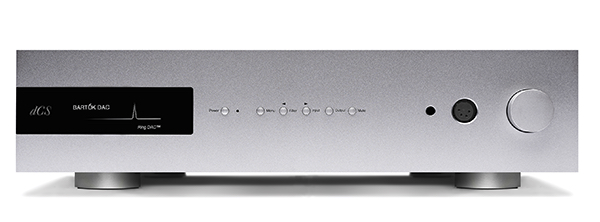
I view poetry as more than a literary genre. It's a worldview and a state of being that frames my daily experience in the supernal. I've consumed a lifetime keeping my senses peeled for authentic, manmade mysteries, especially in art and music. Music is my favorite hunting ground, and nowhere have I found mysteries as DNA-deep as the 59 takes of 29 songs recorded in only five days by Delta blues legend Robert Johnson (19111938). I've played the Columbia Records 1961 anthology King of the Delta Blues Singers (Columbia LP CL 1654) 100 times since my days in Chicago as a teenager, and I still haven't grasped more than a portion of its juke-joint poetics.
Gramophone Dreams #81: Feliks Envy headphone amplifier
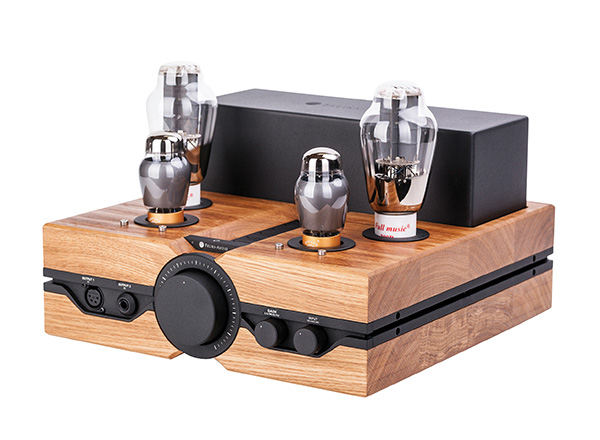
I always say I can't find what I'm not looking for, which doesn't mean I always know what I'm looking for. And not knowing what I want is unsettling. Recently, I was reminded of the thoughts of French polymath-philosopher René Girard (19232015), who suggested that people are not actually motivated by specific things like lust or capital or power, as major philosophers have declared, but by subtle, disconcerting forces of existential desire for something outside ourselves, never actually knowing what that something is.
Girard explains how this not knowing drives history and invention. His main premise is that we feel desire but, not knowing what we desire, mimic the desires of others. These "others" we mimic constitute a third element, interrupting the lines of force between a person and the objects desired. This, according to Girard, makes desire, and by extension human evolution, a nebulous but powerful anthropological force engaged in forming human cultures.
In other words, you might like big speakers and fat speaker cables, but maybe only because people around you appear to like them. Same with cars and clothes and lovers.
Gramophone Dreams #82: IKIGAI Kangai-level cables, dCS Lina headphone amplifier

Decades ago, when I was peddling million-dollar sound systems, an astute potential customer asked me: "If I buy your very expensive system, what will I get that I'm not getting with my less expensive system?" Smiling my best fatherly smile, I whispered to his ear, "Goosebumps, tears, and laughter."
With a slightly worried look, he asked, "How much did you say those silver cables cost?"
Thirty years later
Changing audio cables always changes the sound of my system, sometimes a lot but usually just a little. Typically, the sonic effects of cable changes are modest shifts in focus, tone, or transparency. But sometimes during blue moons I've seen a new set of cables turn a blah, dull, fuzzy system into a macrodynamic, microdetailed one. Or turn a cool, mechanical-sounding system into something fierce and mammalian.
Changing audio cables always changes the sound of my system, sometimes a lot but usually just a little. Typically, the sonic effects of cable changes are modest shifts in focus, tone, or transparency. But sometimes during blue moons I've seen a new set of cables turn a blah, dull, fuzzy system into a macrodynamic, microdetailed one. Or turn a cool, mechanical-sounding system into something fierce and mammalian.
Gramophone Dreams #83: Benz Micro Gullwing SLR, Goldring Ethos phono cartridges, Meze 109 Pro headphones

It was almost Christmas, a perfect, chilly, blue-sky day to visit the Met Museum and see the Manet/Degas show before it ended. On my way, walking north on Madison Avenue, I passed the uptown branch of Gagosian Gallery and noticed a brightly lit poster behind thick glass announcing their exhibition of American artist Brice Marden's last paintings. The title of the show was "Let the painting make you," which sounded like an invite and a challenge, so of course I had to go in. I was in the perfect mood to ride in Gagosian's swanky private elevator and see how a famously serious painter with a six-decade career chose to communicate his last thoughts.
Gramophone Dreams #94: Sparkler Audio S515t CD transport, Beyerdynamic DT 1990 PRO MKII and DT 1770 PRO MKII headphones
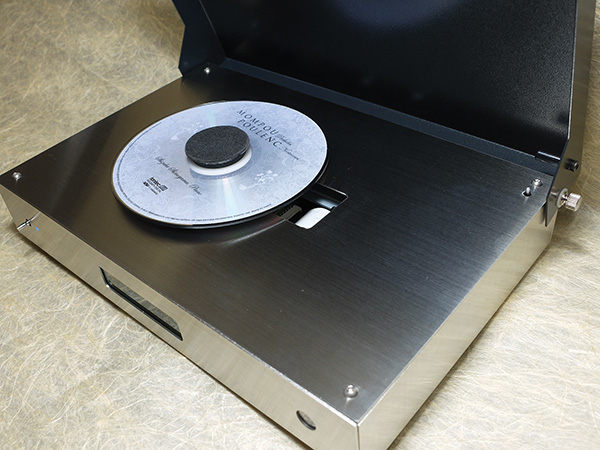
I am a lucky person. I've been writing monthly audio columns since 1992, and the chief benefit of that privilege has been that each month my mind is free to visit distant shores searching for exotic artifacts that readers might never encounter at their local audio emporium. This month, my raft drifted again onto Japan's metaphorical shores.
I was cordially greeted by an international cohort: Victor Kung (VK Music in Canada), Yoshi Segoshi (the American distributor for 47 Labs), Junji Kimura (47 Labs' founder and chief engineer), and Kazutoshi Tsukahara, formerly associated with 47 Labs (in Japan) and now founder and chief engineer of Sparkler Audio, which is also based in Japan. Sparkler Audio makes modestly priced components including the model S515t "ballade II" CD transport, which I am about to describe.