

Shure E3c in-ear headphones
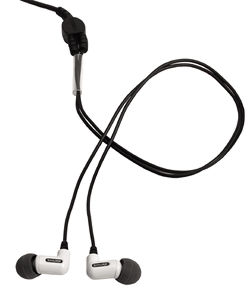
"Ah, I see what the problem is. Your ear canals are larger in diameter than normal."
Shure E4 in-ear earphones
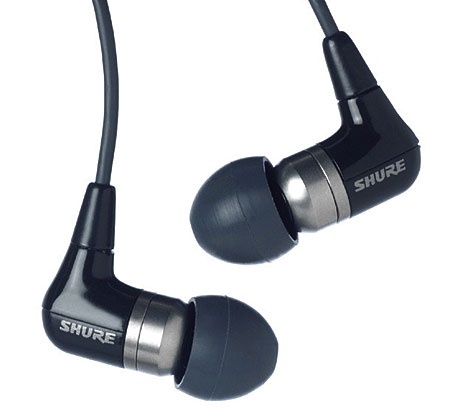
In New York and other major cities, I understand, bus accidents are a real problem. Buses turn right and failing to yield to pedestrians. Clueless pedestrians walk in front of buses. I haven't seen any statistics, but I'm guessing that in this era of cell phones and iPods, the problem has gotten worse: not only do such devices distract you, they make it harder to hear warning signs—such as the sound of a municipal bus bearing down on your ass.
Shure In-Ear Series SE215, SE315, SE425, and SE535
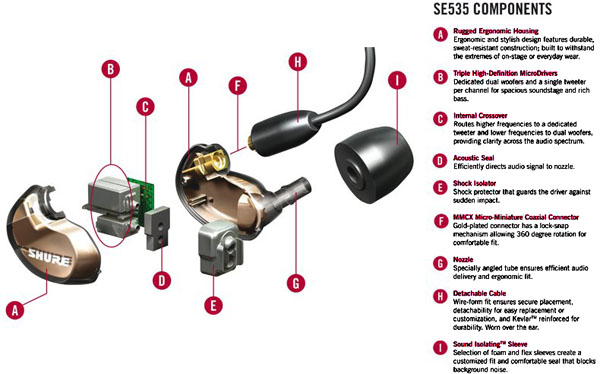
This story originally appeared at InnerFidelity.com
Evolution is not like a car wash; it's not some process with a beginning, a middle, and an end. It's messy; it makes mistakes; sometimes it moves in a particular direction; sometimes it just goes in circles refining things. Evolution doesn't really know where it's going until it gets there.
Since 1997 Shure has been evolving its line of in-ear headphones. It seems to me they've both run in circles on the ergonomics, and made a bee-line for good sound. Let me explain.
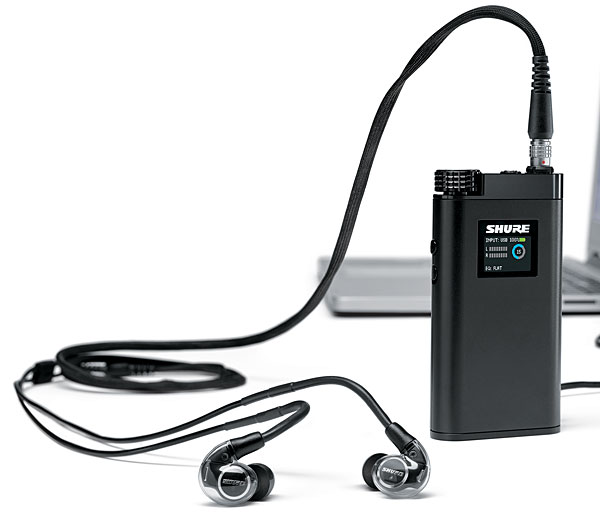
Shure KSE1200SYS electrostatic in-ear headphone system
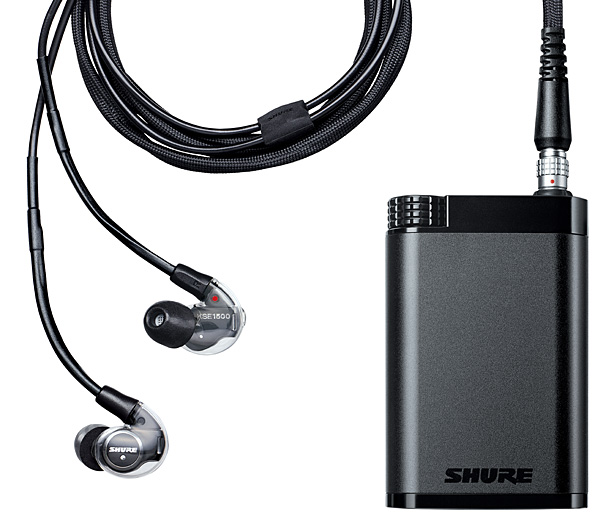
In November 2016, I reviewed Shure's KSE1500 electrostatic in-ear headphone system, which featured a D/A amplifier with both analog and USB inputs that drove in-ear headphones with unique electrostatic diaphragms. At $2999, the KSE1500 was and is pricey, and recently Shure introduced a less-expensive electrostatic headphone system, the KSE1200SYS ($1999), with the same amplifier and earpieces but just an analog input.
Shure KSE1500 electrostatic in-ear headphone system
I wrote several issues back that my first high-end headphones were Koss Pro4AAs, which I bought in 1972 following a positive review in the British magazine Hi-Fi News. Although that review didn't mention that the Pro4AAs were relatively fragile (footnote 1), I nonetheless loved their sound. They were the best headphones I'd hearduntil, a couple years later, I was playing bass on some sessions for record producer Tony Cox. Tony had a pair of signal-energized electrostatic headphones, Koss ESP-6es, which were heavy and clunkybut they opened my ears to the sound quality that could be obtained from "cans." I didn't hear better until after I'd moved to Santa Fe, in 1986, and J. Gordon Holt loaned me his review samples of the Stax SR-Lambda Pros.
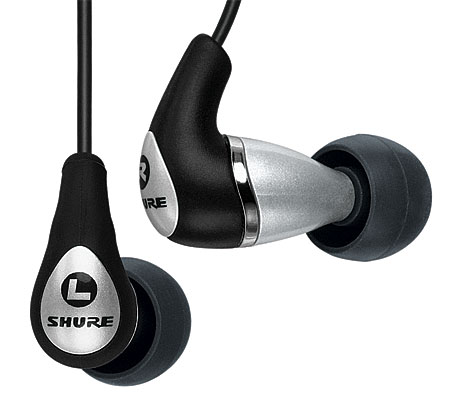
Shure SE310 in-ear headphones
I got early into personal stereos. I lost my driving license for a while in the mid-1970s—something about a stop sign and "failure to observe"—so I used to take the train to a regular bass-playing gig I had in Brighton, on England's south coast. Not only did I conclude that any audio magazine worth its cover price had to have enough meat in it to last the two-hour journey and back again, I also built myself an op-amp–based, battery-powered amplifier to drive a pair of RadioShack headphones. Desperate times called for desperate measures, and my only source was a mono cassette recorder. Inside-the-head mono is as mono desperately does, so once I got my license back, it was back to the car and stereo FM radio. It wasn't until a) I moved to New York City to become a strap-hanging commuter and b) bought a 2003-vintage 30GB iPod (which I still use) that music on the move again began to play a major role in my listening.
Shure SE530 in-ear headphones
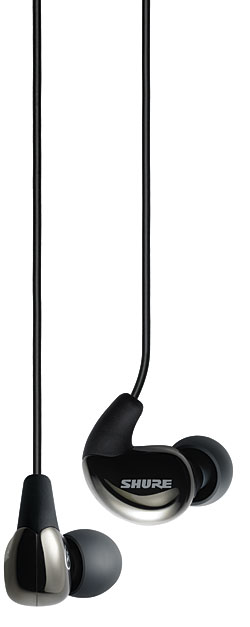
I first saw the Shure SE530 at the 2006">http://blog.stereophile.com/ces2006/010606shure">2006 Consumer Electronics Show, when it was dubbed the E500. The '500 shared the current product's three-armature driver technology and in-ear, sound-isolating, sleeve fitting scheme, but that early prototype seemed almost crude in comparison with the SE530.
Skullcandy Crusher Wireless Over-Ear Sealed Headphones with Haptic Bass Drivers
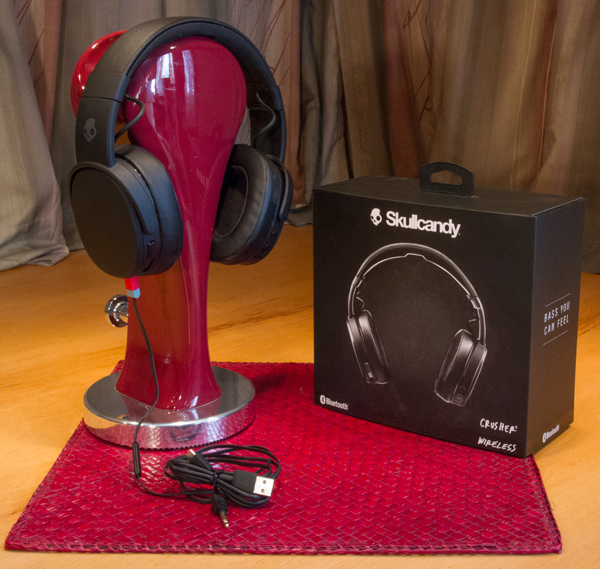
This story originally appeared at InnerFidelity.comFor those of you who just stumbled across this InnerFidelity review as you were looking for information about the Skullcandy Crusher Wireless, welcome! InnerFidelity is a website for hard core headphone enthusiasts and it's likely you've never read headphone reviews like the ones here. I'll be going on in some detail about the technicalities of this headphone and that will probably bore you. So, I'll save you some time. I don't think the Crusher is a good sounding headphone, even for bass-heads. Let me recommend you take a look at the InnerFidelity reviews of the comparably priced Sennheiser HD 4.40 BT ($149) and the more expensive but better sounding Beats Solo3 Wireless ($299).
For the rest of you headphone geeks, I'm sure you've not been chomping at the bit for a Crusher audition, but given the haptic (vibration) transducer intended to produce the feeling of low bass response, I think it's a headphone worthy of a little satisfied curiosity. Let's have a look.
Skullcandy Mix Master
This story originally appeared at InnerFidelity.comI've got an open invitation to visit Skullcandy's headphone R&D labs in Park City Utah ... and I'll be taking them up on it sometime soon. Why? Because I want to see what they're doing that let them build a few darn good sounding headphones lately.
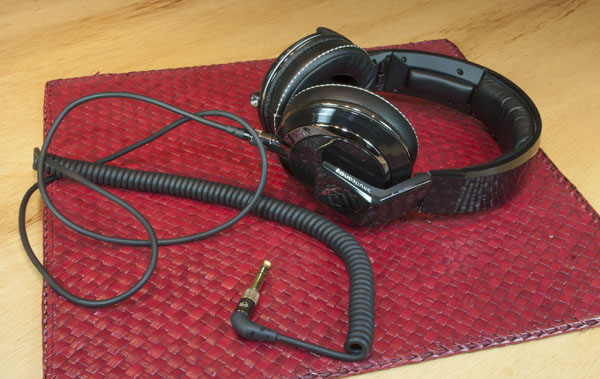
The Mix Master is one of them.
Skullcandy Roc Nation Aviator
This story originally appeared at InnerFidelity.comOh Nooooos!
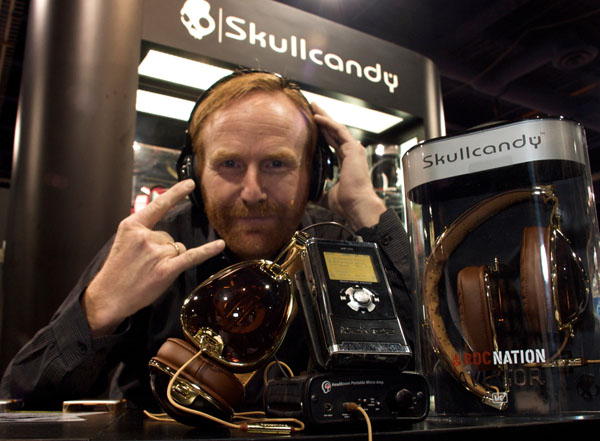
I was at the Consumer Electronics Show earlier this year for my first face-to-face meetings with my new boss and his boss from Source Interlink Media about the InnerFidelity start-up, when out of the blue the boss's boss says, "Say, I've got a meeting with Skullcandy this afternoon, you should come." Ruh roh. We high-end headphone geeks don't take too kindly to headphones painted up with pink kitties and cartoon monkeys, so I try to opt out gracefully, "Aw, geez, I dunno, they're not really my thing. They're pretty and all, and Skullcandy is a very popular maker, but I think I'm more interested in the more serious and sound quality oriented brands." *silence* "You should come." "Yes, boss..."
I was at the Consumer Electronics Show earlier this year for my first face-to-face meetings with my new boss and his boss from Source Interlink Media about the InnerFidelity start-up, when out of the blue the boss's boss says, "Say, I've got a meeting with Skullcandy this afternoon, you should come." Ruh roh. We high-end headphone geeks don't take too kindly to headphones painted up with pink kitties and cartoon monkeys, so I try to opt out gracefully, "Aw, geez, I dunno, they're not really my thing. They're pretty and all, and Skullcandy is a very popular maker, but I think I'm more interested in the more serious and sound quality oriented brands." *silence* "You should come." "Yes, boss..."