

SME Series V tonearm
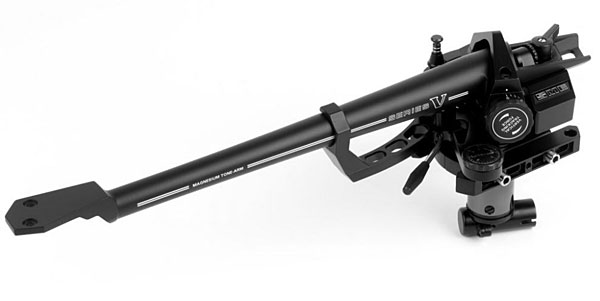
Once upon a time, SME made "the best tonearm in the world." That claim may have been justifiable through the 1960s and early '70s, but then something happenedSME failed to keep pace with their competition in coping with the increasing popularity of low- to medium-compliance, highish-mass, moving-coil cartridges. I had just about written SME off as a serious high-end company when, at the 1984 Summer CES, I saw the first prototype of the Series V.
Spiral Groove Centroid tonearm
Spiral Groove's new Centroid tonearm ($6000) arrived just a few days before press time, so it would be risky to say anything definitive about it. But I will take that risk: using the system described in my">http://www.stereophile.com/turntables/spiral_groove_sg2_turntable/">my review of the SG2 turntable, this may be the best tonearm I've heard. Its sound is different in ways that will open people's ears, and I predict that it will affect the design of every tonearm from now on. The Centroid's design deserves and will await full coverage in its own review, but here are the basics: It's a fluid-damped unipivot design unlike any other that gives the user fine adjustment of all relevant parameters.
The Tri-Planar Tonearm
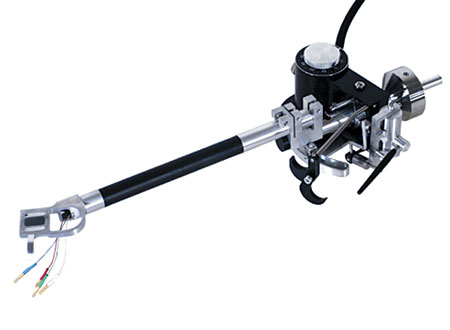
While brushing my teeth this morning, it occurred to me that there are significant similarities between a toothbrush and a tonearm/cartridge. The bristles would be analogous to the cartridge and the brush handle to the tonearm. In either case it is the business end of the device that does all the work. The bristles track the contours of your ivories in search of hazardous waste deposits, while the cartridge tracks the record groove transducing wall modulations into an electrical signal. I think that this is where the old adage came from: "A used cartridge is like a used toothbrush—nobody wants one!"
The Well-Tempered Arm
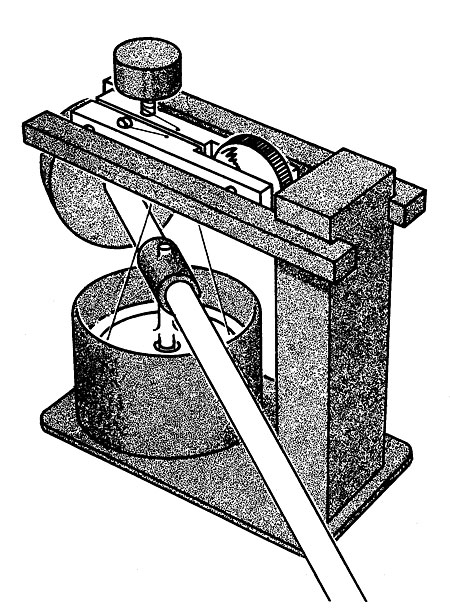
Remember Rube Goldberg? He was a cartoonist during the late 1920s to early 1950s who specialized in devising the most outlandish and ingenious devices ever conceived by man, before or since. A Rube Goldberg mousetrap, for example, would occupy an entire small room. In taking the bait, the mouse would tip a balance beam, dropping a steel ball into a gutter, down which the ball would roll to strike a paddle whose spin would wind up a string that hoisted a weight into the air until it reached a trigger at the top, which would then release the weight to drop onto the unsuspecting mouse. Splat!
Transcriptors Vestigal tonearm
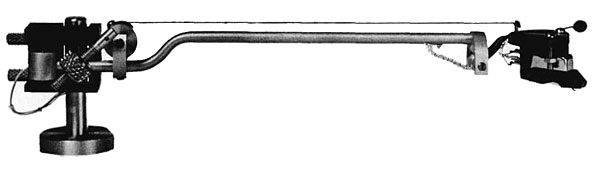
Because this is an unusual and controversial tonearm design, and has had astonishing claims made for its performance by the manufacturer, this in-depth report goes deeper and is longer than is usual for Stereophile. We will return to a reasonable balance of reportage in the next issue.
The manufacturer's initial advertisement for their mis-named "Vestigal" arm (footnote 1) was so laced with nonsense that we will admit to having been skeptical about the product from the outset.