

Shure V15-IV phono cartridge
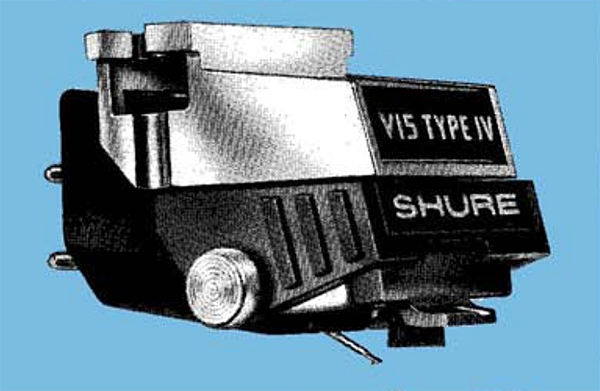
The Shure Brothers have been making magnetic cartridges since the early 1950s (they had been exclusively microphone manufacturers prior to then), and their continuing R&D program has resulted in new, improved models every few years rather than every 6 months (as seems to be the rule these days). As a result, Shure has the appearance, to most audiophiles, of a stodgy, plodding, rather "establishment" manufacturer that can be trusted to make a solid, reliable product but nothing brilliantly innovative orfor that matternothing remarkably good either.
Siefert Maxim III loudspeaker
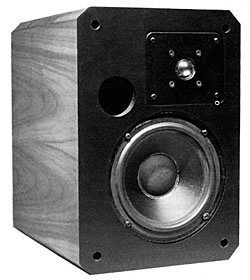 While it is not quite accurate to say that $500/pair loudspeakers are a dime a dozen, they are by no means unusual. And since this is a price area where major design compromises are mandatory (footnote 1), the sound of such loudspeakers tends to vary all over the map, from pretty good to godawfuldepending on what performance areas the designer chose to compromise and by how much.
I approached this latest half-grander with little enthusiasm, despite Siefert's persuasive literature, I have, after all, been reading such self-congratulatory hype abiout new products for longer than most Stereophile readers have been counting birthdays. This, I must admit, was ho-humsville.
While it is not quite accurate to say that $500/pair loudspeakers are a dime a dozen, they are by no means unusual. And since this is a price area where major design compromises are mandatory (footnote 1), the sound of such loudspeakers tends to vary all over the map, from pretty good to godawfuldepending on what performance areas the designer chose to compromise and by how much.
I approached this latest half-grander with little enthusiasm, despite Siefert's persuasive literature, I have, after all, been reading such self-congratulatory hype abiout new products for longer than most Stereophile readers have been counting birthdays. This, I must admit, was ho-humsville.
SME 3009 Series III tonearm
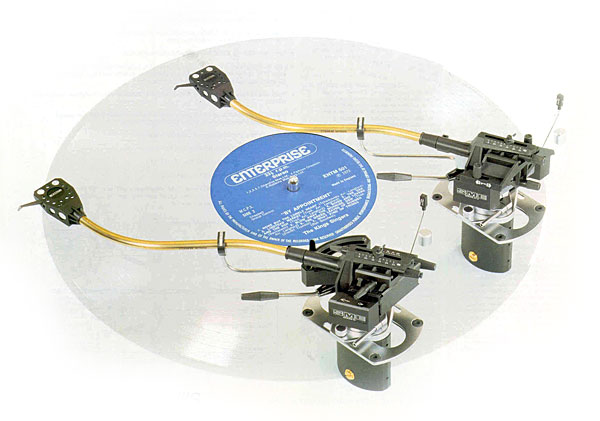
The third iteration of SME's 3009 is one of the most versatile tonearms around. For the same reason, it is also one of the most tedious to set-up because, since every parameter is adjustable, every parameter must be adjusted.
SME 3009 tonearm
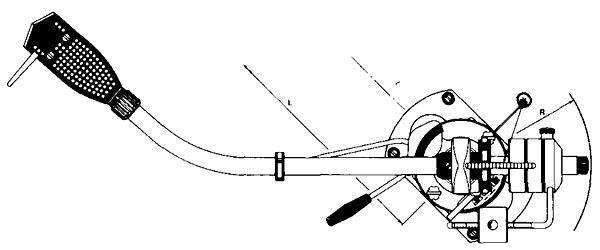
This is by no means a new product. It was available in a stereo version as far back as 1961, and apart from a couple of minor refinementsthe addition of a bias compensator and a new, lightweight shellit is still the same arm, and it still has the reputation of being the perfectionist's tonearm.
Snell Type A loudspeaker
One of the less-glamorous speaker systems around today, these have more to offer the critical listener in terms of satisfaction than do most of the more-exotic designs.
Snob Appeal
A number of recent letters have accused us of snobbishness and elitism because we devote so much space to reports about components that "common folk" can't afford. We are "snobbish" because we seem to look down on anything less perfect than a Wilson WAMM speaker system or an Audio Research SP-10 preamplifier. And we are "elitist" because we seem to show little interest in any components which fall short of state of the art. Far from being chastened by these letters, I am proud, to declare that they are right on target.
Sony CDP-101 Compact Disc Player
Our long-awaited laser-audio disc player (usually called the CD, for "Compact Disc") finally arrived, along with a real bonanza of software: two discs—a Polygram classical sampler of material from Decca, Deutsche Grammophon and Philips, and a Japanese CBS recording of Bruckner's 4th Symphony, with Kubelik.
Sony CDP-520ES CD player
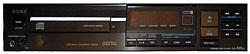 Publisher's Note: For the first time since I've published Stereophile, we are running two completely differentand opposed reports on the same product. Normally, we try to reach some conclusion as to why reviewers come up with opposite views on a product, and resolve the problem prior to publication. In this case, the problem lies in the differing sound systems used for review. Since some readers will have systems like SWW's, and others will have systems more like JGH's, I felt it was valuable to run both reviews.
For the record, SWW's reference system consists of Dayton Wright XG-lO speakers, BEL 1001 amplifiers, a Klyne preamp, a SOTA Star Sapphire turntable, the Well-Tempered Arm (or Sumiko Arm), and a Talisman S cartridge. The sound on analog disc is far preferable to that from CD, being much more alive and present, and with a tendency to exaggerate sibilants. The low end of the system is awesome, the high end extended, and transients are rendered with a great feeling of immediacy and quickness.
Publisher's Note: For the first time since I've published Stereophile, we are running two completely differentand opposed reports on the same product. Normally, we try to reach some conclusion as to why reviewers come up with opposite views on a product, and resolve the problem prior to publication. In this case, the problem lies in the differing sound systems used for review. Since some readers will have systems like SWW's, and others will have systems more like JGH's, I felt it was valuable to run both reviews.
For the record, SWW's reference system consists of Dayton Wright XG-lO speakers, BEL 1001 amplifiers, a Klyne preamp, a SOTA Star Sapphire turntable, the Well-Tempered Arm (or Sumiko Arm), and a Talisman S cartridge. The sound on analog disc is far preferable to that from CD, being much more alive and present, and with a tendency to exaggerate sibilants. The low end of the system is awesome, the high end extended, and transients are rendered with a great feeling of immediacy and quickness.Sony CDP-R1/DAS-R1 CD player
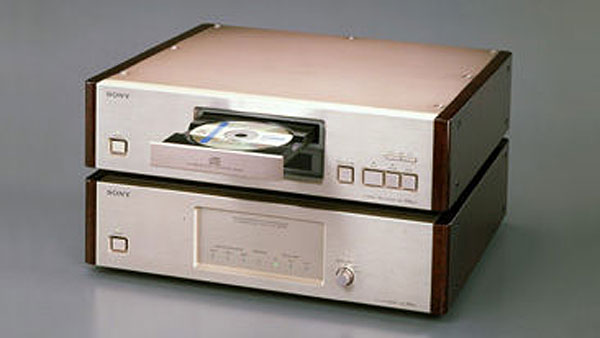
Two of the most cherished terms in the lexicon of high end are "no holds barred" and "cost no object." These are usually applied, together, to the most expensive version of something currently on the market. But is either term really appropriate for an audio product? The answer is a flat, unequivocal No. No consumer product has ever conformed to the real meaning of those terms, and it is unlikely that one ever will.
Sony CDP-X779ES CD player
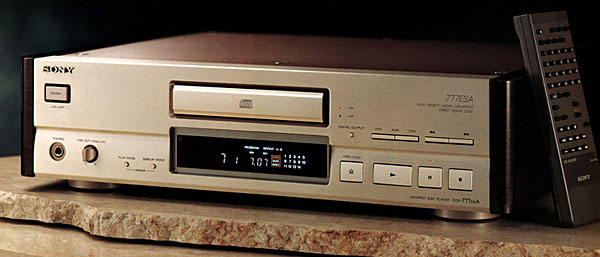
Sony's first CD player, the much-maligned CDP-1 (reviewed in Vol.5 No.10), did all the things we'd been promised from CD except deliver perfect sound. It met CD's incredible claims for frequency range and linearity, harmonic and intermodulation distortion, and signal/noise ratio, yetdespite my own initial enthusiasm for itit proved ultimately to be a disappointing-sounding player (footnote 1). Its sound was rather hard and grainy, and quite spectacularly uninvolving to listen to. But considering that it was the first of its kind, it was a good start despite its many sonic shortcomings (footnote 2).