

PMC IB-1S loudspeaker
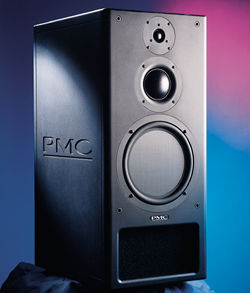
I have a soft spot in my heart (some say my head) for transmission-line designs. I remember being entranced by the authoritative but effortless bass of John Wright's IMF and TDL Monitors, and I have been inspired to experiment by building my own lines in various sizes. Then, as demonstrated by Bryston's Jim Tanner at the 1997 WCES and at HI-FI '97, PMC's IB-1S loudspeakers threw an enormously deep soundstage. (I have a soft spot for that as well.)
Polk Audio LSi7 loudspeaker
In my review of Polk">http://www.stereophile.com//loudspeakerreviews/417/">Polk Audio's RT25i loudspeaker (September 2001, Vol.24 No.9), I was mightily impressed with Matthew Polk's execution of this $320/pair design. Although it has since been replaced by the RT27i, with slightly modified cosmetics and a different tweeter, the RT25i remains my favorite loudspeaker costing less than $500/pair.
Polk Audio RTi A3 loudspeaker
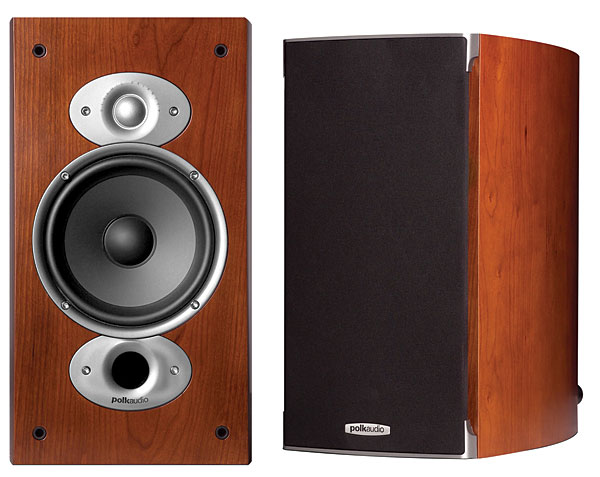
Back at home, I'd recently set up Polk Audio's RTi A3 loudspeakers ($399.95/pair), which, at 14.75" H by 8.58" W x 14" D, are by far the largest bookshelf models I've had in my listening room. Right out of the box, the RTi A3 impressed me with its fit and finish. In Polk's Damped Asymmetrical Hex Laminate Isolation (DAHLI) cabinet design, five layers of MDF are glued together to form a damping system, then topped by a real-wood veneer of black ash or, in the case of my review samples, an impeccable cherry. The gracefully curved cabinet narrows in width from 8.58" at the front to about 5" at the rear, and is said to create a stronger, more rigid, more acoustically inert enclosure. (Knocking on the speaker's side panels resulted in a hollow resonance.)
Polk Audio RT25i loudspeaker
Polk Audio is the Rodney Dangerfield of high-end audio. Why does this conscientious, innovative, and well-organized company garner no respect from hard-to-please audiophiles?
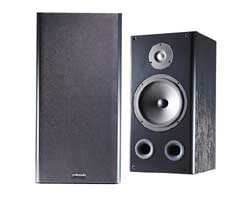
Polk Audio RT5 loudspeaker
 Yeah, yeah, I know what you're thinking: "Polk? You're reviewing a $300 speaker from Polk? Get ready for the flames!"
The genesis of this review lies in a casual comment Larry Archibald made last summer. Larry travels a lot, and everywhere he goes, like the archetypical (archibaldical?) audiophile he is, he listens voraciously. After a trip to the east coast, he dropped by my office and laid a bomb on me.
"I heard a pair of inexpensive bookshelf speakers from Polk that really impressed me."
"Um-hum," I replied dubiously, waiting for the punchline.
Yeah, yeah, I know what you're thinking: "Polk? You're reviewing a $300 speaker from Polk? Get ready for the flames!"
The genesis of this review lies in a casual comment Larry Archibald made last summer. Larry travels a lot, and everywhere he goes, like the archetypical (archibaldical?) audiophile he is, he listens voraciously. After a trip to the east coast, he dropped by my office and laid a bomb on me.
"I heard a pair of inexpensive bookshelf speakers from Polk that really impressed me."
"Um-hum," I replied dubiously, waiting for the punchline.
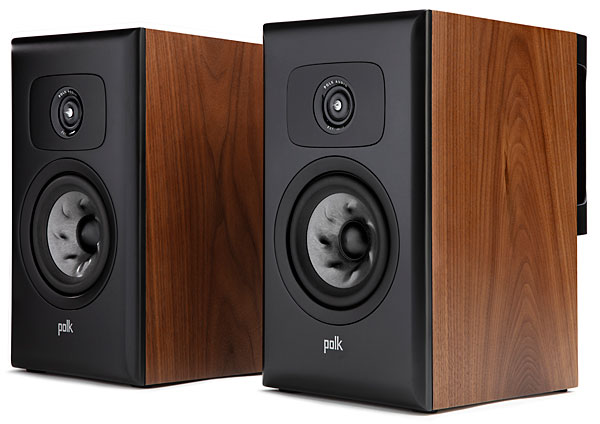
Polk Legend L100 loudspeaker
Summer!
COVID-19 notwithstanding, summerwarmth, flowers, leaves on treeshas descended on Greenwich Village, my New York City home for the past 30 years. What hasn't descended are tourists, belching motorcycles, behemoth sports cars, beer drinkers, and the usual summer hell-raisers, the sort that would've sent legendary Village bohemians Kerouac, Ginsberg, and Burroughs running back to their cold-water flats.
Polk LSiM703 loudspeaker
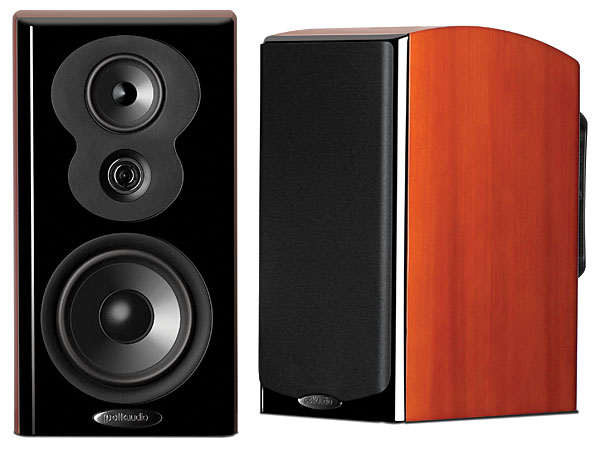
When a reviewer specializes in seeking out innovation and value in affordable loudspeakers, certain manufacturers warrant revisiting again and againcompanies that consistently deliver high-value products, but also steadily revamp their lines to trickle down design innovations to ever more affordable models.
Polk RTi A1 loudspeaker
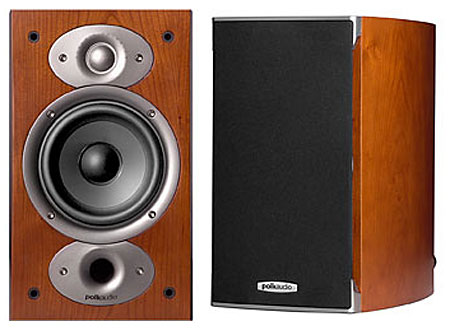
I always enjoy reviewing affordable loudspeakers from Polk Audio, who trumpet high value for the dollar with their philosophy of "Incredible Sound/Affordable Price." They also update their broad and deep product lines more frequently than do most manufacturers. I've always been intrigued by how much Polk has been able to deliver at the bottom of the price range. In fact, the first Polk speaker I reviewed, the RT25i (September">http://www.stereophile.com/standloudspeakers/417">September 2001, Vol.24 No.9), is the only affordable speaker I've reviewed for Stereophile that I ended up buying (for my computer-based musical-composition system). So, when approached by Polk to review a speaker from their affordable RTi A series, I was interested in the least expensive of that line's five models: the RTi A1 ($349.95/pair).
Polk RTi4 loudspeaker
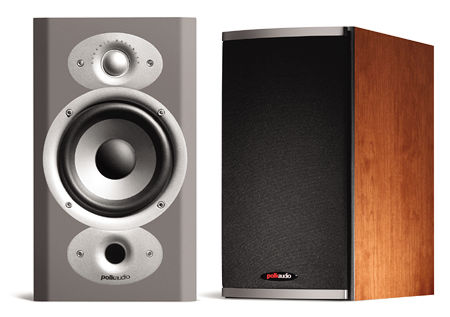
In the September 2001 Stereophile (Vol.24 No.9), I wrote very favorably about Polk's RT25ihttp://www.stereophile.com/loudspeakerreviews/417">RT25i; loudspeaker ($319.90/pair). That bookshelf model impressed me with its open, neutral midrange; its pristine, extended high-frequency response; and its low-level dynamics. On the minus side, the RT25i was fairly limited in low-bass extension and high-level dynamic slam. At the time, I was seeking a new speaker for my home computer music-composition system, and I bought the review samples—the only time I've done that since I began to write for Stereophile some 20 speaker reviews ago.
ProAc Response 1S loudspeaker
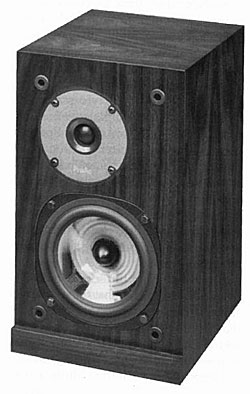 Here's the deal: If you're the kind of listener who must listen to your stereo at levels that change the barometric pressure of your listening room, or if you can't enjoy reggae concerts because they don't have enough bass, then the ProAc Response 1S (revised) is definitely not the speaker for you. Read no further. Move on. Scoot.
Anybody left? Good. Now we can talk about a very special little speaker. In a way, I didn't even want to review the 1S. I mentioned to John Atkinson that I'd heard them at my buddy Ruben's house and enjoyed them immensely, but I'd been using a pair of $13,000 speakers to review an exotic amplifier and had, sad to say, become quite spoiled: bass down to 28Hz, 93dB sensitivity, and some of the most accurate soundstaging I'd ever heardwe're talking about some serious suffering for my art, here.
So when the ProAcs arrived at my house, I thought it unfair: unfair to me (I was gonna miss them big dogs), and unfair to the Response 1S. After all, does anyone remember who played after the Beatles on the Ed Sullivan Show?
Here's the deal: If you're the kind of listener who must listen to your stereo at levels that change the barometric pressure of your listening room, or if you can't enjoy reggae concerts because they don't have enough bass, then the ProAc Response 1S (revised) is definitely not the speaker for you. Read no further. Move on. Scoot.
Anybody left? Good. Now we can talk about a very special little speaker. In a way, I didn't even want to review the 1S. I mentioned to John Atkinson that I'd heard them at my buddy Ruben's house and enjoyed them immensely, but I'd been using a pair of $13,000 speakers to review an exotic amplifier and had, sad to say, become quite spoiled: bass down to 28Hz, 93dB sensitivity, and some of the most accurate soundstaging I'd ever heardwe're talking about some serious suffering for my art, here.
So when the ProAcs arrived at my house, I thought it unfair: unfair to me (I was gonna miss them big dogs), and unfair to the Response 1S. After all, does anyone remember who played after the Beatles on the Ed Sullivan Show?