A Wee Dram of Scotch: Linn Products' Ivor Tiefenbrun Page 3
<I>More than 20 years ago, when the turntable was considered a perfectly neutral component in the playback chain, Ivor Tiefenbrun single-handedly demonstrated to the world that the turntable was not only an important part of a hi-fi system, but perhaps the </I>most<I> important part. That radical idea was the basis for the legendary Linn Sondek LP12 turntable, the product that launched Linn, and which is still in production 22 years later.</I>
A Wee Dram of Scotch: Linn Products' Ivor Tiefenbrun Page 2
<I>More than 20 years ago, when the turntable was considered a perfectly neutral component in the playback chain, Ivor Tiefenbrun single-handedly demonstrated to the world that the turntable was not only an important part of a hi-fi system, but perhaps the </I>most<I> important part. That radical idea was the basis for the legendary Linn Sondek LP12 turntable, the product that launched Linn, and which is still in production 22 years later.</I>
A Wee Dram of Scotch: Linn Products' Ivor Tiefenbrun
Oct 25, 1994
<I>More than 20 years ago, when the turntable was considered a perfectly neutral component in the playback chain, Ivor Tiefenbrun single-handedly demonstrated to the world that the turntable was not only an important part of a hi-fi system, but perhaps the </I>most<I> important part. That radical idea was the basis for the legendary Linn Sondek LP12 turntable, the product that launched Linn, and which is still in production 22 years later.</I>
The future is rarely what anyone expects it to be. I still remember reading, as a child, predictions in <I>Popular Science</I> that everyone would have a personal helicopter by 1980. It never happened, though it sure seemed like a reasonable projection of events. Events, however, have their own agenda.
During a recent visit to Canada's National Research Council, I noticed stuck to the wall of the prototype IEC listening room a page of results from one of Floyd Toole's seminal papers on the blind testing of loudspeakers. The scoring system was the one that Floyd developed, and that we adopted for <I>Stereophile</I>'s continuing series of blind tests. "0" represents the worst sound that could possibly exist, "10" the perfection of live sound—a telephone, for example, rates a "2." The speakers in Floyd's test pretty much covered the range of possible performance, yet their normalized scoring spread, from the worst to the best, was just 1.9 points.
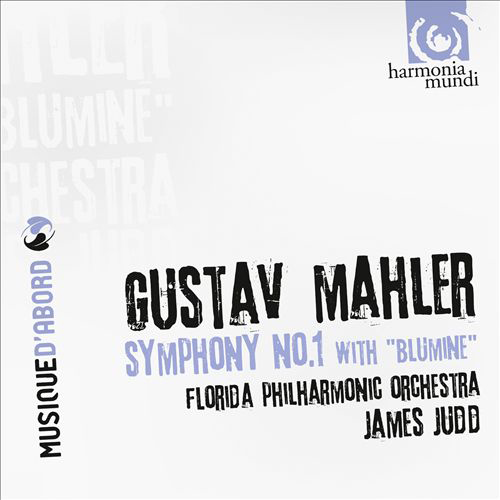
MAHLER: Symphony 1, "Blumine" James Judd, Florida Philharmonic Orchestra Harmonia Mundi USA 907118 (CD only). Peter McGrath, eng.; Paul F. Witt, prod.; Robina Young, exec. prod. DDD. TT: 64:15
In this space last January, I enthused about the sound of linear 20-bit digital recordings which, I felt, preserve the quality of a live microphone feed. "I have heard the future of audio—and it's digital!" I proclaimed, which led at least a couple of readers to assume I had gone deaf. Putting to one side the question of my hearing acuity, 20-bit technology has been rapidly adopted in the professional world as the standard for mastering. The remaining debate concerns how to best preserve what those 20 bits offer once they've been squeezed down to the 16 that CD can store. Sony's Super Bit Mapping algorithm and Harmonia Mundi Acustica's redithering device have been joined by new black boxes from Apogee Electronics, Lexicon, and Meridian; it appears likely that, in next to no time at all, all CD releases will be offering close to 20-bit resolution—at least in the upper midrange, where the ear is most sensitive.
Canadian speakers from such companies as Mirage, PSB, and Paradigm have acquired international reputations for offering good sound at more-than-competitive prices. The latest Canadian speaker manufacturer to hit the big time might well be Energy, which has actually been around for about 15 years, but has only recently introduced a flagship speaker. Energy's $6000/pair Veritas v2.8 earned Tom Norton's commendation for having produced one of the best sounds at the 1993 Las Vegas WCES. [<A HREF="http://www.stereophile.com//loudspeakerreviews/551/">TJN's review</A> appears in this issue.—Ed.]