About three weeks ago, while perusing the gear in a local audio retail establishment, I overheard a salesman, who could well have been selling used cars, giving a classic spiel to an obviously confused customer. "You see, sir, all preamplifiers basically sound alike, especially with line-level inputs. The only differences are in the number of features." He went on to tell his prey that spending big bucks for high-end products such as Krell or Mark Levinson (neither of which he sold) would be a big mistake. I choked back my automatic response of a certain bovine term, but thought it better to continue my fly-on-the-wall masquerade.
About three weeks ago, while perusing the gear in a local audio retail establishment, I overheard a salesman, who could well have been selling used cars, giving a classic spiel to an obviously confused customer. "You see, sir, all preamplifiers basically sound alike, especially with line-level inputs. The only differences are in the number of features." He went on to tell his prey that spending big bucks for high-end products such as Krell or Mark Levinson (neither of which he sold) would be a big mistake. I choked back my automatic response of a certain bovine term, but thought it better to continue my fly-on-the-wall masquerade.
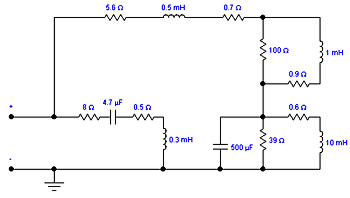
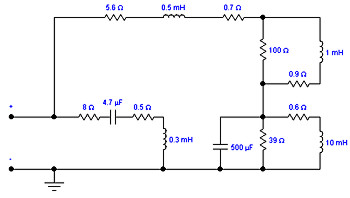
As mentioned by two readers in this month's "Letters," amplifiers are used to drive loudspeakers but are almost exclusively measured into resistive loads. The reasons for this are twofold: 1) real loudspeakers both produce neighbor-annoying sound levels and tend to break when driven with typical amplifier test signals; and 2) the question as to which "standard" loudspeaker should be used is impossible to answer---at least the conventional resistive loads are consistent and repeatable.
As mentioned by two readers in this month's "Letters," amplifiers are used to drive loudspeakers but are almost exclusively measured into resistive loads. The reasons for this are twofold: 1) real loudspeakers both produce neighbor-annoying sound levels and tend to break when driven with typical amplifier test signals; and 2) the question as to which "standard" loudspeaker should be used is impossible to answer---at least the conventional resistive loads are consistent and repeatable.
Audio Research D-250 II Servo power amplifier Specifications
The D-250 is the flagship of Audio Research's power amplifier range and, at 250 watts per channel, is the most powerful all-tube stereo amplifier currently available in the US. Under the circumstances, then, it is not surprising that it should also be one of the heaviest and largest.
Audio Research D-250 II Servo power amplifier Page 4
The D-250 is the flagship of Audio Research's power amplifier range and, at 250 watts per channel, is the most powerful all-tube stereo amplifier currently available in the US. Under the circumstances, then, it is not surprising that it should also be one of the heaviest and largest.
Audio Research D-250 II Servo power amplifier Page 3
The D-250 is the flagship of Audio Research's power amplifier range and, at 250 watts per channel, is the most powerful all-tube stereo amplifier currently available in the US. Under the circumstances, then, it is not surprising that it should also be one of the heaviest and largest.
Audio Research D-250 II Servo power amplifier Page 2
The D-250 is the flagship of Audio Research's power amplifier range and, at 250 watts per channel, is the most powerful all-tube stereo amplifier currently available in the US. Under the circumstances, then, it is not surprising that it should also be one of the heaviest and largest.
The D-250 is the flagship of Audio Research's power amplifier range and, at 250 watts per channel, is the most powerful all-tube stereo amplifier currently available in the US. Under the circumstances, then, it is not surprising that it should also be one of the heaviest and largest.
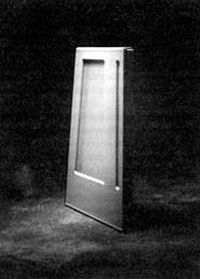
As Laura Atkinson shuffled into my listening room one evening, she spied the Stage loudspeakers tucked away in the corner. "Hey, Dick, those look like Apogees, but they're kind of small." Rising to the occasion, I responded with: "Honey, I shrunk the Apogees." At roughly 3' tall by 2' wide, the Stage is far from intimidating; it even feels more compact and is certainly much cuter looking than the old Quad ESL. Yet Junior's resemblance to the rest of the Apogee family is unmistakable. The canted baffle, the vertical tweeter/midrange along the inside edge of the baffle, and the pleated aluminum-foil woofer clearly bear the imprint of the larger Caliper and Duetta models. It's almost as though Apogee started shrinking the Duetta until the price tag shrank below two kilobucks.