Retail sales of recorded music in the United Kingdom sagged by an unprecedented 13% in the first three months of 2003, according to figures released May 14 by the British Phonographic Industry (BPI). British music fans spent £216 million ($351 million) in the first quarter of this year, compared to £249 million ($404.6 million) in the same period a year ago. In unit sales, albums in the UK declined only 4.8% to 44 million, but prices dropped 9.4%. UK album sales totaled £200 million ($324.9 million); singles were off 42%, accounting for only £16.2 million ($26.3 million).
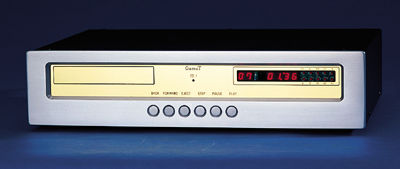
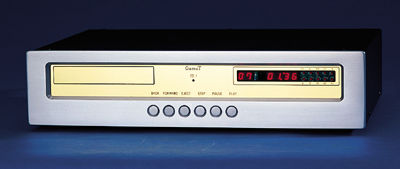
I was in a jam. John Atkinson was gently reminding me of rapidly approaching deadlines, and my longtime reference CD player, the <A HREF="http://www.stereophile.com//digitalsourcereviews/343/">Simaudio Moon Eclipse</A>, had just been recalled for an upgrade. This wouldn't normally have been a problem, but I was also in the middle of relocating from New Mexico to California, and all of my backup gear was either in storage or on a moving truck somewhere.
I was in a jam. John Atkinson was gently reminding me of rapidly approaching deadlines, and my longtime reference CD player, the <A HREF="http://www.stereophile.com//digitalsourcereviews/343/">Simaudio Moon Eclipse</A>, had just been recalled for an upgrade. This wouldn't normally have been a problem, but I was also in the middle of relocating from New Mexico to California, and all of my backup gear was either in storage or on a moving truck somewhere.
I was in a jam. John Atkinson was gently reminding me of rapidly approaching deadlines, and my longtime reference CD player, the <A HREF="http://www.stereophile.com//digitalsourcereviews/343/">Simaudio Moon Eclipse</A>, had just been recalled for an upgrade. This wouldn't normally have been a problem, but I was also in the middle of relocating from New Mexico to California, and all of my backup gear was either in storage or on a moving truck somewhere.
I was in a jam. John Atkinson was gently reminding me of rapidly approaching deadlines, and my longtime reference CD player, the <A HREF="http://www.stereophile.com//digitalsourcereviews/343/">Simaudio Moon Eclipse</A>, had just been recalled for an upgrade. This wouldn't normally have been a problem, but I was also in the middle of relocating from New Mexico to California, and all of my backup gear was either in storage or on a moving truck somewhere.
I was in a jam. John Atkinson was gently reminding me of rapidly approaching deadlines, and my longtime reference CD player, the <A HREF="http://www.stereophile.com//digitalsourcereviews/343/">Simaudio Moon Eclipse</A>, had just been recalled for an upgrade. This wouldn't normally have been a problem, but I was also in the middle of relocating from New Mexico to California, and all of my backup gear was either in storage or on a moving truck somewhere.
I was in a jam. John Atkinson was gently reminding me of rapidly approaching deadlines, and my longtime reference CD player, the <A HREF="http://www.stereophile.com//digitalsourcereviews/343/">Simaudio Moon Eclipse</A>, had just been recalled for an upgrade. This wouldn't normally have been a problem, but I was also in the middle of relocating from New Mexico to California, and all of my backup gear was either in storage or on a moving truck somewhere.
With hindsight, one of the sideways steps taken by the High End in the early 1990s was the splitting of CD players into separate transports and processors. There were good reasons for this development, not the least of which was the flowering of creativity it engendered in high-end audio engineers. Having open access to the digital audio data also made possible effective digital equalizers and room-correction processors, but in the rush to increase a system's component count, it was overlooked for too long that keeping everything in one box offered certain advantages.
With hindsight, one of the sideways steps taken by the High End in the early 1990s was the splitting of CD players into separate transports and processors. There were good reasons for this development, not the least of which was the flowering of creativity it engendered in high-end audio engineers. Having open access to the digital audio data also made possible effective digital equalizers and room-correction processors, but in the rush to increase a system's component count, it was overlooked for too long that keeping everything in one box offered certain advantages.
With hindsight, one of the sideways steps taken by the High End in the early 1990s was the splitting of CD players into separate transports and processors. There were good reasons for this development, not the least of which was the flowering of creativity it engendered in high-end audio engineers. Having open access to the digital audio data also made possible effective digital equalizers and room-correction processors, but in the rush to increase a system's component count, it was overlooked for too long that keeping everything in one box offered certain advantages.