It began with an email from reader Ed Hoffman. "I was looking for a Pass Labs dealer and found out that Pass Labs has dumped all of their dealers around the country. Do you have any information about what is going on?"
Internet radio streams have received a reprieve from the US Copyright Review Board (CRB) decision to <A HREF="http://stereophile.com/news/042307net/">restructure the royalty fees</A> for the format. In March, the CRB established fees, effective retroactively to the beginning of 2006, that would be ramped up each year through 2010, with a cost of 0.08¢ per performance (per listener) in 2006, going up to 0.11¢ in 2007; 0.14¢ in 2008; 0.18¢ in 2009; and 0.19¢ in 2010.
<B>John Atkinson Opens</B>
<BR>
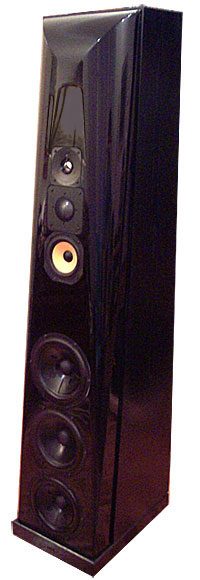
I've said it before and I'll say it again: a would-be loudspeaker designer shouldn't even start to <I>think</I> about the possibility of maybe designing a full-range, multi-way loudspeaker until he (and they do all appear to be men) has cut his teeth on a small two-way design. There is still as much art as science in designing a successful loudspeaker, even with all the computer-aided this and Thiele-and-Small that, that even a two-way design requires a designer either to be possessed of a monster talent or of the willingness to undergo months, even years, of tedious and repetitive work—or of both. For a would-be speaker engineer to start his career with a wide dynamic-range, multi-way design, intended to cover the entire musical spectrum from infra-bass to ultra-treble, seems to me to be a perfect case of an admittedly well-intentioned fool rushing in where any sufficiently self-critical angel would fear to tread.
John Atkinson Opens
I've said it before and I'll say it again: a would-be loudspeaker designer shouldn't even start to think about the possibility of maybe designing a full-range, multi-way loudspeaker until he (and they do all appear to be men) has cut his teeth on a small two-way design. There is still as much art as science in designing a successful loudspeaker, even with all the computer-aided this and Thiele-and-Small that, that even a two-way design requires a designer either to be possessed of a monster talent or of the willingness to undergo months, even years, of tedious and repetitive work—or of both. For a would-be speaker engineer to start his career with a wide dynamic-range, multi-way design, intended to cover the entire musical spectrum from infra-bass to ultra-treble, seems to me to be a perfect case of an admittedly well-intentioned fool rushing in where any sufficiently self-critical angel would fear to tread.
<B>John Atkinson Opens</B>
<BR>
I've said it before and I'll say it again: a would-be loudspeaker designer shouldn't even start to <I>think</I> about the possibility of maybe designing a full-range, multi-way loudspeaker until he (and they do all appear to be men) has cut his teeth on a small two-way design. There is still as much art as science in designing a successful loudspeaker, even with all the computer-aided this and Thiele-and-Small that, that even a two-way design requires a designer either to be possessed of a monster talent or of the willingness to undergo months, even years, of tedious and repetitive work—or of both. For a would-be speaker engineer to start his career with a wide dynamic-range, multi-way design, intended to cover the entire musical spectrum from infra-bass to ultra-treble, seems to me to be a perfect case of an admittedly well-intentioned fool rushing in where any sufficiently self-critical angel would fear to tread.
<B>John Atkinson Opens</B>
<BR>
I've said it before and I'll say it again: a would-be loudspeaker designer shouldn't even start to <I>think</I> about the possibility of maybe designing a full-range, multi-way loudspeaker until he (and they do all appear to be men) has cut his teeth on a small two-way design. There is still as much art as science in designing a successful loudspeaker, even with all the computer-aided this and Thiele-and-Small that, that even a two-way design requires a designer either to be possessed of a monster talent or of the willingness to undergo months, even years, of tedious and repetitive work—or of both. For a would-be speaker engineer to start his career with a wide dynamic-range, multi-way design, intended to cover the entire musical spectrum from infra-bass to ultra-treble, seems to me to be a perfect case of an admittedly well-intentioned fool rushing in where any sufficiently self-critical angel would fear to tread.
<B>John Atkinson Opens</B>
<BR>
I've said it before and I'll say it again: a would-be loudspeaker designer shouldn't even start to <I>think</I> about the possibility of maybe designing a full-range, multi-way loudspeaker until he (and they do all appear to be men) has cut his teeth on a small two-way design. There is still as much art as science in designing a successful loudspeaker, even with all the computer-aided this and Thiele-and-Small that, that even a two-way design requires a designer either to be possessed of a monster talent or of the willingness to undergo months, even years, of tedious and repetitive work—or of both. For a would-be speaker engineer to start his career with a wide dynamic-range, multi-way design, intended to cover the entire musical spectrum from infra-bass to ultra-treble, seems to me to be a perfect case of an admittedly well-intentioned fool rushing in where any sufficiently self-critical angel would fear to tread.
<B>John Atkinson Opens</B>
<BR>
I've said it before and I'll say it again: a would-be loudspeaker designer shouldn't even start to <I>think</I> about the possibility of maybe designing a full-range, multi-way loudspeaker until he (and they do all appear to be men) has cut his teeth on a small two-way design. There is still as much art as science in designing a successful loudspeaker, even with all the computer-aided this and Thiele-and-Small that, that even a two-way design requires a designer either to be possessed of a monster talent or of the willingness to undergo months, even years, of tedious and repetitive work—or of both. For a would-be speaker engineer to start his career with a wide dynamic-range, multi-way design, intended to cover the entire musical spectrum from infra-bass to ultra-treble, seems to me to be a perfect case of an admittedly well-intentioned fool rushing in where any sufficiently self-critical angel would fear to tread.
<B>John Atkinson Opens</B>
<BR>
I've said it before and I'll say it again: a would-be loudspeaker designer shouldn't even start to <I>think</I> about the possibility of maybe designing a full-range, multi-way loudspeaker until he (and they do all appear to be men) has cut his teeth on a small two-way design. There is still as much art as science in designing a successful loudspeaker, even with all the computer-aided this and Thiele-and-Small that, that even a two-way design requires a designer either to be possessed of a monster talent or of the willingness to undergo months, even years, of tedious and repetitive work—or of both. For a would-be speaker engineer to start his career with a wide dynamic-range, multi-way design, intended to cover the entire musical spectrum from infra-bass to ultra-treble, seems to me to be a perfect case of an admittedly well-intentioned fool rushing in where any sufficiently self-critical angel would fear to tread.


meridian 586.2
is this dvd player any good for today's theater setup? I would figure the sound quality to be pretty good, right?thanks