I tried hooking my stereo receiver (about 15 years old but working great) to one 6" sub speaker. I connected the positives of both speaker wire outs and both of the negivatives of the speakers out and connected the positives to one side of the speaker and the negitives to the other side of the speaker. It seamed to work, but as I turned up the volume I heard a pop and then my receiver died and now it won't power on.
So, what could this be. I'd like to know so I can buy a replacement part for it cause I really like it.
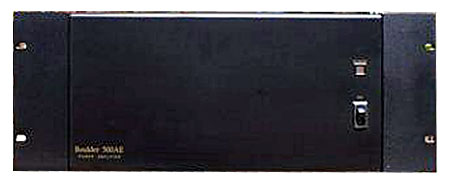
Boulder 500AE power amplifier Steven Stone, November 1997
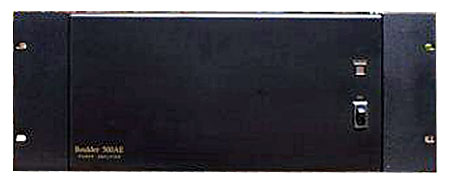
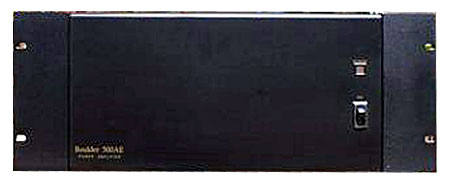
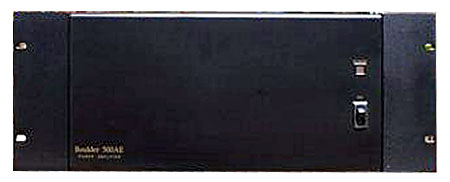
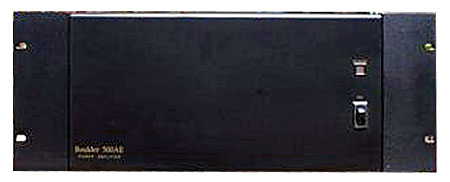
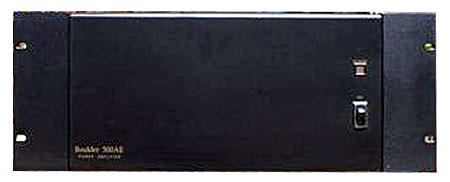
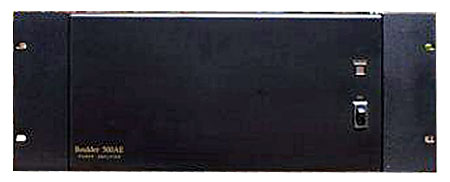
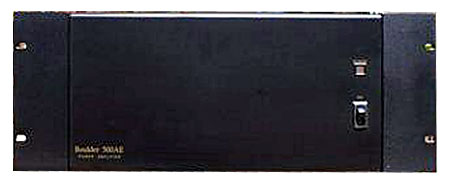
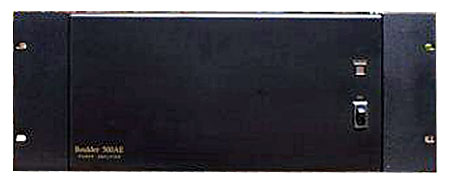
To high-end audiophiles, the Boulder 500 amplifier and its less expensive derivative, the 500AE (Audiophile Edition), would not seem to be "high-end" designs. They are designed around op-amps (felt by many to be generally poor-sounding), they have scads of negative feedback (which is perhaps why op-amps sound bad), and they have only a moderately hefty power supply. Why, then, is <I>Stereophile</I> publishing a review of an op-amp–based power amplifier? Read on...
Boulder 500AE power amplifier Lewis Lipnick June 1992
To high-end audiophiles, the Boulder 500 amplifier and its less expensive derivative, the 500AE (Audiophile Edition), would not seem to be "high-end" designs. They are designed around op-amps (felt by many to be generally poor-sounding), they have scads of negative feedback (which is perhaps why op-amps sound bad), and they have only a moderately hefty power supply. Why, then, is Stereophile publishing a review of an op-amp–based power amplifier? Read on...
Boulder 500AE power amplifier Robert Harley April 1992
To high-end audiophiles, the Boulder 500 amplifier and its less expensive derivative, the 500AE (Audiophile Edition), would not seem to be "high-end" designs. They are designed around op-amps (felt by many to be generally poor-sounding), they have scads of negative feedback (which is perhaps why op-amps sound bad), and they have only a moderately hefty power supply. Why, then, is <I>Stereophile</I> publishing a review of an op-amp–based power amplifier? Read on...
To high-end audiophiles, the Boulder 500 amplifier and its less expensive derivative, the 500AE (Audiophile Edition), would not seem to be "high-end" designs. They are designed around op-amps (felt by many to be generally poor-sounding), they have scads of negative feedback (which is perhaps why op-amps sound bad), and they have only a moderately hefty power supply. Why, then, is <I>Stereophile</I> publishing a review of an op-amp–based power amplifier? Read on...
Boulder 500AE power amplifier Complementary Symmetry
To high-end audiophiles, the Boulder 500 amplifier and its less expensive derivative, the 500AE (Audiophile Edition), would not seem to be "high-end" designs. They are designed around op-amps (felt by many to be generally poor-sounding), they have scads of negative feedback (which is perhaps why op-amps sound bad), and they have only a moderately hefty power supply. Why, then, is <I>Stereophile</I> publishing a review of an op-amp–based power amplifier? Read on...
Boulder 500AE power amplifier Transient Intermodulation Distortion
To high-end audiophiles, the Boulder 500 amplifier and its less expensive derivative, the 500AE (Audiophile Edition), would not seem to be "high-end" designs. They are designed around op-amps (felt by many to be generally poor-sounding), they have scads of negative feedback (which is perhaps why op-amps sound bad), and they have only a moderately hefty power supply. Why, then, is <I>Stereophile</I> publishing a review of an op-amp–based power amplifier? Read on...
To high-end audiophiles, the Boulder 500 amplifier and its less expensive derivative, the 500AE (Audiophile Edition), would not seem to be "high-end" designs. They are designed around op-amps (felt by many to be generally poor-sounding), they have scads of negative feedback (which is perhaps why op-amps sound bad), and they have only a moderately hefty power supply. Why, then, is <I>Stereophile</I> publishing a review of an op-amp–based power amplifier? Read on...
To high-end audiophiles, the Boulder 500 amplifier and its less expensive derivative, the 500AE (Audiophile Edition), would not seem to be "high-end" designs. They are designed around op-amps (felt by many to be generally poor-sounding), they have scads of negative feedback (which is perhaps why op-amps sound bad), and they have only a moderately hefty power supply. Why, then, is <I>Stereophile</I> publishing a review of an op-amp–based power amplifier? Read on...
To high-end audiophiles, the Boulder 500 amplifier and its less expensive derivative, the 500AE (Audiophile Edition), would not seem to be "high-end" designs. They are designed around op-amps (felt by many to be generally poor-sounding), they have scads of negative feedback (which is perhaps why op-amps sound bad), and they have only a moderately hefty power supply. Why, then, is <I>Stereophile</I> publishing a review of an op-amp–based power amplifier? Read on...


I tried hooking my stereo receiver (about 15 years old but working great) to one 6" sub speaker. I connected the positives of both speaker wire outs and both of the negivatives of the speakers out and connected the positives to one side of the speaker and the negitives to the other side of the speaker. It seamed to work, but as I turned up the volume I heard a pop and then my receiver died and now it won't power on.
So, what could this be. I'd like to know so I can buy a replacement part for it cause I really like it.