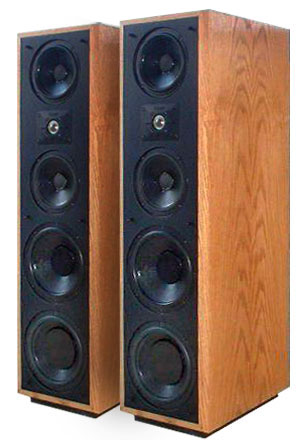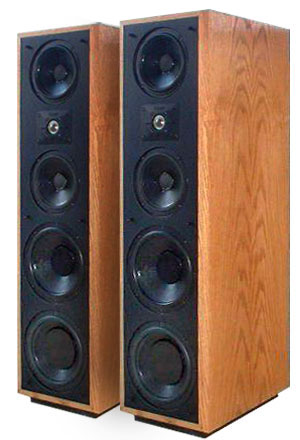
ProAc's Response D Two is a stand-mounted, two-way, ported loudspeaker with a a proprietary 1" silk-dome tweeter and woofer using a proprietary 6.5" cone of glass-fiber with a copper phase plug. At 17" high by 8" wide by 10.25" deep, the cabinet is taller and narrower than usual, owing to the fact that the port is centered below its mid/woofer.
Readers frequently ask me how <I>Stereophile</I>'s writers select equipment for review. More often than not, a writer comes up with a review candidate because he's heard it or heard about it, and then suggests it to editor John Atkinson for possible review. JA encourages this behavior—a writer excited about reviewing a component is more likely to produce an article that's interesting and informative. That said, occasionally a review candidate surfaces at <I>Stereophile</I> HQ; in such cases, JA assigns it to one of us.
Forget about using a dish towel in the state of Oregon or in Minneapolis. Letting china air-dry is the only allowable way.
In Florida, you're in trouble if you shatter more than three dishes per day, or chip the edges of more than four cups and/or saucers. If you get your kicks tossing plates, don't try it from any window above the ground floor of a house or apartment in Freeport, Illinois.
In Kansas, you can't stack plates more than eight high.
Forget about using a dish towel in the state of Oregon or in Minneapolis. Letting china air-dry is the only allowable way.
In Florida, you're in trouble if you shatter more than three dishes per day, or chip the edges of more than four cups and/or saucers. If you get your kicks tossing plates, don't try it from any window above the ground floor of a house or apartment in Freeport, Illinois.
In Kansas, you can't stack plates more than eight high.