The hi-fi receiver has been many different things. Early examples, like the Harman Kardon "Stereo Festival" TA-230 from 1958 (said by modern-day Harman/Samsung to be the first stereo receiver), featured separate FM and AM monophonic tuners that could assign a speaker to each if you wanted to listen to what was then a fad: stereo broadcasts over two stations (left channel over FM, right over AM, for instance). Standardized FM stereo broadcasting began in 1961, and by then, receivers had evolved into large, complex, nearly complete stereo systems; an example of that was the Fisher 800.
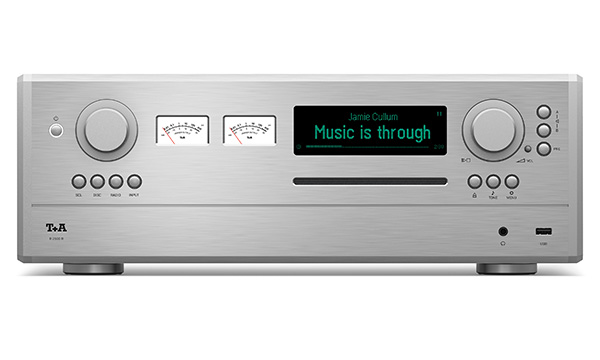
It might be nice if the receiver can connect to a modern TV, which will have either TosLink or HDMI-ARC output, or both. For those of us who still own a bunch of CDs, we might as well include a robust DACand maybe even a built-in CD transport. Throw in FM analog and digital tuners, and voilà, you have the R 2500 R, the "21st Century Receiver" from T+A Elektroakustik of Herford, Germany, southwest of Hanover.
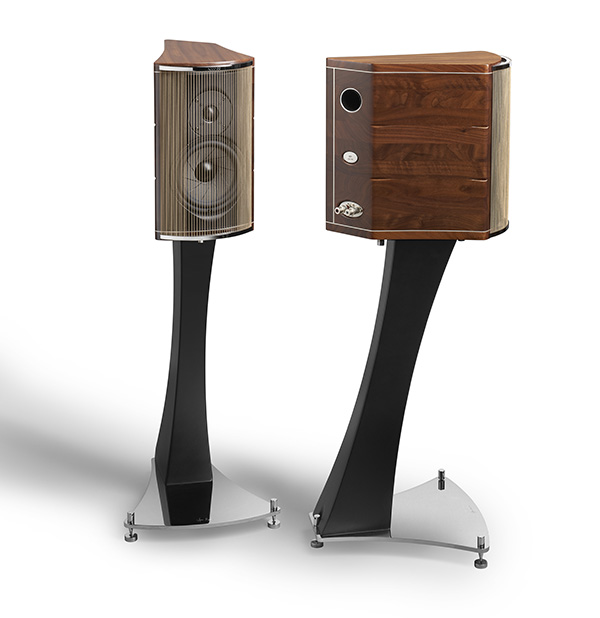
As founder and chief designer of Sonus Faber, Franco Serblin designed and manufactured many loudspeakers of acclaimed high quality, mainly in box form. Nevertheless, he remained painfully aware that such conventional rectangular parallelepiped constructions inevitably possessed an inherent and hard-to-suppress resonant signature characteristic of box-form cabinetry, significantly differing from that for a musical instrument. Franco had long obsessed over the sound and construction of classical string instruments, violins, violas, and cellos made by grand masters over centuries. He valued highly those richly resonant, expressive, complex sonic signatures.