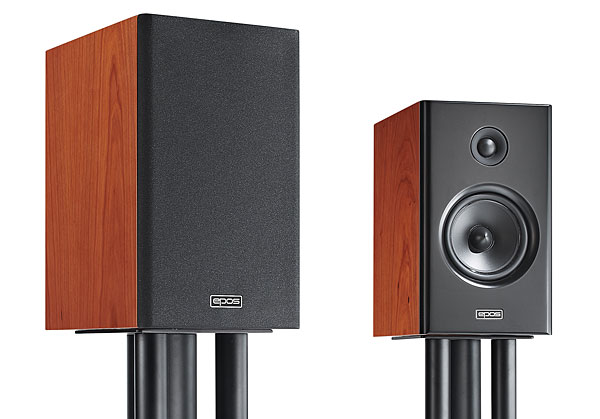
I've long kept an eye on Michael Creek's loudspeakers (Epos) and electronics (Creek). He's always moving forward, with either updates of current designs or a revamp of an entire product line. And though I've found that many of his new-product ideas tend to feature evolutionary rather than revolutionary sonic improvements, I've found that they always represent excellent sound quality for the dollar in an increasingly competitive marketplace.
The road to hell is paved with good inventions: clever ideas that appear, in hindsight, motivated more by a desire to sell clever ideas than to make musically superior products.
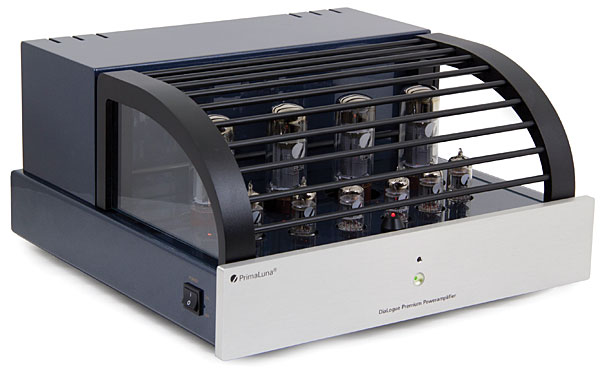
The DiaLogue tube amplifiers from PrimaLuna have, at their heart, a clever idea of their own: an output circuit that is user-switchable between triode operation, in which the screen grid of a tetrode or pentode power tube is defeated by means of connection to the tube's anode; and Ultralinear operation, in which the screen grid of a tetrode or pentode carries a portion of the AC music signal, supplied by a tap on the output-transformer primary, in a feedback-like effort to reduce distortion and increase power. Fans of the former often report a sweeter, more tubey sound, while fans of the latter report a tighter, more detailed, more timbrally neutral sound. Audio enthusiasts are given to reporting any number of things.
Last month, I wrote about Light Harmonic's use of Kickstarter to fund the final production and packaging of their Geek Out portable USB DACheadphone amplifier. The campaign raised $303,061 from 2146 backers. That success led Light Harmonic to create a new division dedicated to mass-market products: LH Labs. The Geek Out would be its first product. (Pre-orders are still being accepted.) LHL's second product would be the Geek Pulse, a "pure class-A" desktop integrated amplifierDAC capable of handling 32-bit/384kHz PCM files, as well as decoding native DSD64 and DSD128 files.