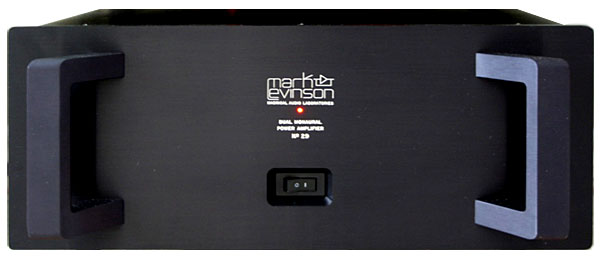
I still remember reading about my first Mark Levinson product 14 or 15 years ago. It was a preamp. The model number escapes me, but it sold for over $2000. It was soon followed by the JC-2, designed by John Curl, which was a bit less pricey but still astonishingly expensive for a mid-'70s preamp. We've come a long way since then. The man, Mark Levinson, left the company that bore his name in the early 1980s and founded a new company, Cello. The company Mark Levinson became the core of Madrigal. It is a mark of their continued dedication to uncompromising high-end products that their bread-and-butter line remains the high-priced Mark Levinsons. They no longer have the Rolls-Royce of the audio market to themselves (in their early years, they made the never exactly inexpensive Audio Research productsARC was certainly a contender for the same titlelook like bargains), but they are certainly a leading player.
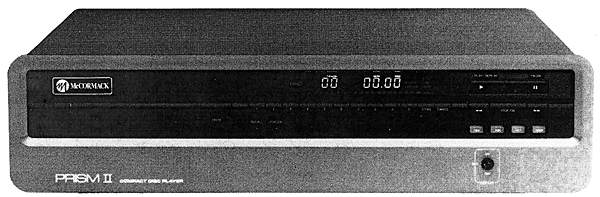
Like its Prism I predecessor, which I reviewed in May 1988, the Mod Squad Prism II is based on a Philips player: the same 16-bit, 4x-oversampling converter, the same general control layout. But The Mod Squad does their own extensive remanufacture, both on the internal circuitry and on the cosmeticsthe latter involving a handsomely sculptured case and metal front trim-panel surrounding Philips's command center.
Like every sensible publication, The Stereophile keeps track of the questions raised by readers who write to us, so we can get some idea of what most of you would like to see in future issues of the magazine. To date, the list looks like this, in order of diminishing interest: transistor amps and preamps, loudspeakers, pickups, tape equipment, tuners and, way at the bottom of the list, recordings. We are devoting most of the August 1964 issue to a discussion of commercial recording practices.
Note: As our coverage of the 2016 New York Audio Show has just been posted, I thought it would be interesting to post our report from the 1965 show, in particular to see which brands are still around 50 years later.John Atkinson
The 1965 New York hi-fi show was, to these observers, most notable for the marked increase in the number of exhibits which featured goodie, classicalmusic for demonstration purposes. In the past, only about a half dozen of the exhibitors played any thing of musical worth, the rest of them evidently figuring they could make more noise with wild brass-and-percussion "demo" records.