Ed Meitner is one of those rare individuals who charts his own course in audio product design. From his platterless turntable of the mid-1980s to his new Intelligent Digital Audio Translator (IDAT, reviewed elsewhere in this issue), Ed Meitner's products have been distinguished by original thinking and innovative engineering. Although not all his designs have been commercially successful, in each he has attempted to advance the state of the art by rethinking fundamental principles.
Ed is also pursuing an ambitious project that would radically change the way recordings are made. It began when he recorded an electric guitar through a 10" guitar-amp loudspeaker and was dismayed that it was impossible to even come close to capturing and realistically reproducing this apparently simple sound through another 10" speaker. This experience launched his investigation into why reproduced sound is never mistaken for live music, a quest that may result in a radically new recording technique.
In 2009, I wrote about Luxman's entry-level solid-state integrated amplifier, the L-505u ($3700), and their near-universal (no Blu-ray) disc player, the DU-50 ($4990, now discontinued). I was very impressed by their performance and their quality at those prices. Indeed, I think I commented on these models in no fewer than five columns back then.
Branford Marsalis: Renaissance
Branford Marsalis, tenor & soprano sax; Kenny Kirkland & Herbie Hancock, piano; Bob Hurst & Buster Williams, bass; Tony Williams, drums
CBS FC 40711 (LP). Dennis Ferrante, Bob Margoleff, Howard Siegel, engs.; Delfeayo Marsalis, prod. DDA. TT: 57:09
These are heady days for those who believe that jazz may have reached its height in the mid- to late '60s, before its disastrous 15-year romance with fusion. With such strong new talents as the Marsalis and Brecker brothers and Chico Freeman embracing the spirit of that time, and fusion-scarred veterans like Freddie Hubbard and Joe Henderson returning to the basics of acoustic trios, quartets, and quintets in recent recordings and concerts, jazz has attained a new and cherished seriousness valued all the more for its unexpectedness.
Wabaam! Another month, another Stereophile. My how time flies when you are reviewing hi-fi.
Compared to the enormous April issue that hosts our chunky Recommended Components listing, May is petite but still packs a powerful punch loaded with insights and audio enhancers. Enhancers you ask? What might those be? Well how about bell bronze gongs! And magic fuses! And audio to make you cream…I mean, P.W.B.’s Electret Cream, which according to AD, just might work if you rub it in the right place.
"...and measures bad, then you're measuring the wrong thing!" If one motto could sum up this magazine's philosophy, this would be it. Too many times we have discovered components that sounded musically fabulous while offering measured performance that was, at best, merely competent. Yet recently, I'm starting to lose confidence in that old saw.
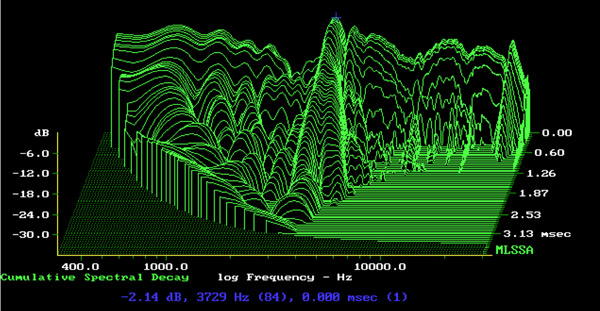
On a number of occasions, I or another of Stereophile's reviewing team has heard a product sounding flawed in ways later revealed by measurements. A closed story, you might thinkbut consider the NEAR-50M loudspeaker reviewed by Dick Olsher in this issue. Despite hearing many good things in the speaker's sound, Dick was bothered by a tonal-balance problem in the low treble. He was also disturbed by a lack of integration between the tweeter and midrange unit. When I measured the '50M, my response graphs (footnote 1) pretty much explained why Dick heard what he heard. Nevertheless, other reviews of this loudspeaker have been ecstatic in their praise, one even stating that it was "one of the most transparent and balanced dynamic loudspeakers available at any price" (my italics).
I saw the Vijay Iyer trio at Birdland in midtown Manhattan two weeks ago. It was a great show. Most of the songs were from the band's new CD, Accelerando (which I raved about in my March 31 blog post), some were from earlier albums; all were riveting. The trio weaves in and out of patterns with a swinging agility. Iyer plays piano with precision yet gusto; he could have been a master interpreter of Liszt or Ligeti, had he chosen that direction. If you have a chance to hear this group live, take it.
But my main purpose here is to correct something I wrote in that earlier post about the album's sonics, namely that "the drums have that digital swish (I'd like to hear the ride cymbal ring and the bass drum boom once in a while)." Well, after watching the group in person, I have to conclude that the drummer, Marcus Gilmore, doesn't like to hear those things very much. He tightens his drum heads more than any drummer I've seen (he re-tightened them several times during the show), to the point where banging them (or the cymbals, which I didn't see him tighten, but he must have before the set) produces almost no decay. He seems to aim for razor-sharp control of his share of the rhythm.
In other words, the drum sound you hear on Accelerando, like it or not, comes quite close to the sound of Gilmore live. The real thing swishes forth a bit more air, but the difference isn't huge; if I'd known what he sounds like in person before hearing the disc, I wouldn't have criticized anything. Apologies to the engineer, Chris Allen.
Stereophile is not all about reviewing hi-fi, and thanks to our all-knowing and thrill-seeking Music Editor, Robert Baird, we cover exciting new releases in each monthly issue for you to consider on your hi-fi escapades. In this post, I listen to all records we reviewed available on streaming services MOG and Spotify from our April 2012 issue, provide my own two-cents, and link to the playlists from the two services. With a premium account, one can stream at 320kbps Ogg Vorbis files from Spotify, and MOG users can stream 320kbps MP3s for free!




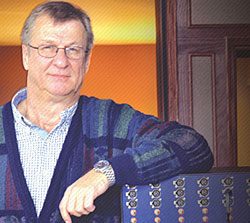 Ed Meitner is one of those rare individuals who charts his own course in audio product design. From his platterless turntable of the mid-1980s to his new Intelligent Digital Audio Translator (IDAT,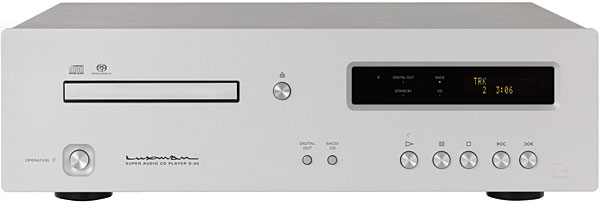
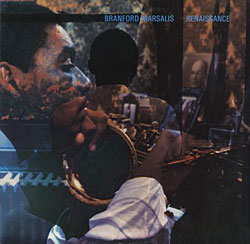 Branford Marsalis: Renaissance